China’s spectacular rise from copycat to innovation powerhouse

China is successfully transitioning from being a “copycat” that adapted and scaled foreign inventions into an emerging global powerhouse independently driving original innovation. Its capability to innovate is the result of multi-decade determination by China’s government to not only be an adaptive leader but to become the world’s innovation leader in key core technologies.

Invention (R&D) and adaptive leadership (mass adoption and scaling) represent two distinct parallel pathways for China. While they historically pursued “adaptive leadership” by copying and refining foreign technologies, it now balances both. It leads globally in applied scaling while fiercely pursuing invention to combat supply-chain vulnerabilities and genuinely determined to lead the world as a tech innovator. A comparative overview of the two follows.

FeatureAdaptive leadership (Scaling)Invention (R&D)
StrategyAdapting, standardizing, and mass-producing existing global tech.Discovery and pioneering basic scientific research.
Examples5G Network deployment, EV manufacturing, super-app ecosystems.Breakthroughs in AI algorithms and indigenous semiconductor manufacturing.
Key StrengthsUnmatched manufacturing speed, low wages, network effects, and diffusion capacity.High-value intellectual property, tech sovereignty, and global standard-setting.
ChallengesRelies heavily on foreign foundational IP; susceptible to geopolitical sanctions.Massive capital costs, historical inefficiencies in basic research, and talent constraints.

My memory growing up in Australia through the 1970s / 80s / 90s, it was always a joke that China could only copy a product or a brand, reproduce it on mass at a far lower quality and price, and export it for distribution across the world.
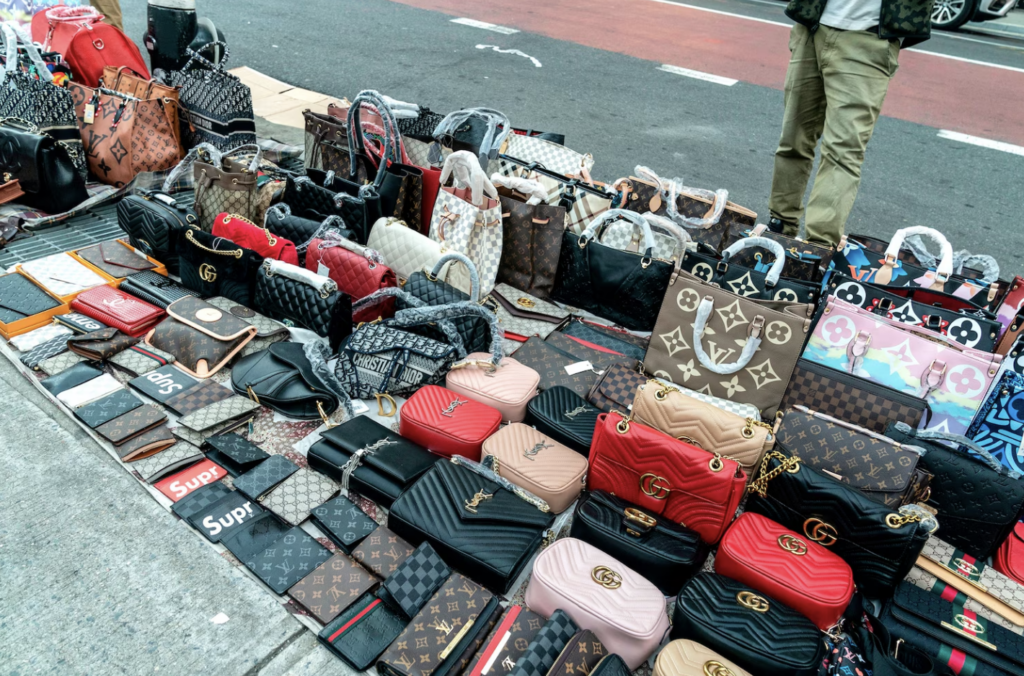
To understand why this was the case, lets put ourselves in China’s Jimmy Choo’s… during China’s “Century of Humiliation” and decades following, China’s competitive advantages had been reduced to its vast population, pride in its cultural heritage, resilience, and belief in its right to return to its former superpower position in the world. These enduring traits allowed the country to resist total colonization, eventually absorb foreign ideas, and cultivate a unified drive through an authoritarian government for national rejuvenation. The ability to mass produce goods with workers on drastically lower wages, manufactured and transported at vastly lower costs meant global demand for cheap replicas helped drive export growth in the early stage of China’s rejuvenation.

China has a rich history of innovation, however, with countless inventions that have shaped the course of human civilization. Not just being good at mass production of cheap rip-offs! For context to understand this better, lets step back to the period when China was previously the world’s economic leader, from 1 AD to 1820. During this period there were many inventions and discoveries but there are four great inventions from imperial China in particular that are historical significant. They are also symbols of ancient China’s advanced science and technology for the era. The great four inventions are the compass, gunpowder, papermaking and printing.

It is no coincidence that China’s great historical inventions were during the era when they were global economic leaders and able to invest in the ingredients required for invention, such as education, research, development, and resilience.

The magnetic compass was invented in China, with the earliest appearing during the Warring States period (475-221 BC), a device called a Si Nan became the forerunner of the compass. A Si Nan was a ladle-like magnet on a plate with the handle of the ladle pointing to the south. The Chinese considered south their cardinal direction, and the original compass was created using a naturally magnetized iron ore called lodestone to point south with Earth’s magnetic field, known as the “south pointer”.

During the Han dynasty (202 BC–220 AD), it was mainly used for geomancy (feng shui) and fortune telling. By the Song dynasty (960–1279 AD), during the 11th century, engineers began rubbing iron needles with lodestone and found a suspended lodestone could turn freely and would point towards the south and north magnetic poles. These artificial magnets were placed into carved wooden fish and floated in a bowl of water to align themselves.

This quickly evolved into the revelation that the lodestone could also be used to indicate a direction for travellers. Before this revelation, travellers on open ocean or in unfamiliar terrain attempted to tell directions by interpreting the positions of the sun, moon, and pole stars. This was impossible during overcast weather, making travel difficult. At this point in time onwards, the compass’ use facilitated travel and had a profound influence on trade, war, and cultural exchange. As maritime trade expanded, the floating needle was enclosed in a protective case with a glass top, becoming small enough for sea travel and navigation. This crucial invention spread to Europe by the 12th century, significantly impacting the age of exploration.

The first chemical explosive known as a gunpowder or black powder was made from sulfur, charcoal, and potassium nitrate (saltpeter). Gunpowder wasn’t a sudden invention. The Chinese had used saltpeter since the middle of the first century AD in various medical treatments. Gunpowder was invented during the Tang dynasty, by Daoist alchemists, in the 9th century, but it wasn’t until the Song dynasty in the 11th century that the first recorded formula was documented. The Chinese used gunpowder and gunpowder-based weaponry as a military defence and was further adapted for firearms, cannons, and eventually fireworks. China was the world leader in gunpowder technology for centuries before the invention and its military application spread to the Middle East and Europe. 

The birth of papermaking, is traced to China about AD 105, when Cai Lun, an official attached to the imperial court during the Han dynasty (202 BC – AD 220), created a sheet of paper using mulberry and other waste products such as bast fibres, old rags, and hemp waste. However, a recent archeological survey indicates that paper had already been invented 200 years earlier and used by the ancient Chinese military.

Before paper was invented, the Chinese carved characters on pottery, animal bones and stones, cast them on bronzes, or wrote them on bamboo or wooden strips and silk fabric. These materials, however, were either too heavy or too expensive for widespread use. The invention of paper brought about a revolution in writing materials and it only took a few years before it was widely in use all over China.

While paper used for wrapping and padding was used in China since the 2nd century BC, paper used as a writing medium only became widespread by the 3rd century. By the 6th century in China, sheets of paper were beginning to be used for toilet paper as well. During the Tang dynasty (618–907) paper was folded and sewn into square bags to preserve the flavour of tea. The Song dynasty (960–1279) that followed was the first government to issue paper currency. Paper was brought to the rest of the world via the Silk Road.

Around 2200 BC, the Egyptians discovered a type of reed called papyrus which could be used to write on by overlapping thin strips that had been soaked in water. The world “paper” was derived from papyrus.

Printing was invented in China, with fixed woodblock printing originating in the Tang dynasty around the 7th century. A major revolution in the history of printing came after the invention of movable clay type printing by Bi Sheng (990–1051) during the Northern Song dynasty (960–1127). The printing process consisted of four stages: making the types, composing the text, printing, and retrieving the movable types.

Later, in 1298, it was re-invented by Wang Zhen during the Yuan dynasty. He produced 100 copies of the Nong Shu or Book of Agriculture using more than 30,000 wooden movable types. The book consists of over 60,000 Chinese characters. Metal movable type printing was invented during the Jin (1115–1234) and Southern Song (1127–1279) dynasties in the 12th century. It was mostly made of bronze and was used to print money.

The ancient Chinese printing innovations spread across Asia and served as a revolution in the dissemination of information, long before Johannes Gutenberg’s printing press emerged in Europe.

Additional inventions which made their first appearance in ancient China through to 1912, the start of the new modern Chinese era, include:
* Acupuncture: the traditional Chinese medicinal practice of inserting needles into specific points of the body for therapeutic purposes and relieving pain, from the 3rd to 2nd centuries BC. Acupuncture was revolutionized during the period of Huang Di, the Yellow Emperor (2697–2597 BC).
* Alcohol: Yi Di, the wife of a Xia dynasty’s king, Yu the Great around 2000 BC, is said to have created the first-ever alcohol beverage and gave it to her husband.
* Belt drive: The mechanical belt drive, using a pulley machine, in 15 BC. The belt drive was not only used in textile technologies spinning silk and for weavers, it was also applied to hydraulic powered bellows.
* Blast furnace: were used to make pig iron and early blast-furnace sites discovered around 117 BC.
* Bomb: The first accounts of bombs made of cast iron shells packed with explosive gunpowder, coined the “thunder-crash bomb”. First recorded Jin dynasty (1115–1234).
* Borehole drilling: By the Han dynasty (202 BC – 220 AD), the Chinese used deep borehole drilling for mining and other projects.
* Bristle toothbrush: first recorded in China since 1498 during the Ming dynasty, using pig bristles.
* Cast iron: Confirmed by archaeological evidence, cast iron, made from melting pig iron, was developed in China by the early 5th century BC during the Zhou dynasty.
* Clock: During the Song dynasty (916 – 1279), Su Song built a huge clock tower by adding a chain-driven mechanism to a water-powered clock and it could tell the hours of the day, the day of the month, and the moon phase.
* Counting rods or abacus: Counting rods (abacus) are instruments used for performing calculations, which uses a grid of cells to represent a decimal system, from 2 BC. It revolutionized arithmetic calculations.
* Football: The game of football known as cuju was first mentioned in China in 3 BC.
* Field mill: a cart with millstones placed onto the frame; these were mechanically rotated by the movement of the cart’s terrain wheels to grind wheat and other cereal crops, from 350 AD.
* Forensic entomology: In 1235, during the Song dynasty, forensic science was used to solve a murder case.
* Gas lighting: The Chinese made the first practical use of natural gas for lighting purposes about 500 BC.
* Hand gun: the oldest existent archaeological discovery of a metal barrel hand gun is the Heilongjiang hand cannon from the Chinese Heilongjiang excavation, dated to 1288.
* Handscroll: The handscroll originated from ancient Chinese text documents where bamboo or wooden slips were bound and used to write texts on, from the Spring and Autumn period (770–481 BC).
* Inoculation: As Europeans would not begin to develop vaccinations for smallpox until 1796, historical Chinese records show that Chinese physicians have been inoculating against the same disease hundreds of years earlier.
* Kite: The Chinese invented the kite about 3,000 years ago, with the high-tensile strength of silk and the strength and lightness of bamboo being used to make them until paper was invented. It was used for war.
* Match: The earliest type of match for lighting fire was made in China by 577 AD. They were pinewood sticks impregnated with sulfur and needed only a slight touch from a flame to light.
* Modular system of architecture, eight standard grades: published in 1103 by the Song dynasty, descriptions of the “cai fen system” of eight standard dimensions for module components of timber architecture and structural carpentry. These were used to determine the ultimate proportions and scale of a building as a whole.
* Noodles: Originating in China over 4,000 years ago, noodles are a beloved culinary staple enjoyed in countless variations worldwide.
* Oil refining: The Chinese were among the first civilizations to refine oil, around 512 AD.
* Paper cups, napkins, lanterns and packaging: around 1 AD.
* Paper currency: refer to “Chinese currency and its history“.
* Petroleum as fuel: The use of petroleum dates from ancient China more than 2,000 years ago.
* Restaurant menu: During the early Song dynasty (960–1279), due to expanding trader visiting.
* Rock paper scissors: the Han Dynasty (206 BCE – 220 CE) as a game called “shoushiling”, featuring hand signs representing a frog, a slug, and a snake, and was often used as a drinking game.
* Rockets: The first gunpowder-powered rockets were developed during the Song dynasty in 13th century.
* Seismograph: In 132 AD, Zhang Heng (78–139 AD) of the Han dynasty invented the first seismograph called “Houfeng Didong” to measure the movements of the earth and seasonal winds. The seismograph was an urn-like instrument made of copper with a central pendulum. The eight dragons on the surface, each one holding the copper in its mouth, point out the eight different directions: east, south, west, north, southeast, northeast, southwest, and northwest. When there was an earthquake, the dragon’s mouth that was closest to the earthquake’s source opened and the ball dropped into the mouth of the frog, producing a sound. This let people know the direction of the earthquake.
* Silk: It is silkworms that naturally create silk, however, it is Chinese people that invented how to harvest the silk and use it in clothing. The oldest silk, which was found in Henan Province, came from the Chinese Neolithic period and dates to around 3,630 BC. Silk production in China became a highly sought-after commodity, leading to the famous Silk Road trade routes.
* Tea: The tea plant is indigenous to western Yunnan, first recorded in 2 BC. They also invented the teapot.
* Wheelbarrow: the invention of the wheelbarrow can be credited to prime minister Zhuge Liang during the Han dynasty sometime between 197 and 234 AD. Liang created the wheelbarrow to carry military weapons and to move injured and dead soldiers from the battlefield.

Following the Industrial Revolution (between 1760 and 1840), Great Britain, Europe and the United States rapidly outpaced China in productivity and technological innovation. China’s “Century of Humiliation” began roughly in 1820, along with internal civil wars, foreign imperialism, and political instability. China’s share of global GDP plummeted, falling to a low of about 5% by 1980.

After decades of centralized planning under Mao Zedong, as Chairman of the CCP from 1949, China’s economy began its revitalization journey from 1978 when leader Deng Xiaoping introduced the “Reform and Opening Up” policies. The transition to a market-oriented economy and export-driven manufacturing ignited unprecedented growth. China relied heavily on the production and export of low-cost manufacturing to fuel its initial economic rise from the 1980s onwards, with cheap replicas and knockoffs serving as a stepping stone.

In 2001, China officially joined the World Trade Organization (WTO), cementing its title as the “factory of the world”. As China integrated into the global economy, it lacked globally recognized brands. Manufacturing cheap replicas allowed local factories to bypass the immense costs of international marketing and R&D. Relying on abundant, low-cost labour, extensive raw material networks, and currency manipulation, factories churned out mass-market imitations to quickly capture global market share. This hyper-efficient, low-margin manufacturing ecosystem flooded global markets with inexpensive consumer goods, providing massive early momentum to China’s export machine. This underpinned China’s resurgence through the 1990s – 2000s.

According to OECD data, China accounted for up to 45% of all reported global customs seizures of counterfeit and pirated merchandise. Total output estimates of this grey and black-market manufacturing have historically exceeded $150 billion annually. While highly lucrative for specific municipalities, illegitimate replicas represent only a fractional % of China’s multi-trillion dollar legitimate goods trade.

Over the last 20 years however, the narrative of China’s export growth has drastically shifted. The era of relying primarily on cheap textiles, toys, and replicas has passed. China has pivoted to high-value manufacturing, with mechanical, electrical, AI hardware, and automotive products now dominating its export profile. The industry segments in which China has focused on becoming the world’s leader can be seen through the progressive Five-Year Plans, per below. This doesn’t mean these segments were invented by China and the blurring between scaled adaptive leadership versus invention has increased.

China’s adaptive mastery of taking foundational Western concepts, refining them at scale, and drastically lowering costs are widely acknowledged in segments including electric vehicles (EVs), high-speed rail, consumer electronics (like drones), and digital payment ecosystems. China has revolutionized global markets and technology by indigenizing and perfecting the following:
* Electric vehicles (EVs): China dominates the world’s EV supply chain. While the motor and battery concepts originated globally, China scaled manufacturing to make EVs globally accessible, and in 2025 they commanded a 67% share of global EV sales. Multiple countries contributed to the EV’s origins. Model EVs date back to experiments by Hungary and Scotland in the 1830s. The first practical, commercial vehicle was built in France by in 1881, while Germany produced the first four-wheeled electric car in 1888.
* Consumer drones: Leveraging the manufacturing ecosystem of Shenzhen, Chinese firms like DJI took basic remote-controlled aircraft and transformed them into the global standard for commercial and consumer use. China accounts for an estimated 90% of the global consumer drone market, with DJI accounting for 70% to 85% alone. The first unmanned aircraft prototype originated in Austria in 1849. The modern quadcopter and consumer drone market was later revolutionized in China in the 2010s.
* High-speed rail: China adapted foreign train technologies and subsequently built the world’s largest high-speed rail network. High-speed rail in China regularly cruises at a standard top speed of 350 km/h. The modern high-speed passenger railway was pioneered in Japan with the launch of the Tōkaidō Shinkansen (Bullet Train) in 1964.
* Solar panels (Photovoltaics): Building on basic physics principles discovered in the West, China heavily subsidized and re-engineered the production process, driving down global costs by over 80% to become the leading global supplier. In 2025, China accounts for more than 85% of global solar panel output and produces 96.6% of the world’s solar wafers, 93.2% of polysilicon, and 92.3% of photovoltaic cells. The photovoltaic effect was discovered in France in 1839. However, the first modern silicon-based solar cell capable of powering devices was developed in the United States in 1954.
* 5G Telecommunications: China rapidly adapted early 5G/4G network architectures to build the world’s most extensive 5G infrastructure. Chinese providers have built and installed more than 60% of the world’s 5G base stations. 5G standards were shaped by contributions from multiple nations. Key foundational technologies were pioneered in the United States, Japan, South Korea, and China via global 3GPP standards.
* Agile hardware prototyping: China adapted original equipment manufacturing (OEM) processes to create a synchronized supply chain in Shenzhen, allowing companies to design, manufacture, and iterate on complex electronics at unprecedented speeds. Agile methodologies for software were established in the United States in 2001, which later inspired “agile hardware” practices in academic and tech hubs like Stanford University.
* Digital wallets & super apps: China adapted the western concept of online transactions to create an ecosystem where mobile payments completely replaced physical cash and credit cards. The foundation for mobile digital wallets and QR code payments took off in Japan (inventor of QR codes) and South Korea. The evolution into full-featured “Super Apps” (like WeChat and Alipay) was pioneered in China.

China’s economy surpassed the U.S., on a purchasing power parity (PPP) GDP basis, to become the world’s largest economy in 2013. Today, it remains the second-largest economy by nominal GDP representing roughly 16% – 17% of the world’s GPD and holds the world’s largest outbound foreign direct investments and manufacturing base. This ascension by China has provided the capital, resources, expertise capacity and determination for it to once again be a world leader in meaningful innovation.

In March 2026, China’s CPC formally released and adopted the 15th Five-Year Plan (2026–2030) at the annual session of the National People’s Congress. The ambition in its vision and scale is breathtaking. The masterplan represents an aggressive state-led push to dominate high-value sectors and shift China from the “world’s factory” to a top-tier innovation powerhouse. The question is no longer whether China can innovate, but what kind of innovation ecosystem it is building and how it can redefine manufacturing across the world.

Facing domestic economic headwinds and global geopolitical restrictions, China’s strategy outlined in the 15th FYP has decisively shifted from consumer platforms to a state-backed push into deep, strategic, and “frontier” technologies. At the high level, this blueprint is:
* Short-term targets (next 5 years): Commercializing fledgling fields, such as AI-driven robots, hydrogen power, and brain-computer interfaces.
* Long-term targets (next 10 years): Achieving technological breakthroughs and establishing massive “application scenarios” in highly complex fields, such as nuclear fusion and quantum computing.
* The “Intelligent Everything” Push: Broader integration of AI across economic and social structures to boost productivity and foster tech self-reliance.

Central to the plan is integrating AI into 90% of the economy by 2030, securing technological self-reliance against Western sanctions, and commercializing “frontier” technologies like quantum computing and brain-computer interfaces. Key pillars of the strategy include:

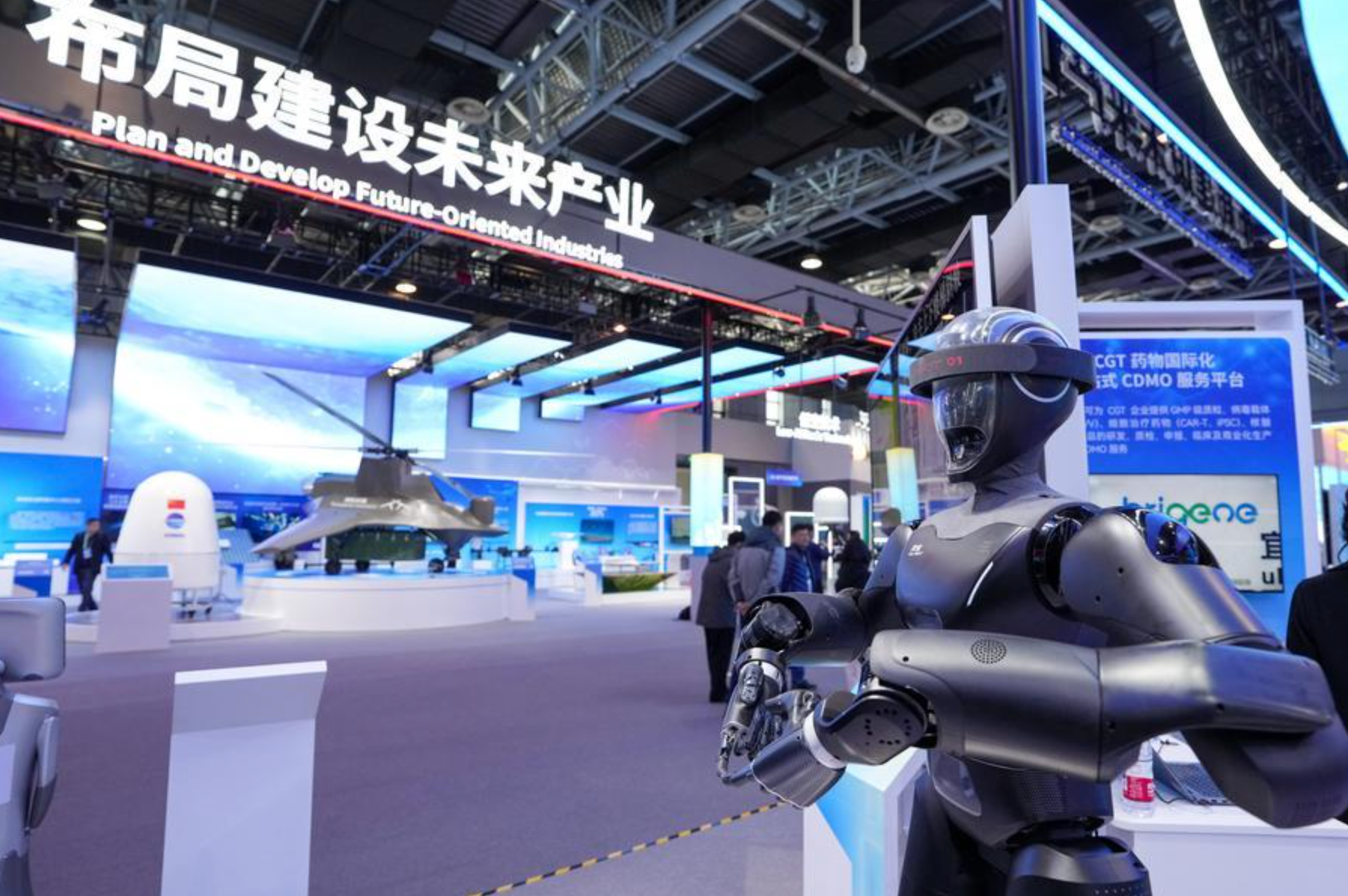
  • Artificial intelligence & robotics: Aiming to seamlessly weave AI into industry. The plan heavily promotes “embodied intelligence” (AI integrated directly into physical robots) and scaling humanoid robotics to help offset shrinking labor forces. It aims to integrate AI into 90 per cent of the country’s economy by 2030.
  • The strategy also includes keeping AI models open-source to promote entrepreneurship and development.
  • Technological Self-Reliance: A critical mandate to sever reliance on foreign markets (especially the US) for advanced semiconductors, machine tools, and core software.
  • Futuristic technologies: Driving R&D breakthroughs and commercial scale in next-generation fields, including 6G mobile communications, quantum computing, nuclear fusion energy, and brain-computer interfaces.
  • Low-altitude economy: Supporting private-sector ingenuity to build commercial infrastructure for delivery drones, flying taxis, and smart aerospace.
  • Global talent & science investment: Growing core digital industries to 12.5% of GDP and increasing R&D spending by over 7% annually. The government is also establishing aggressive talent immigration programs to draw global researchers.

The plan leverages heavy state funding to reduce risk and catalyze private capital. However, analysts note that the execution relies heavily on local officials effectively allocating funds without duplicating efforts or wasting resources in less-established regions.

Hold onto your hat!!