Beijing is one of the special cities of the world and was one of the early trips during my time living in Hong Kong in 1996/97. Its cultural heritage and history is magnificent and fascinating to immerse yourself in and needs a trip of at least a long weekend to enjoy. It is also the central point of China’s phenomenal rise on the world stage. You do feel, however, like a school kid stepping into the headmaster’s office when in Beijing as you look around the room and wondering at the history and grandeur. Whilst also being conscious of the rule of power and consequences of stepping out of line!
My strongest memories of my first trip in August 1996, are of the fun connection with locals in a game of football at sunset with some lads in Tiananmen Square and drinking rice wine on stools with three local men in a hutong alley one night, and being in awe of the amazing Great Wall of China and Forbidden City.
To start with, everything about Beijing is grand! It is China’s historic and vibrant capital, boasting over 3,000 years of habitation and 800 years as the nation’s political centre. Housing a sprawling population of over 22 million, 96% of of whom are Han Chinese, it is the world’s most populous national capital city. The city is flat and spread out, then surrounded by mountain ranges on three sides; the west, north, and northeast. It is home to the headquarters of most of China’s largest state-owned companies and houses the largest number of Fortune Global 500 companies in the world. Beijing Capital International Airport is Asia’s busiest airport and the second-busiest airport in the world. In 2020, the Beijing subway was the fourth-busiest and second-longest in the world.
“Beijing” (北京) translates to “Northern Capital” and has been the official name of the city for centuries. You may have heard it referenced as “Peking” however this is an unofficial name ascribed by early European missionaries and traders based on local or southern dialects rather than standard Mandarin. “Beijing” and “Peking” are simply two different ways of spelling the same Chinese name in the Latin alphabet. “Beijing” became the standard English spelling in 1979 when China officially adopted the Pinyin romanization system to better reflect standard Mandarin pronunciation.
By way of its history, in prehistoric times the area around Beijing was inhabited by some of the earliest-known human beings. Fossil remains of Peking man (known as Homo erectus pekinensis), who lived about 770,000 to 230,000 years ago, and of Upper Cave man (homo sapien, our human being linage today), who lived about 50,000 years ago.
During the Zhanguo (Warring States) period (475–256 bc) of the Zhou dynasty (1046–256 bc), one of the powerful feudal states, the kingdom of Yan, established its capital, named Ji, near the present city of Beijing; this was the first capital city to be associated with the site. The city was destroyed by the troops of the founder of the Qin dynasty (221–207 bc). A new town was built during the succeeding Han dynasty (206 bc–ad 220) that was also known as Yan. Throughout the Han period and the turbulent centuries that followed, however, the place remained a provincial town, most of the time caught in the fateful struggle between the Han Chinese to the south and the nomadic Huns to the north. The city was to become an important strategic and a local political centre due to its location between the north and south.
The period following was turbulent and traumatic to say the least! When all China fell to the Mongol hordes, Kublai Khan (1215–94), grandson and successor to Genghis Khan, decided to build a new capital where Beijing is located. In 1272, he named the new capital Dadu (“Great Capital”) and built that over the next 15 years. Kublai’s greatest achievement was to reestablish the unity of China, which had been divided since the end of the Tang dynasty (618–907).
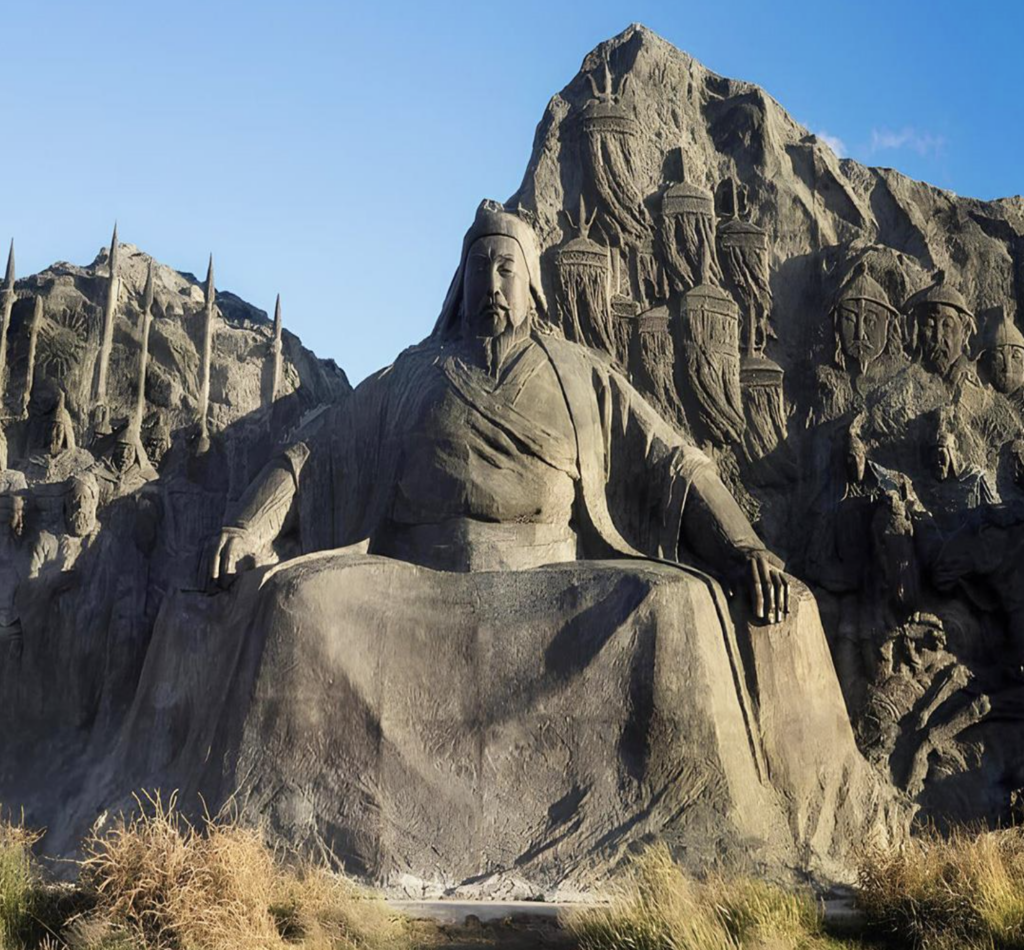
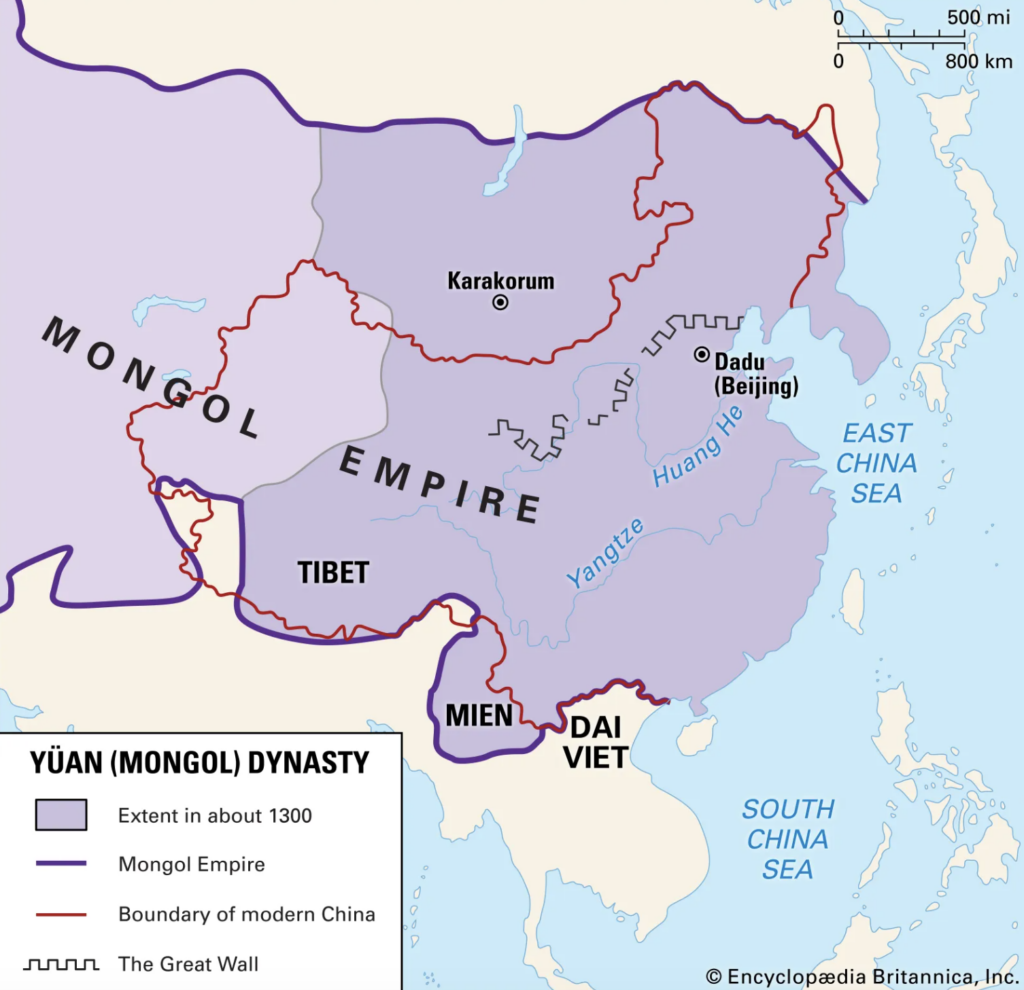
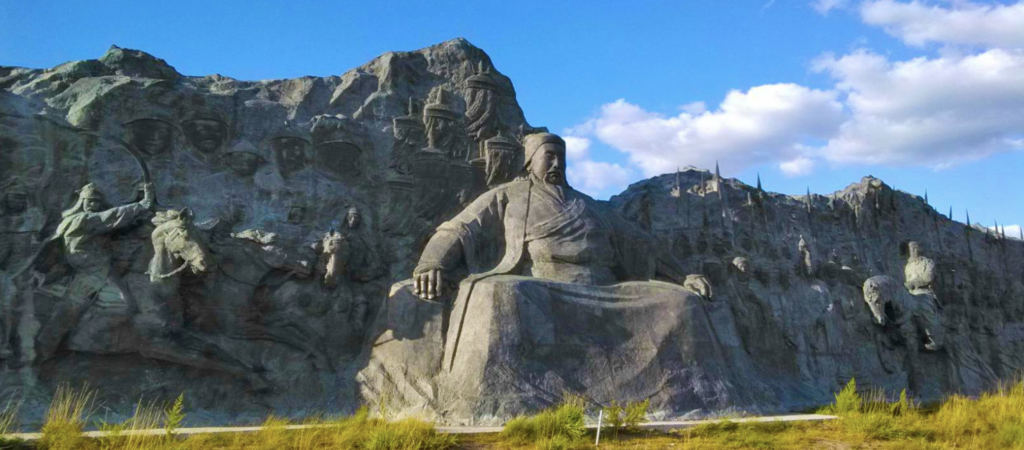
Dadu, which had magnificent imperial palaces and treasures drawn from every corner of the country, was the scene of stupendous feasts given by the khan (ruler) on state occasions. These characteristics and the well-organized post stages on the roads leading to the city astounded the Venetian traveler Marco Polo, who visited Dadu in the 1280s.
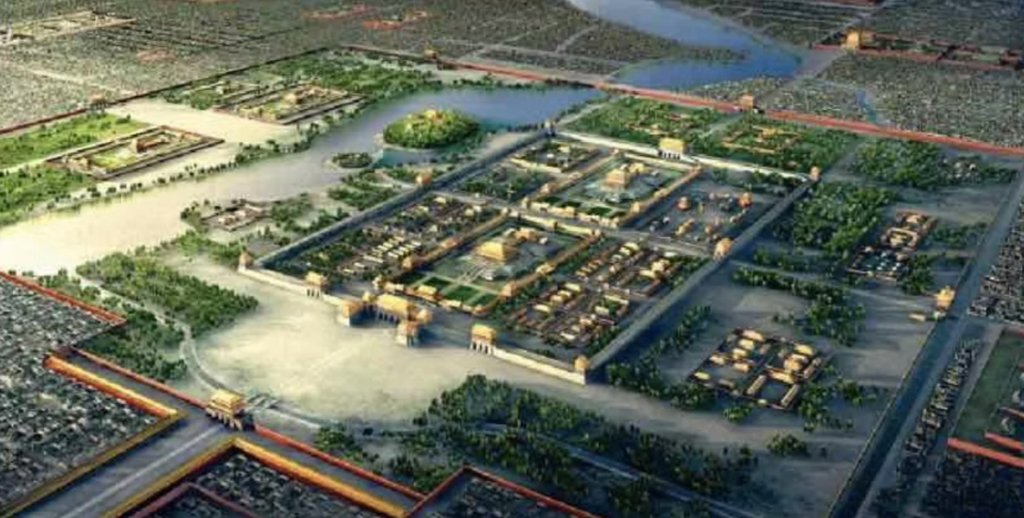
It subsequently served as the seat of power for the Ming and Qing Dynasties. In the mid-14th century a peasant revolt overthrew the Mongol dynasty and established the Ming dynasty (1368–1644). The capital to Jinling in Jiangsu province and called it Nanjing; Dadu was renamed Beiping (“Northern Peace”). In 1403, the city was renamed Beijing (“Northern Capital”), and in 1421 it was officially made the capital city of the Ming dynasty. The old city of Dadu, including its palaces, was largely demolished and rebuilt larger than before as Beijing. In 1644, Beijing was taken over by another peasant uprising against the Ming regime and installed the first emperor of the Qing dynasty (1644–1911).
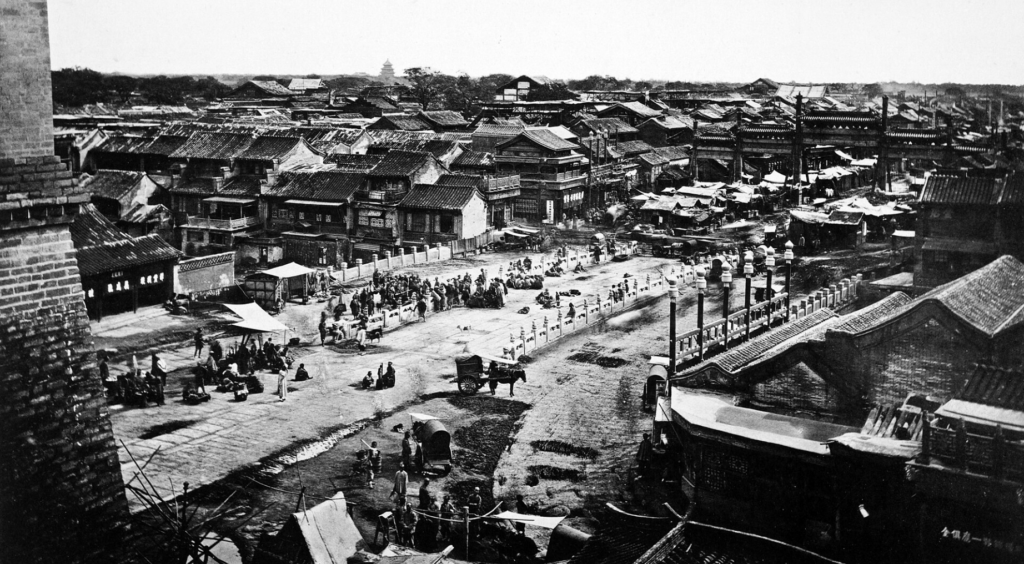
After the revolution of 1911, Beijing remained the political centre of the Republic of China until 1928, when the Nationalists moved the capital to Nanjing; Beijing was again called Beiping. The city came under increasing pressure from the Japanese, who established the puppet state of Manchukuo in Manchuria in 1931. In July 1937, fighting broke out between Chinese and Japanese, and Beiping was subsequently occupied by the Japanese until 1945.
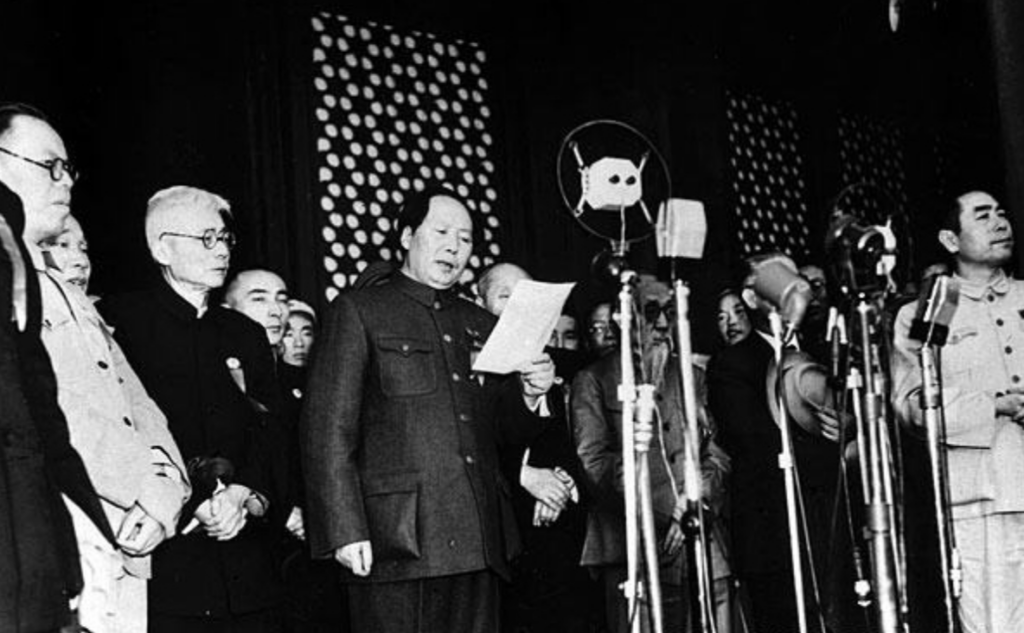
After World War II, the Nationalists were defeated by the Chinese Communist Party (CCP) in the ensuing Chinese Civil War. On 1 October 1949, with the inauguration of the People’s Republic of China (PRC), Beijing (with its old name restored) was chosen as the capital of the new regime. Chairman Mao Zedong formally proclaimed the founding of the new nation fat a ceremony in Tiananmen Square, central Beijing. The city soon regained its position as the leading political, financial, and cultural centre of China.
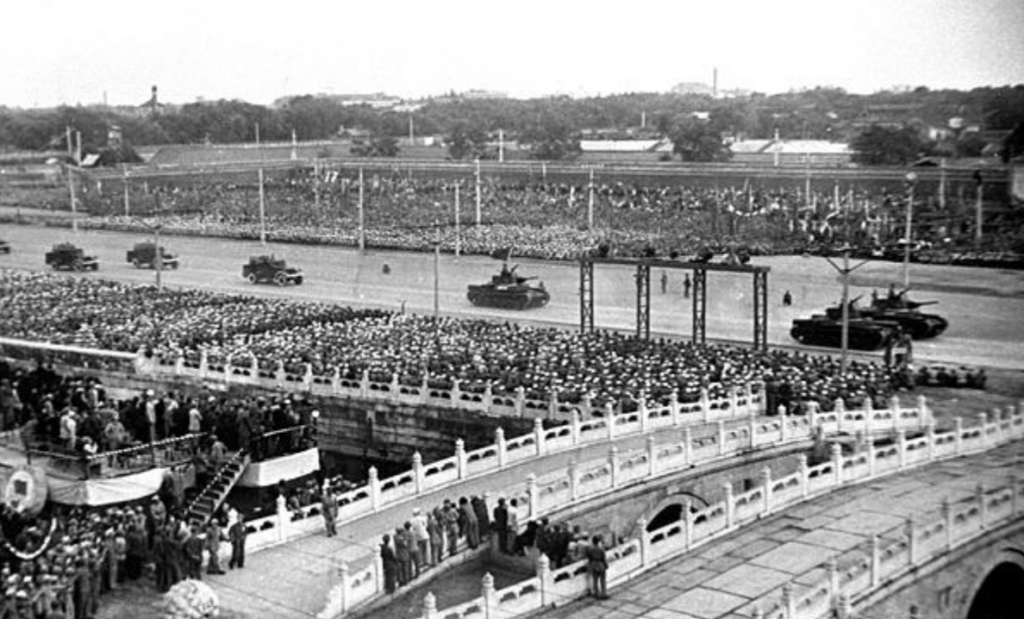
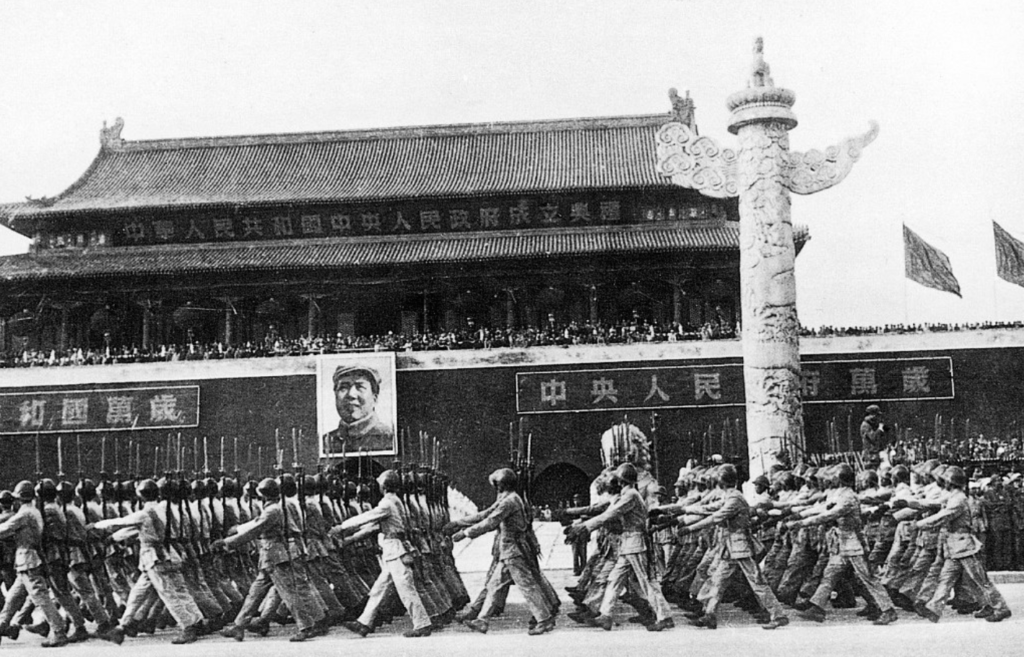
In the 1950s, the city began to expand beyond the old walled city and its surrounding neighbourhoods, with heavy industries in the west and residential neighbourhoods in the north. Many areas of the Beijing city wall were torn down in the 1960s to make way for the construction of the Beijing subway and the 2nd ring road. The 1960s and 1970s saw expansion and progress severely disrupted by the two sequential social policies of the PRC, namely the Great Leap Forward and the Cultural Revolution.
The Cultural Revolution took a devastating toll on Beijing’s built heritage; by its end in 1976, 4,922 of the 6,843 sites officially designated as historically significant in the city had been destroyed or damaged, over 70 percent of the total. This was because the Red Guards systematically targeted temples, shrines, ancestral halls, and monuments in the campaign to eliminate the “Four Olds”. To read more on these policies and their impact, click here.
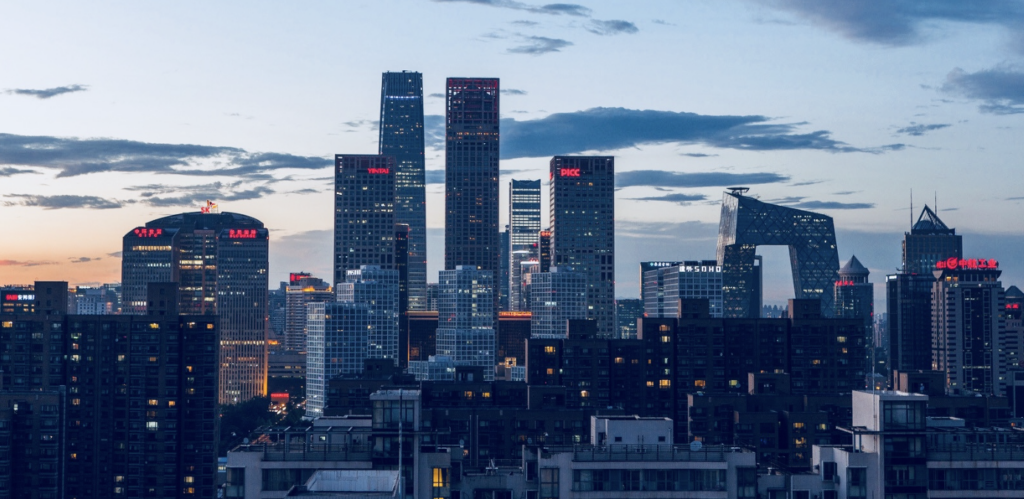
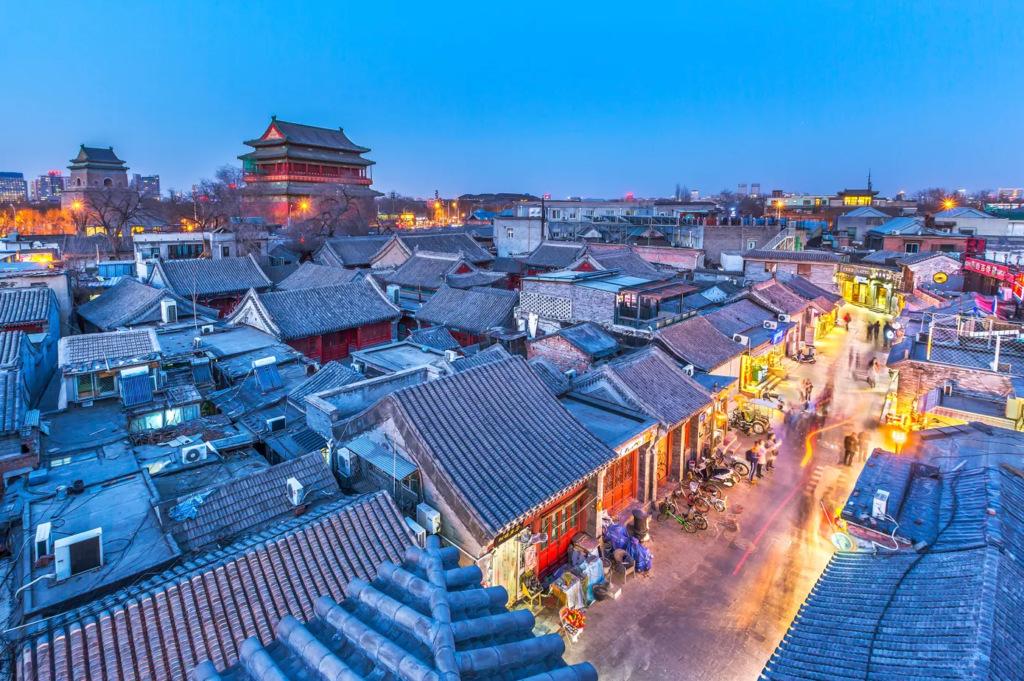
Since the early 1980s, the urban area of Beijing has expanded greatly. Today, the architecture of Beijing contains elements of both traditional Chinese architecture with modern styles, with one side of the city being modernized and renovated, and the other half still offering traditional hutong districts. Beijing CBD is a centre for Beijing’s new economic expansion, with the ongoing or recently completed construction of multiple skyscrapers. Beijing’s Zhongguancun area is a world leading centre of scientific and technological innovation as well as entrepreneurship. Beijing has been ranked the city with the largest scientific research output for ten years.
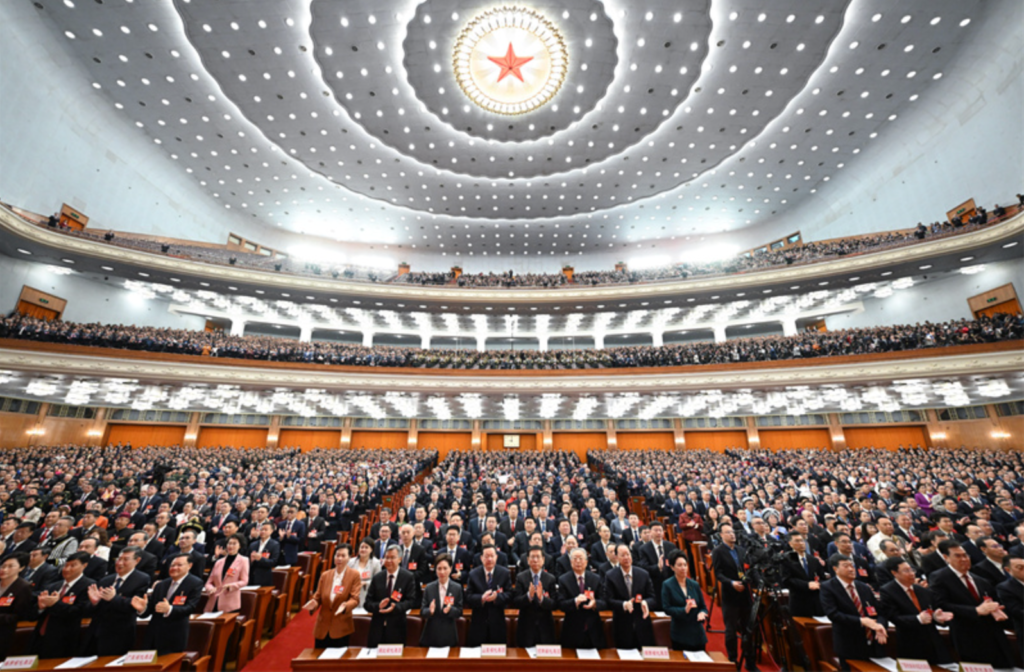
Since 1 October 1949, Beijing is the heart of the centralized, one-party political system of the People’s Republic of China, defined by a dual party-government structure. The CCP holds ultimate authority, with government institutions acting as administrative bodies to implement the Party’s policies. The ultimate philosophical and ideological goal of the CCP is the realization of a communist society, characterized by the abolition of social classes, the elimination of private property, and the development of a system where “from each according to his ability, to each according to his needs” is achieved. Click here to read “China’s amazing long game, five-years at a time” which details the Chinese political system, its history of five-year plans and current direction for its future.
The Beijing municipal government is regulated by the Municipal Committee of the CCP, led by the Beijing CCP Secretary, the highest-ranking official for Beijing. The Municipal CCP Committee issues administrative orders, collects taxes, manages the economy, and directs a standing committee of the Municipal People’s Congress in making policy decisions and overseeing the local government.
The city has a post-industrial economy that is dominated by the services sector, which generated 83.8% of output, followed by the secondary sector (manufacturing, construction) at 15.8%. The services sector is broadly diversified with professional services, wholesale and retail, information technology, commercial real estate, scientific research, and residential real estate.
Beijing’s pattern of development from the old inner city to its urban fringe are frequently described as “spreading like a pancake”. This rapid expansion has brought to the forefront problems of heavy traffic, poor air quality, the loss of historic hutong neighbourhoods, and a significant influx of migrant workers from less-developed rural areas of the country.
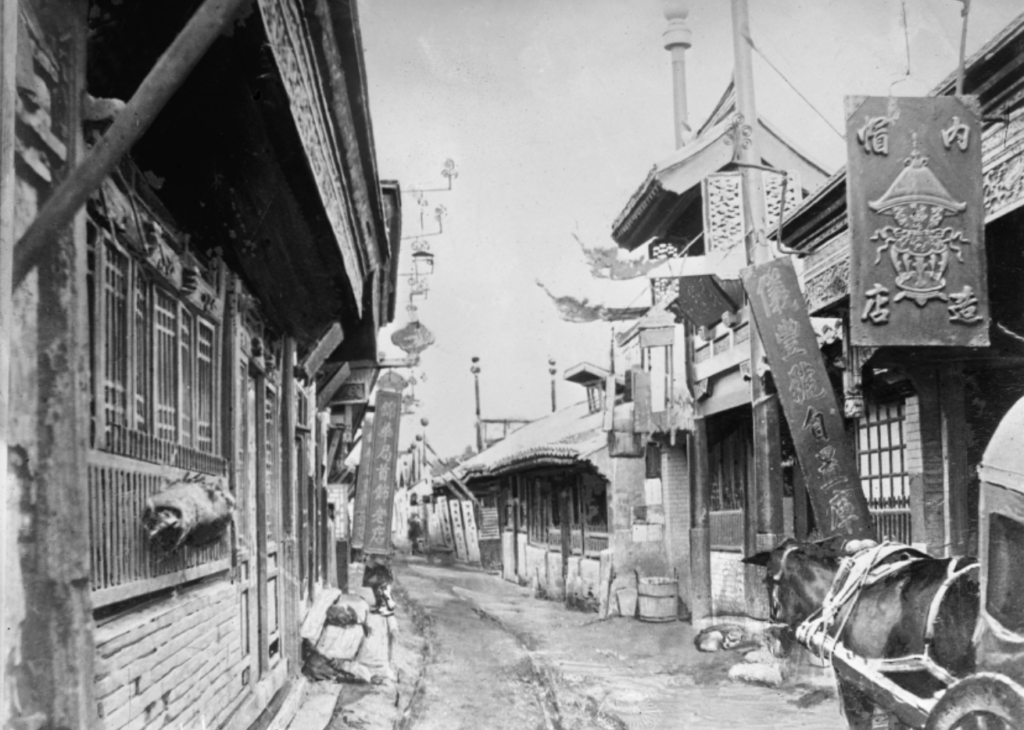
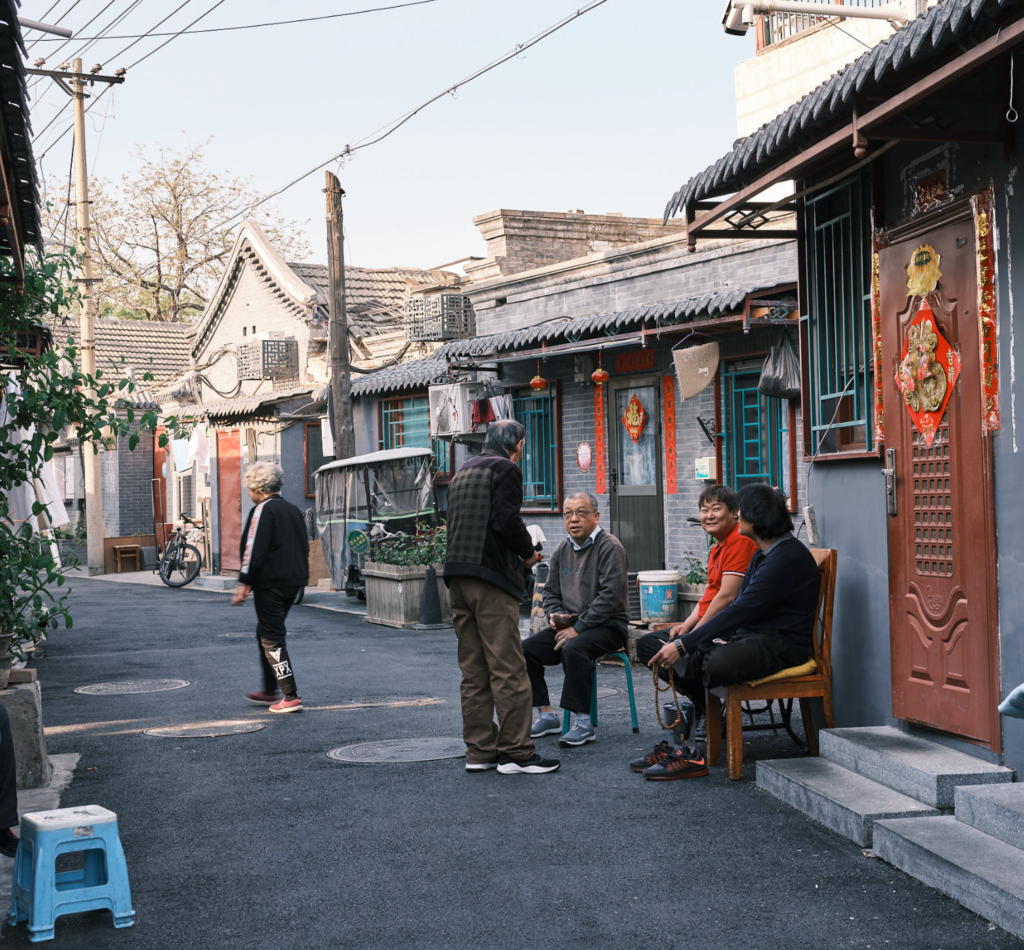
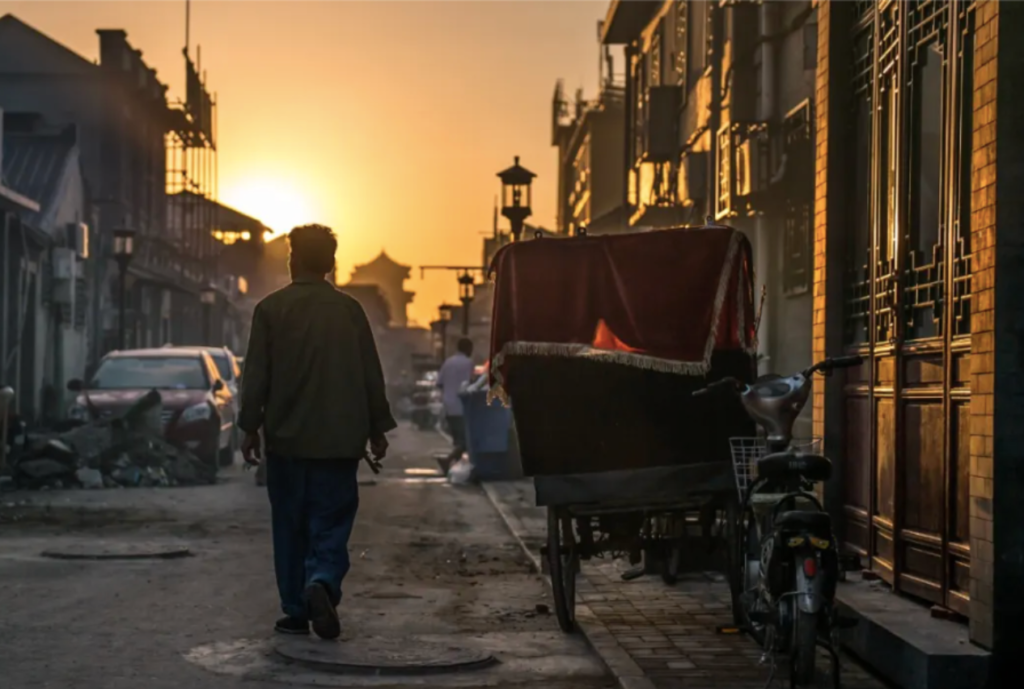
Hutongs are narrow streets or alleys formed by lines of siheyuan, traditional courtyard residences. They are typically found in northern Chinese cities, especially Beijing. Many neighbourhoods were formed by joining one siheyuan to another to form a hutong, and then joining one hutong to another. The hutongs are generally straight and run east to west so that doorways face north and south for good Feng Shui. During China’s dynastic period, emperors planned the city of Beijing on a strict orthogonal grid system and arranged the residential areas according to the social classes. The term “hutong” appeared first during the Yuan Dynasty, which is Mongolian meaning “water well”. The majority of the hutongs still in Beijing today were significantly expanded and built during the later Ming and Qing dynasties, however today they are disappearing and being replaced by high-rise buildings.
Hutongs represent an important cultural element of the city of Beijing. Thanks to Beijing’s long history and status as capital for six dynasties, almost every hutong has its stories. In contrast to the court life and elite culture represented by the Forbidden City, Summer Palace, and the Temple of Heaven, the hutongs reflect the culture of grassroots Beijingers. The hutongs are residential neighbourhoods which still form the heart of Old Beijing.
One of my fondest experiences in Beijing came at the end of a day exploring the Temple of Heaven and some hutong districts, our group had dinner at a small local restaurant in one of those hutongs and were walking home down a narrow alleyway. We came across three Beijing men sitting on stools chatting and laughing whilst slowly drinking shots of rice wine. The three of were welcomed to join them. Through very broken english we joined their festivities with laughter and rice wine drinking until late into the night. Er Guo Tou “rice wine”, a grain-based spirit (53% ABV), is the go-to budget drink for blue-collar Beijing workers. In 1996, in Beijing generally cost between 2 to 5 RMB (about $0.25–$0.60 USD at the time) for a standard 500ml bottle. It was a wonderful experience to have to finish the trip… although cheap rice wine is not good for hangovers!
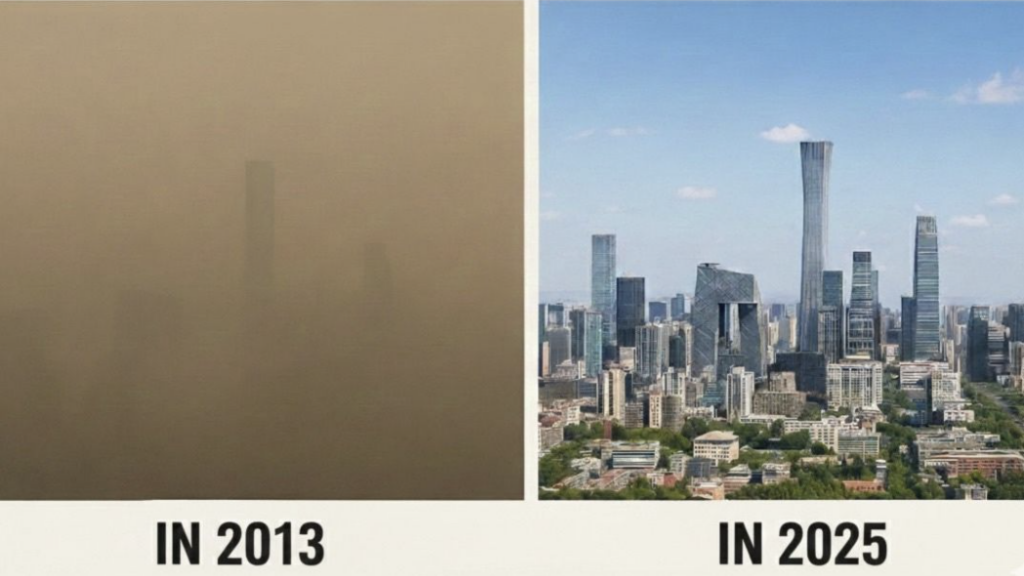
One of my strong memories of Beijing when I visited in 1996, and two other trips subsequently, has been the heavy pollution across the city, especially that distinct smell and smog of burning coal from houses. Over the 1990s and 2000s, Beijing’s urban expanse more than quadrupled. This urbanization combined with pollution caused by a heavy reliance on burning coal for both domestic heating with low-efficiency stoves, increasing cars on the road and industrial production relying on coal-fired power plants. in 1996 when I first visited, over 75% of China and Beijing’s energy came from coal. The city’s air quality regularly exceeded national and global safety standards.
The severity of the mid-90s smog forced the municipal governments to begin to take action. Whilst efforts to change had begun they had a small impact hence air pollution remains a serious problem in Beijing during the 2000s, marked by very frequent pollution episodes, especially during the winter. Air quality in Beijing improved significantly in the lead up to and during the 2008 Summer Olympic Games due to significant but relatively temporary measures imposed by the government so the world didn’t see just how bad it actual was. Most of the improved pollution had faded away by mid 2009.
A study entitled “Years of Breathing Dangerously: A Beijing Air Pollution Timeline” by thebeijinger.com tested Beijing’s air quality between 2009 – 2014 and found Beijing had 1,812 “unhealthy” level air days in this period, with only two days reaching acceptably low levels of pollution. Other research found that life expectancy is 5.5 years shorter in northern China than in the southern counterpart. Profuse coal burning is listed as the primary culprit behind shortened life expectancy!! Beijing citizens dub it the “airpocalypse”.
In 2013, heavy smog struck Beijing and most parts of northern China, impacting a total of 600 million people. After this “pollution shock”, coupled with mounting embarrassment internationally, air pollution became an important economic and social concern in China. The government of Beijing announced serious measures including to shut or upgraded many coal-based industrial plants and dirty boilers, moved or cleaned up highly polluting factories, forced citizens to replace old coal burners with new gas heaters, tightened vehicle emission norms and phased out older vehicles, built a strong EV strategy, expanded public transport massively, and improved air quality monitoring and enforcement.
As a result of Beijing government’s actions, between roughly 2013 and 2020, the results are remarkable; emissions of PM2.5, sulfur dioxide, and nitrogen oxide are found to be reduced by 97%, 98% and 86% respectively compared with 20 years earlier. There is a powerful centralised government in action!!
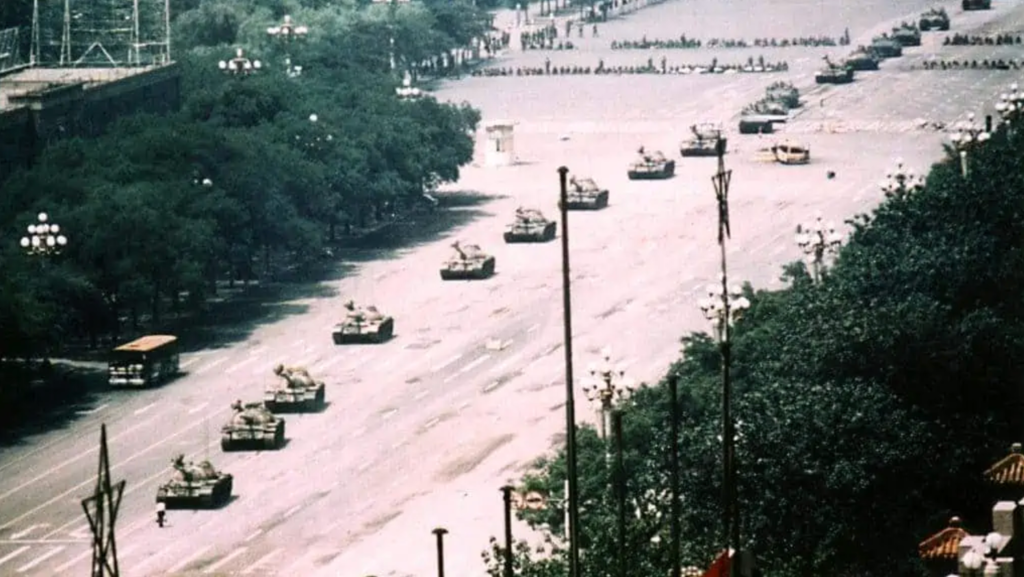
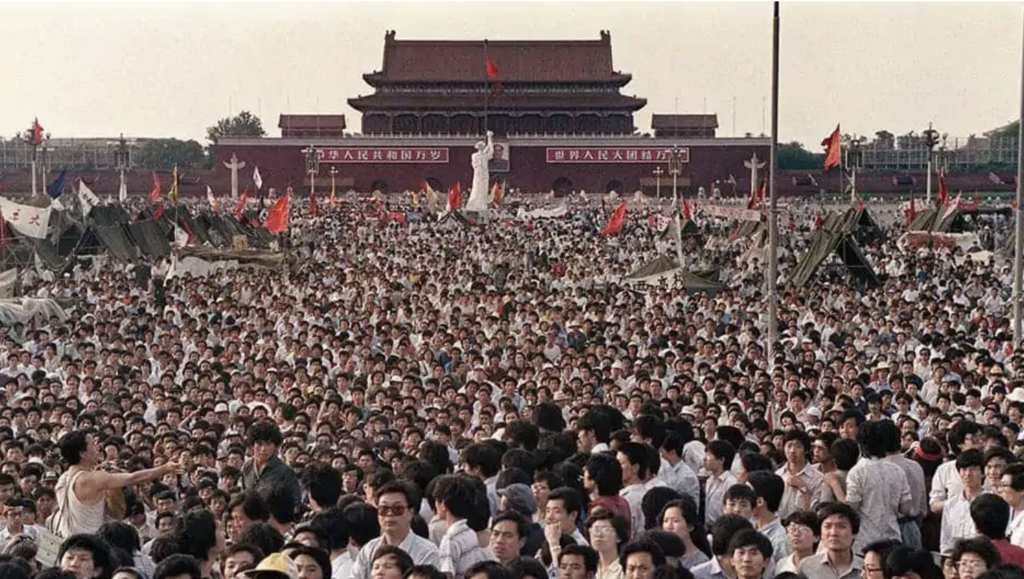
As the capital of China, Beijing has been the location of many significant events in recent Chinese history, with the Tiananmen Square protests and massacre of 1989 one of the most significant. The picture below left sent ripples throughout the entire world on 5 June 1989, the morning after the Chinese military violently suppressed the Tiananmen Square protests. The true identity and ultimate fate of the “Tank Man” remain completely unknown. An ordinary citizen with his shopping bags and stood in front of moving tanks, to defend what he believed in. He has never been identified or publicly acknowledged since that moment. To this day, the Chinese government severely restricts information about the Tiananmen Square Massacre, including blocking internet searches and discussions on the topic within China. The government also does not tolerate any remembrance activities on the anniversary. Hong Kong was the only area of China for such activity and not since 2019 has there been a large scale vigil which has also been banned.
The Tiananmen Square protests of 1989 (commonly known as the June Fourth Incident in China) started as a student movement in Beijing. Students gathered in the Tiananmen Square to mourn former Communist Party General Secretary Hu Yaobang, a liberal reformer. City residents widely supported the movement, exposing the rift between the Chinese leadership and their people. China was passing through a period of massive inflation and several corruption scandals. Protesters demanded freedom of the press, freedom of speech and government accountability — which, ironically, was exactly the opposite of what happened.
When a short period of being conciliatory failed, the government authorized over 300,000 troops to use force however they deemed necessary to stop the protests. What followed next was the Tiananmen Square Massacre. Troops armed with rifles and tanks opened fire on the protesters, resulting in a dramatic bloodbath. The number of deaths was never properly reported, with China stating it was 241 however unofficially estimate by Red Cross International is roughly 2,600. The Chinese authorities also blocked satellite transmission to international broadcasters, expelling all foreign journalists out of the country.
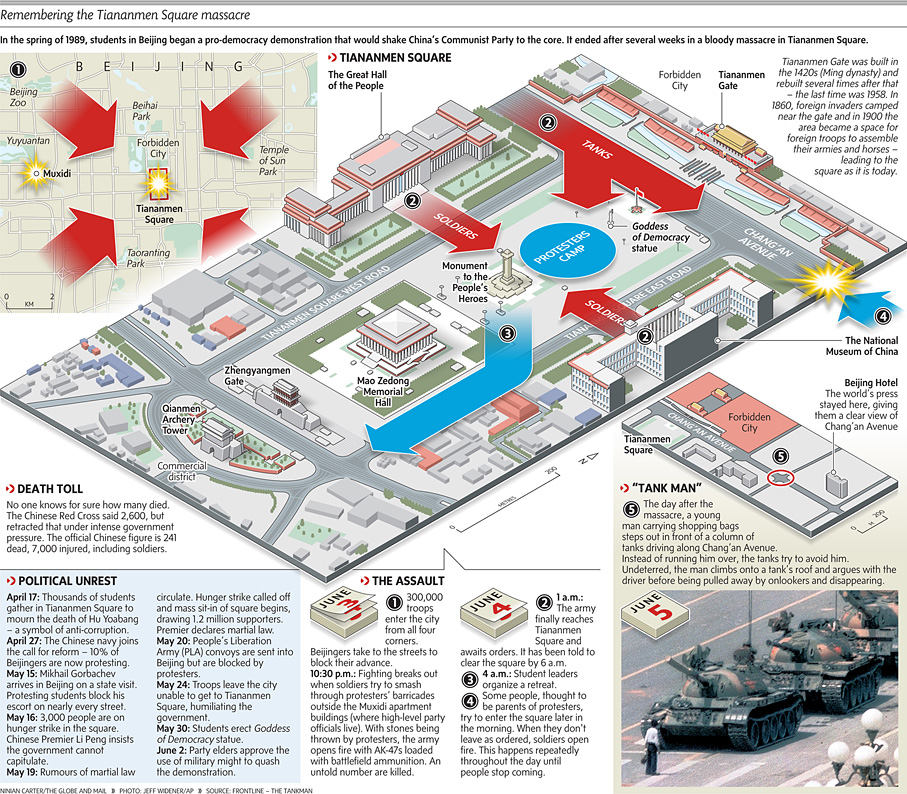
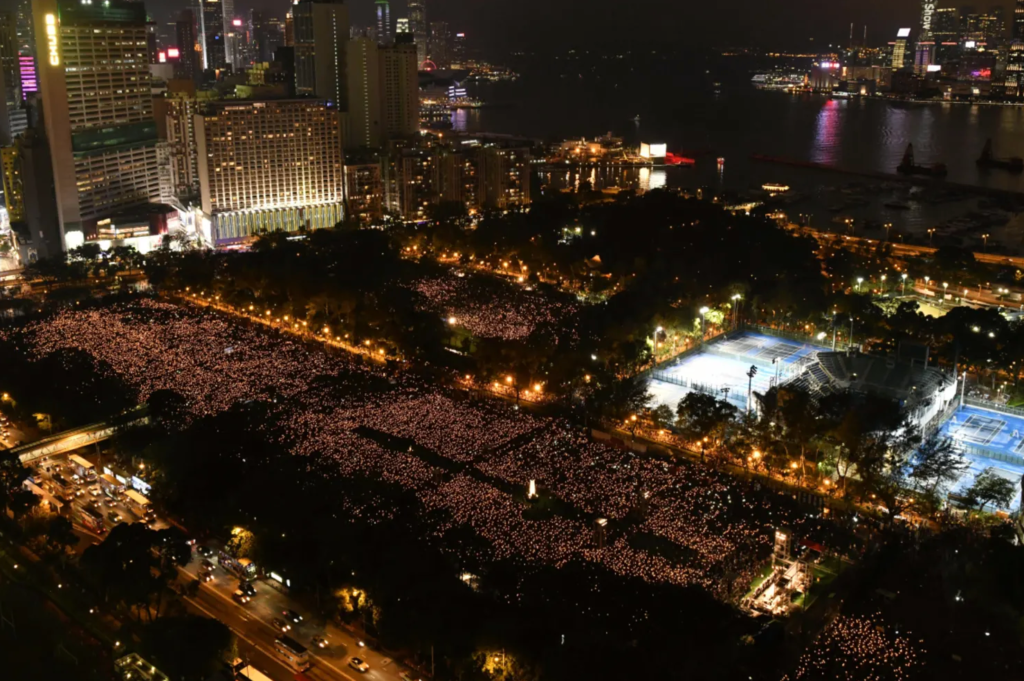
Since the CPP came into power in 1949, China’s human rights landscape has been marked by periods of mass mobilization, severe state repression, and strong control over anything that may be used as a medium to facilitate ideas and movements not in the interests of the CCP. This is the downside of a central-authoritarian government which has been responsible for the devastating politically-driven social campaigns of the Mao era and modern crackdowns of minority groups and idealistic movements. The Tiananmen Square Massacre is one instance, plus over the past ten years the oppression of Uyghurs in the Xinjiang region and heavy crack-downs on pro-democracy protesters in Hong Kong are close to my heart.
At the other end of the spectrum, Beijing has also hosted the 2008 Summer Olympics and the 2022 Winter Olympics. Beamed across the world, China took every step possible to make all aspects look like a total success, including stacking stadiums with spectators to make them look full when ticket sales fell well short and the temporary air quality measures discussed above. Same but different to Trump in the 2020s!
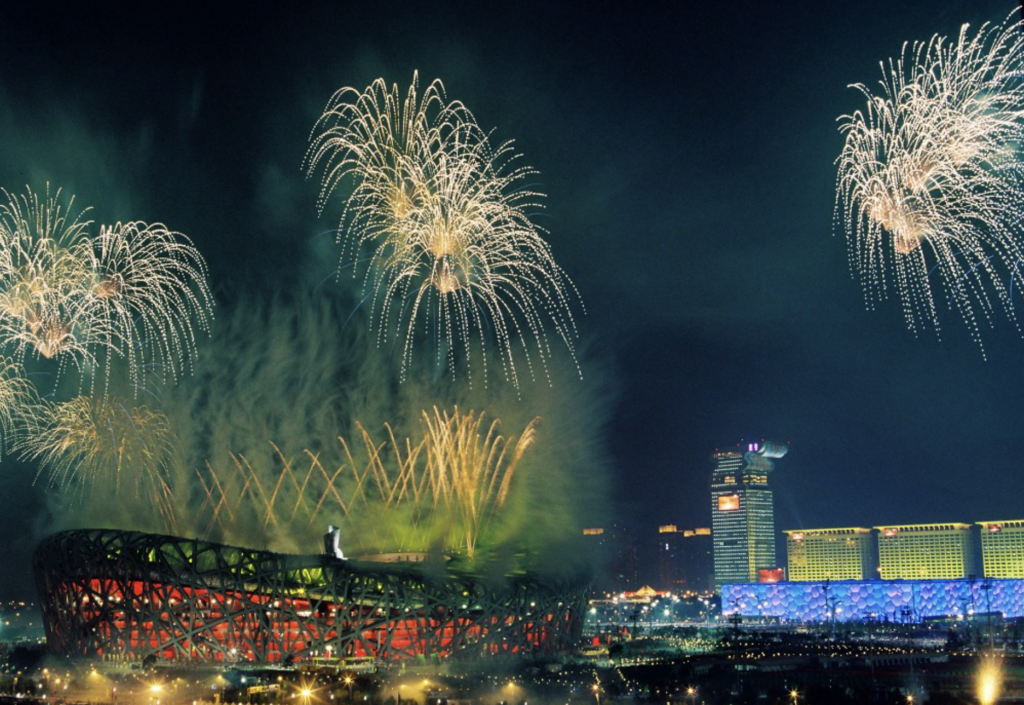
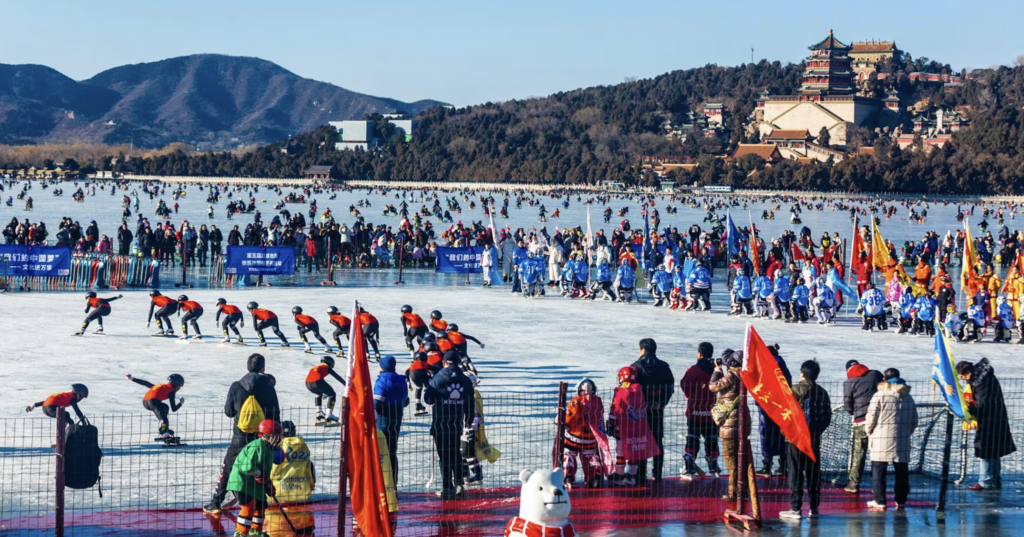
Through this phenomenal history, Beijing has built several of the worlds’ most recognisable and important sites, including Tiananmen Square and the sprawling Forbidden City (Ming dynasty), the Temple of Heaven (Ming dynasty), the Summer Palace (Qing dynasty) and some of the best preserved segments of the Great Wall of China (Qin, Han, and Ming dynasties) on its outskirts. We will explore these below and in the timeline map with photos.
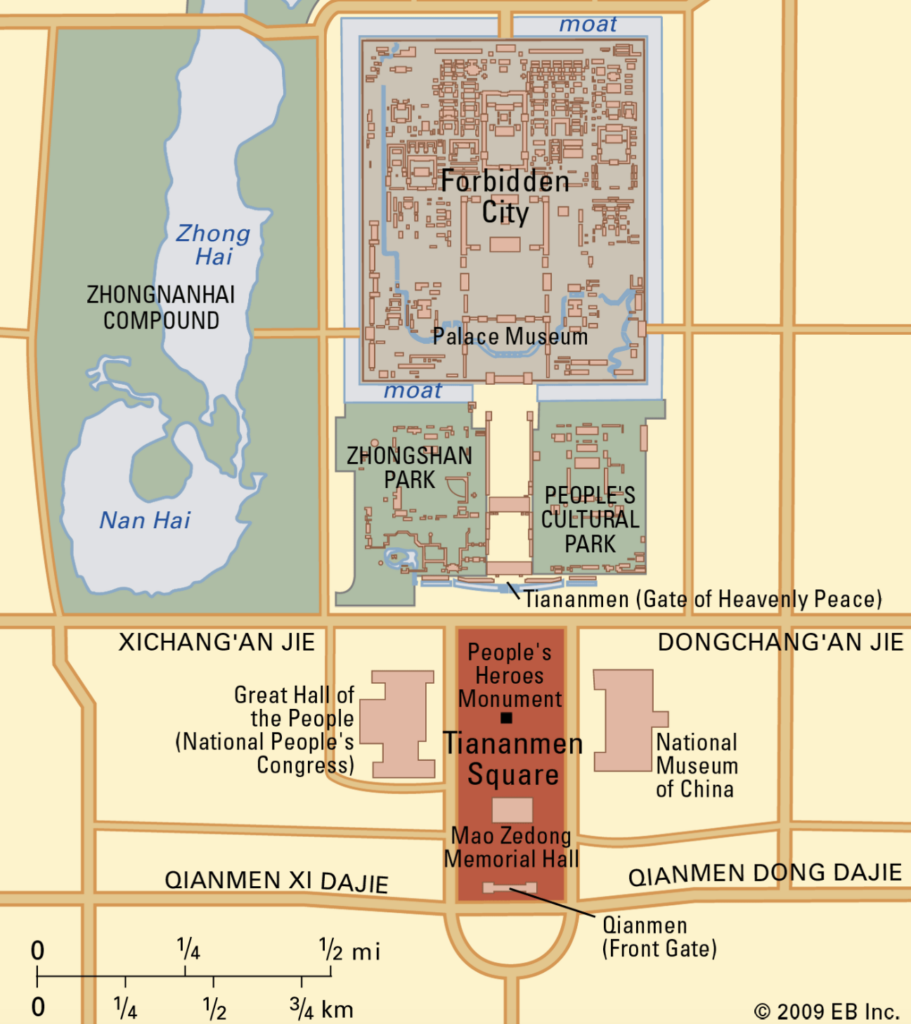
Tiananmen Square was the launch pad for our exploration of Beijing. The Tiananmen Square Massacre was only seven years prior to my first trip to Beijing and it still felt present in our group’s thoughts. For this reason and how that event’s headlines shaped our expectations, it was an exhilarating surprise to find Tiananmen Square full of chilled out people out to enjoy their time.
Tiananmen Square is a massive public plaza, originally designed in 1651 and then significantly expanded in the 1950s. On any given day, it is truely a people’s park, big and sparse with significant buildings surrounding it. Although I’m surprised to learn that since December 2021, visitors must make a reservation before entering the square area.
It has also been a focal point for protests and important events within Beijing. The “May Fourth Movement” on 4 May 1919 saw a mass student protest at the gate over the unfair terms of the Treaty of Versailles. This resulted in a massive wave of nationalism and ultimately the Chinese government refused to sign the treaty. The movement marked a turning point in modern Chinese history stimulating a surge of Chinese nationalism and led many to look toward Marxism and Socialism. On 1 October 1949, Mao Zedong stood atop the Tiananmen gate and formally proclaimed the establishment of the People’s Republic of China. In June 1989, it was the scene of the Tiananmen Square Massacre.
Below is the People’s Heroes Monument and Mao Zedong Memorial Hall (left hand photo) and the National Museum of China behind the People’s Heroes Monument (right hand photo) in Tiananmen square in 1996. In front of the National Museum, behind and to the right of the Monument, is a big 30 foot high countdown clock for when Hong Kong was to be handed back by England to China. On the day of this photo the two electronic counters are: top – 319 days, bottom – 27.56 million seconds. The Chinese writing above the counters said “The Chinese Government Resumes Exercise of Sovereignty over Hong Kong”.
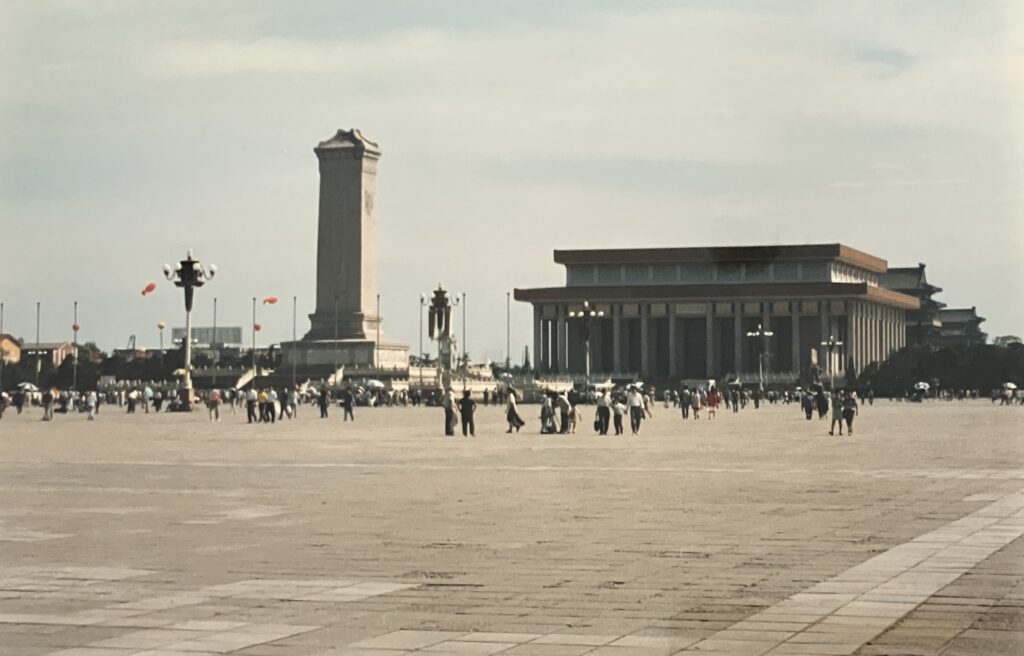
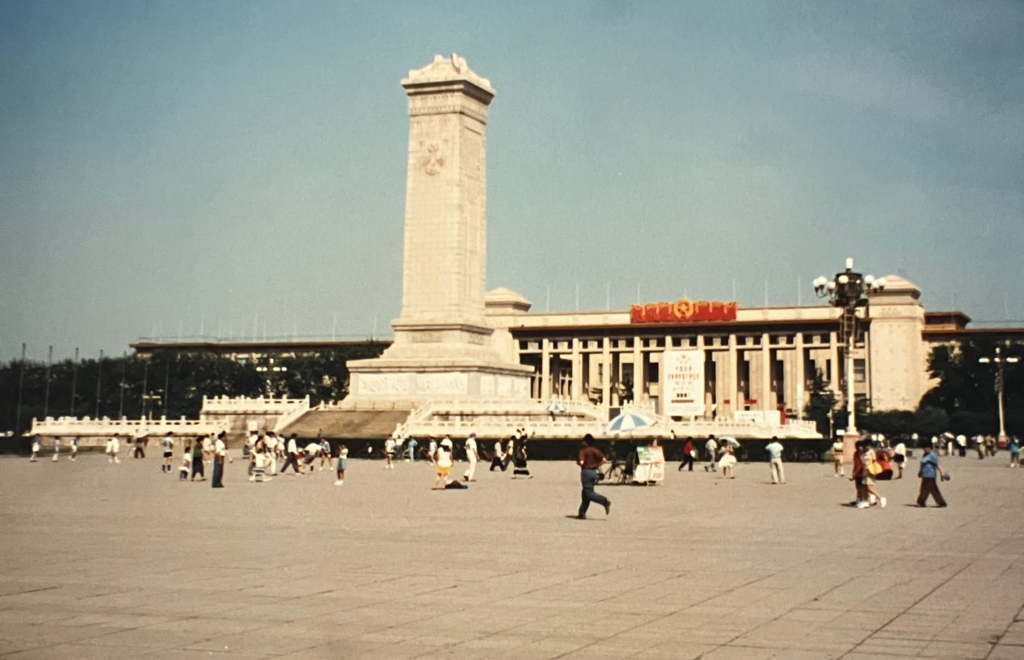
After exploring the Forbidden City for five hours, we went back into the square for sunset and I started kicking a football around with some local lads. We then turned this into a four-a-side football game for an hour or so. So much fun, everyone had a blast!
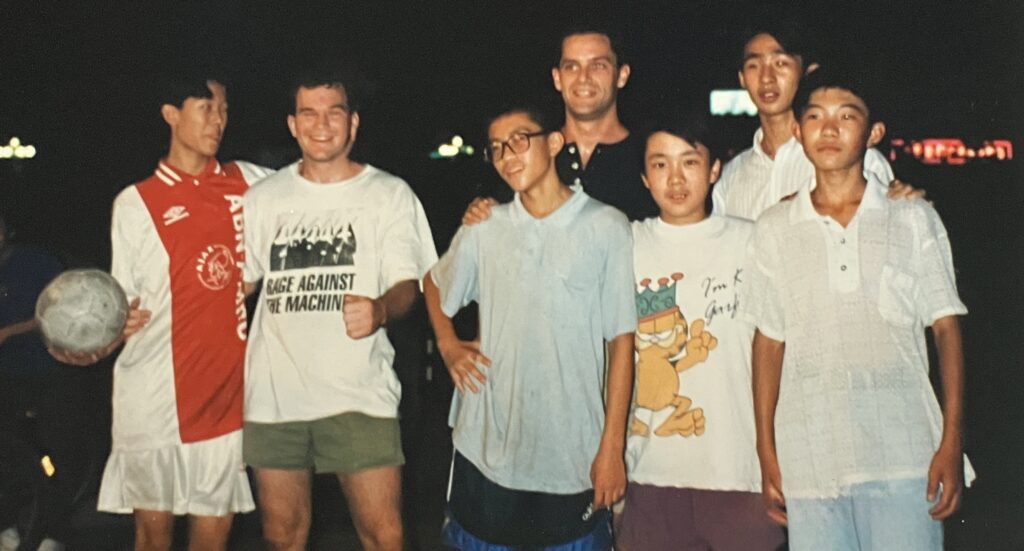
In hindsight I wonder if wearing my Rage Against The Machine t-shirt of nuns with guns was the right choice of clothing for the trip?!?!
The northern entrance to the square, the Tiananmen (Gate of Heavenly Peace), was built during the Ming dynasty in 1417 as the grand entrance to the Imperial Palace and Forbidden City. Two lions stand in front of the gate, and two more guard the bridges. In Chinese culture, lions are believed to protect humans from evil spirits. Two stone columns, called huabiao, each with an animal on top of it, also stand in front.
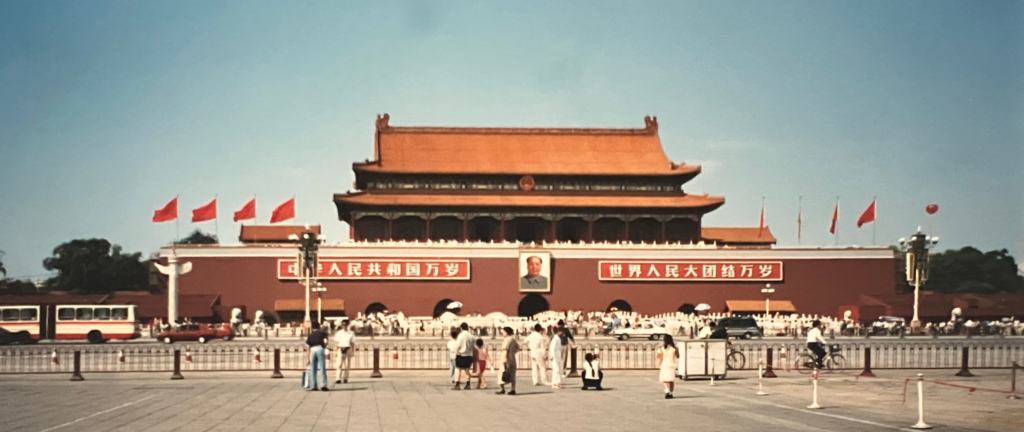
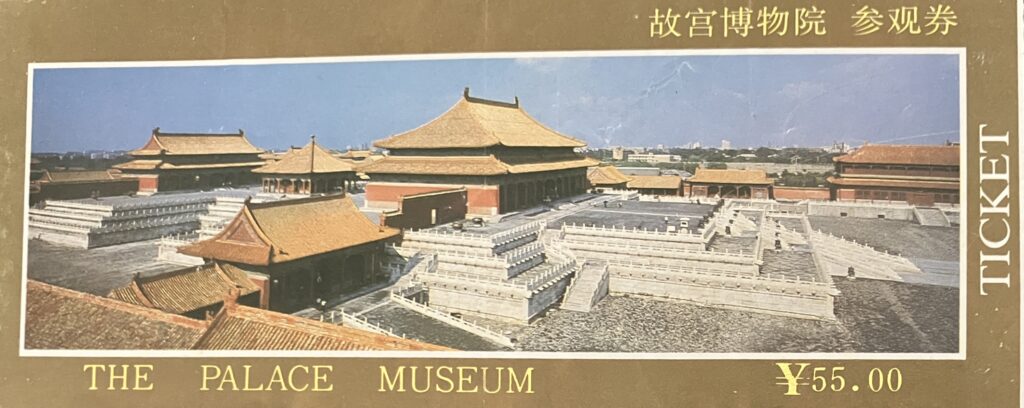
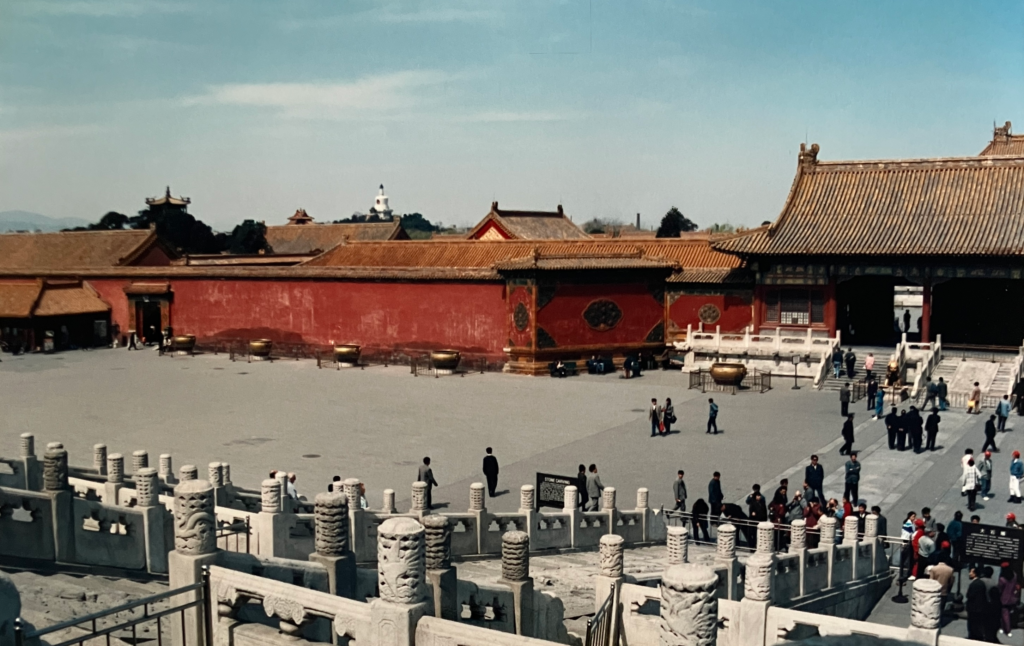
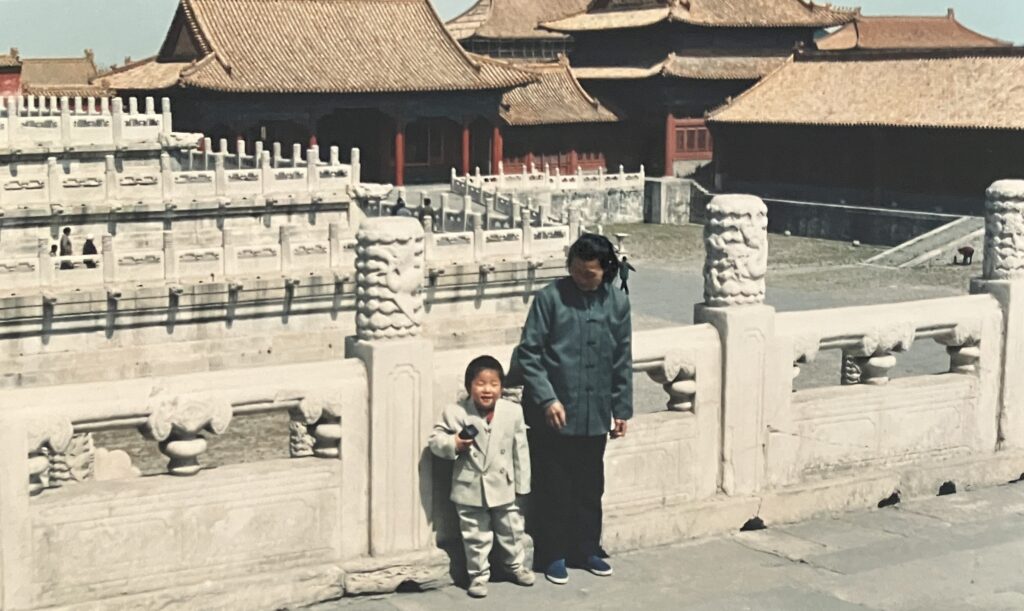
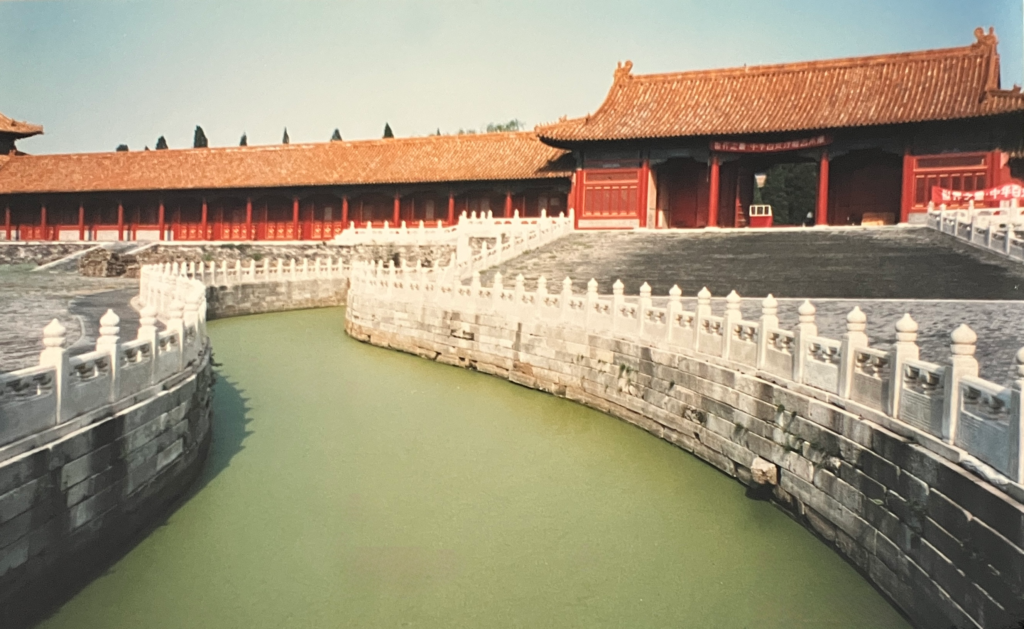
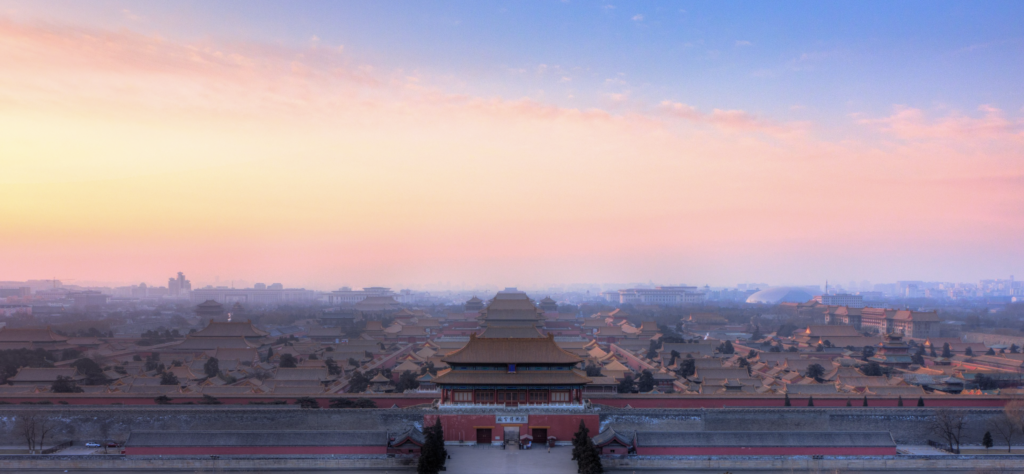
Once you pass through the Tiananmen gate, you are entering the Forbidden City. This is the former imperial palace complex situated on the central axis of Beijing and was the centre of Chinese power for five centuries. It began official use in 1420 during the Mind dynasty for the emperor and his government. It is a 72-hectare compound with 8,886 rooms and is bordered by Tiananmen Square to the South, Jingshan Park to the north and a system of moats and fortified walls. It was named the Forbidden City because access to the area was barred to most of the subjects of the realm. Government functionaries and even the imperial family were permitted only limited access; the emperor alone could enter any section at will. Today, the Forbidden City is a showpiece to the world for its unparalleled architecture and its role as the Palace Museum of dynastic art and history.
The Forbidden City ceased to be the seat of the Qing (Manchu) imperial government with the Chinese Revolution of 1911–12. In 1912, Puyi, the final emperor of the Qing Dynasty, abdicated, ending over 2,000 years of imperial rule in China. Although some of the ancient buildings were lost to the ravages of the revolution and during the war with Japan (1937–45), the site has been repaired and maintained as it was. The film The Last Emperor (1987), which portrays the life of Puyi, was filmed within the Forbidden City.
The architecture of the walled complex adheres rigidly to the traditional Chinese geomantic practice of feng shui. The orientation of the Forbidden City, and for that matter all of Beijing, follows a north-south line. Within the compound, all the most important buildings, especially those along the main axis, face south to honour the Sun. The buildings and the ceremonial spaces between them are arranged to convey an impression of great imperial power while reinforcing the insignificance of the individual. The relative importance of a building can be judged not only from its height or width but also by the style of its roof and the number of figurines perched on the roof’s ridges. Every little detail is deliberate!
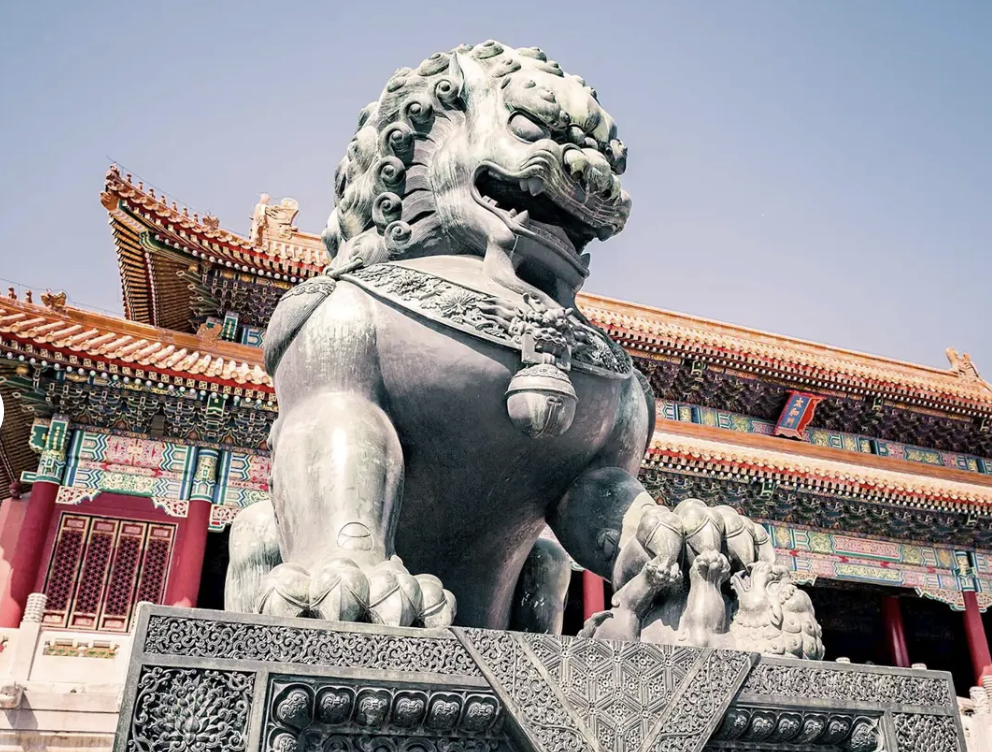
The main photo at the top of this post and also a different photo below is of a female lion within the Forbidden City complex. Chinese lion statues are traditional architectural guardians believed to protect buildings from harmful spiritual influences, bring good luck, and signify wealth. Lion imagery was introduced to China from India roughly 2,000 years ago along with the spread of Buddhism. In Buddhist teachings, the lion is a sacred protector and symbol of courage. They always stand in pairs outside important spaces like temples, palaces, and businesses. Guardian lions are heavily influenced by Taoist principles of Yin and Yang, with the statues split into distinct male and female roles. The male lion is always on the left, looking outwards, and represents the protection of the exterior structure and the broader world. He has an embroidered ball (often carved with a geometric, flower-like pattern) under his right paw. This ball represents supremacy, dominion over the world, and the unity of an empire or business. The female lion is always placed on the right and represents the protection of the people inside and the nurturing of the family. She holds a playful, sometimes rambunctious baby cub under her left paw. The cub represents the nurturing of life, the continuation of the family line, and protection of the home.
There are some wonderful ghost stories and urban legends surround the Forbidden City complex, but the most well-known centres around a vengeful spirit; The Phantom of the Concubine. According to lore, the palace is haunted by the restless ghost of Emperor Qianlong’s “Pearl Concubine” (Consort Zhen). She was reportedly drowned in a well by order of the Empress Dowager Cixi in 1900 during the Boxer Rebellion, after she voiced support for the emperor’s modernization reforms. Another is the sudden midnight coup. During the Ming Dynasty, Emperor Zhengtong was captured by the Mongols in 1449, sparking a succession crisis in Beijing. The court appointed his brother, Jingtai, to the throne. In 1457, Zhengtong was released, returned to Beijing, and successfully staged a midnight coup. He slipped into the Forbidden City, overthrew his brother, and reclaimed the throne, ending Jingtai’s eight-year rule.
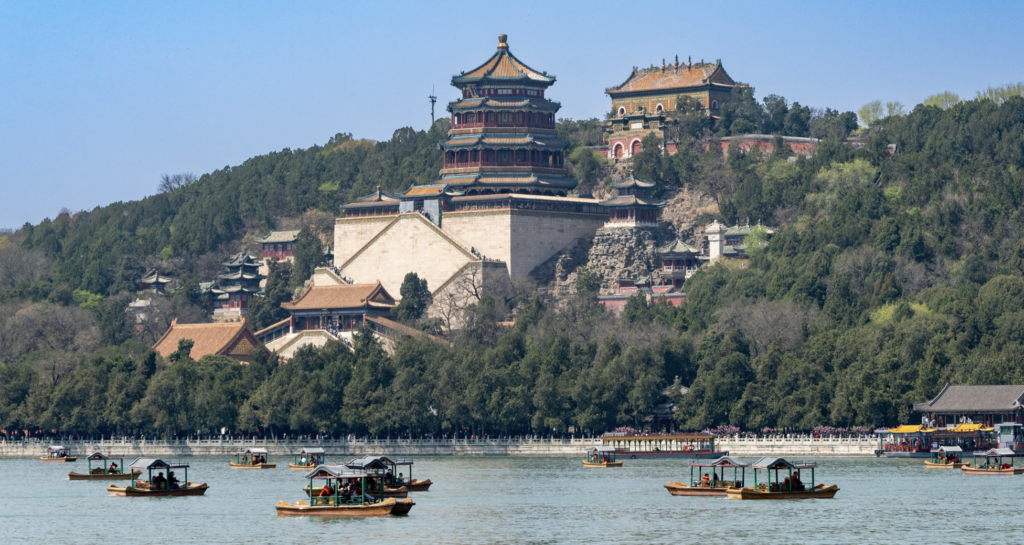
The Summer Palace is the largest and best-preserved imperial garden in China, often called the “Museum of Royal Gardens.” Built in 1750 during the Qing Dynasty, it was most famously used as Empress Dowager Cixi’s summer retreat between 1888 until her death in 1908. It is a vast ensemble of lakes, gardens and palaces covers an expanse of 2.9 square kilometres, three-quarters of which is water. The Summer Palace contains over 3,000 Chinese ancient buildings that house a collection of over 40,000 valuable historical relics from various dynasties.
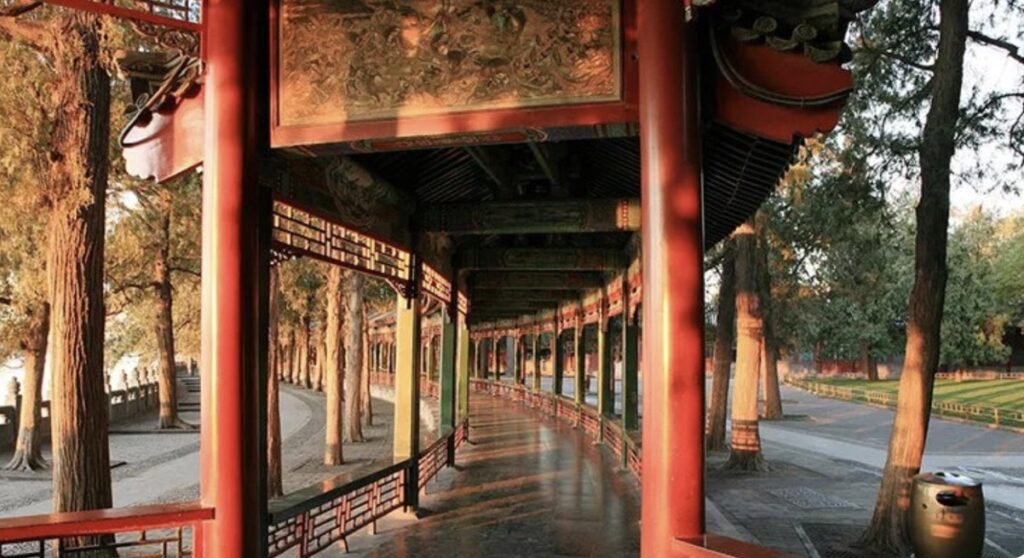
The entire Summer Palace is centred around the man-made Longevity Hill and Kunming Lake. Most of the important buildings were built along the north–south axis of Longevity Hill, according to feng shui principles, which is divided into the front hill and the back hill. There are three small islands within Kunming Lake: Nanhu Island, Zaojiantang Island and Zhijingge Island. The attractions in the Summer Palace may be divided into six different sections or scenic areas: the Halls, Longevity Hill, Kunming Lake, the Farming and Weaving Picture Scenic Area, the Long Corridor and the Central Axis area.
In 1888, after the palace was devastated by foreign allied forces, Empress Dowager Cixi wanted to rebuild it as a magnificent retirement haven. Lacking the necessary royal funds, Cixi infamously embezzled 3 million taels of silver, money originally raised to build and modernize the Chinese imperial navy. She used this money to restore the palace, which some historians believe compromised China’s naval defences during the first Sino-Japanese War.
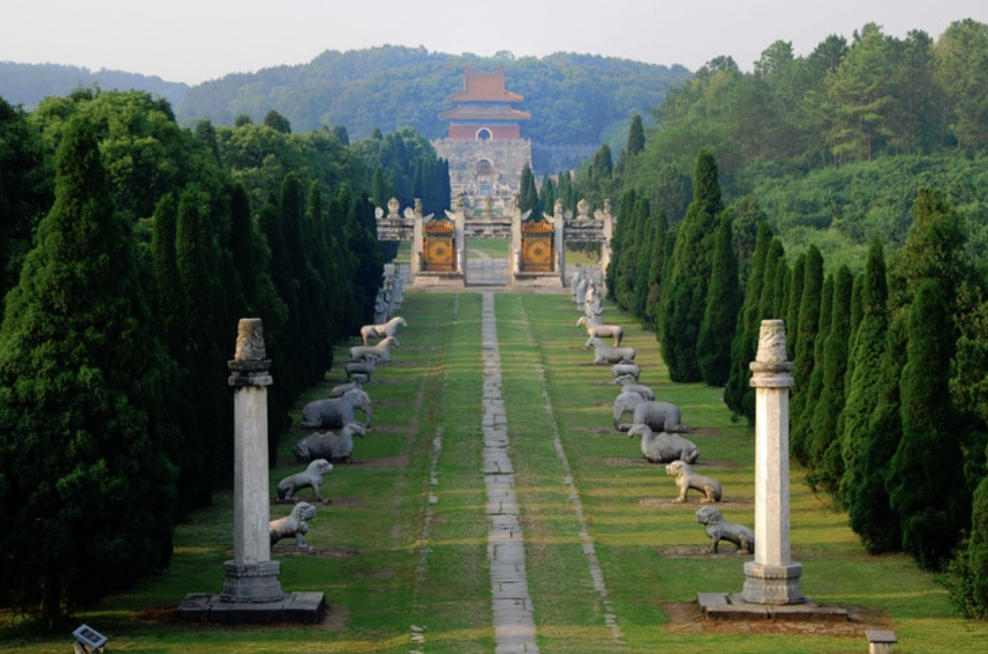
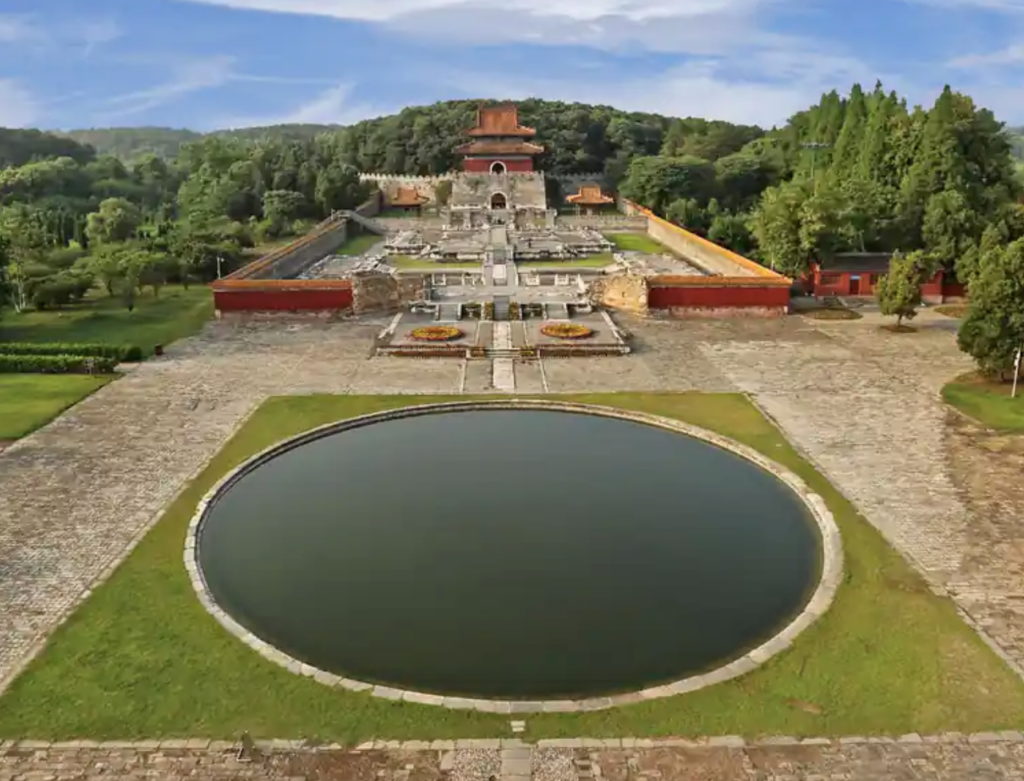
The Ming Tombs are a collection of mausoleums built by the emperors of the Ming dynasty of China. The tomb of the first Ming ruler, the Hongwu Emperor (r. 1368–1398), is located near his capital Nanjing. However, the majority of the Ming tombs are located in a cluster near Beijing and collectively known as the Thirteen Tombs of the Ming dynasty. The location of the Ming dynasty imperial tombs was carefully chosen according to feng shui principles. According to these, bad spirits and evil winds descending from the North must be deflected; therefore, an arc-shaped valley area at the foot of the Tianshou Mountain, north of Beijing, was selected.
The Ming Tombs are more than just burial sites, they are an unparalleled showcase of ancient Chinese architecture and stone-carving craftsmanship. The exquisite design of the mausoleums, combined with intricate stone sculptures along the Sacred Way, highlights the exceptional skills of Ming-era artisans. A seven kilometre road named the “Spirit Way” leads into the complex, lined with statues of guardian animals and officials, with a red front gate consisting of a three-arches, and called the “Great Red Gate”. The Spirit Way, or Sacred Way, starts with a huge stone memorial archway lying at the front of the area.
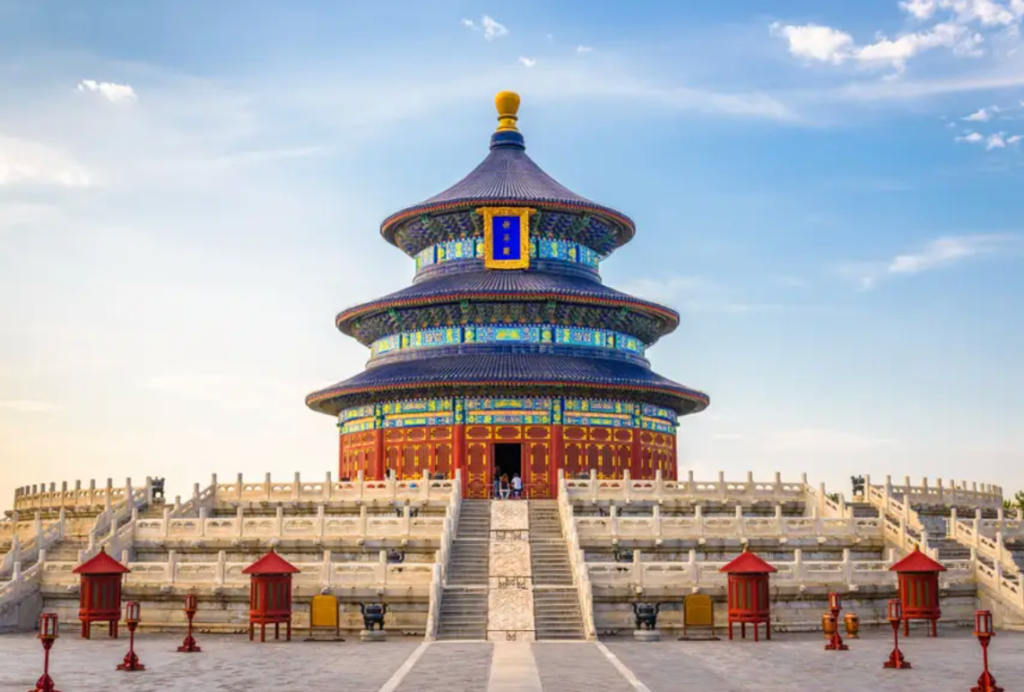
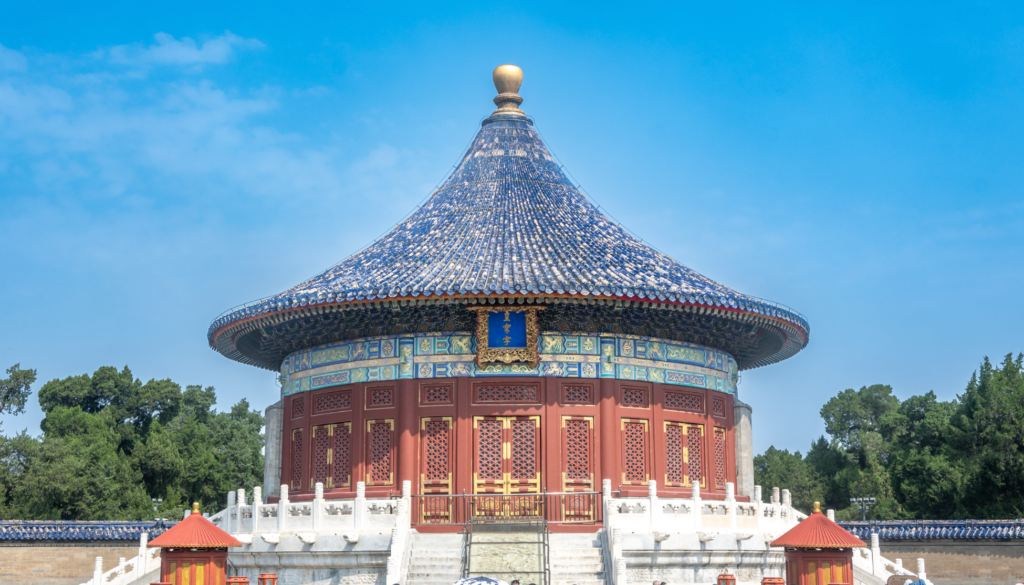
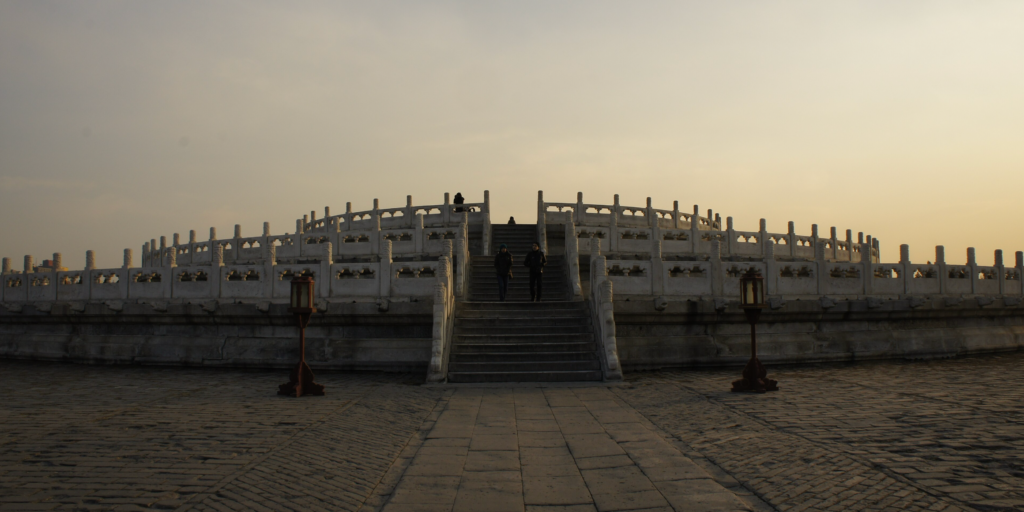
The Temple of Heaven is a complex of Taoist imperial religious Confucian buildings in central Beijing. The complex was visited by the Emperors of the Ming and then later restored by the Qing dynasties for annual ceremonies of prayer to Heaven for a good harvest. The temple complex was first built in 1420, during the reign of the Yongle Emperor of the Ming dynasty and later expanded during the Jiajing reign in the 16th century.
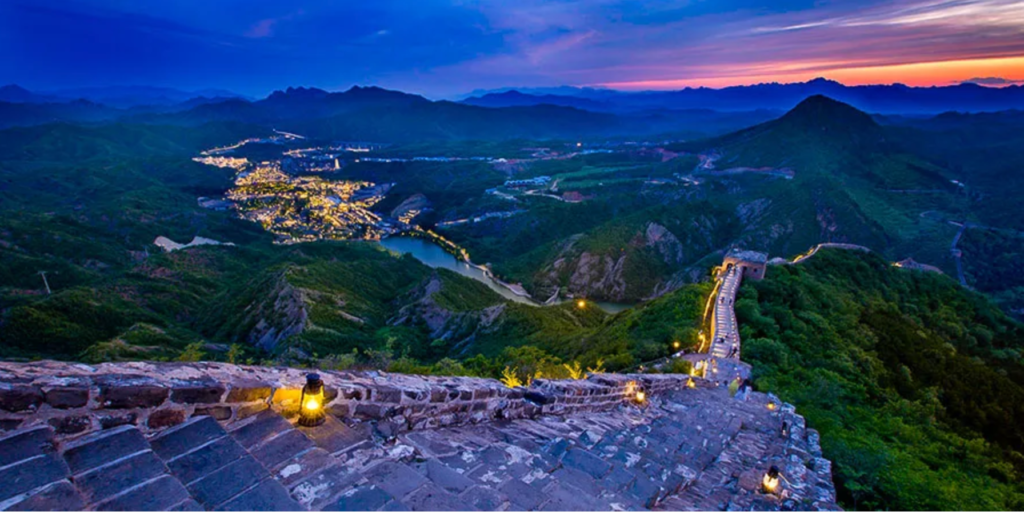
I remember our trip out to the Simatai section of the Great Wall of China like it was yesterday. It really captured my imagination and admiration as it was every bit impressive as its legend portrays.
The Great Wall of China at Simatai is located in Beijing’s Miyun District, 120km northeast of downtown Beijing. Adjoining the Gubei water town, it is unique as the only section of the wall preserved in its original Ming Dynasty (1368–1644) condition without modern restoration. As a result, Simatai features many segments which are steep with rugged terrain and have not been restored as other areas surrounding Beijing, such as Badaling and Jinshanling, have been.
In August 1996, all of the Wall and towers were accessible at Simatai however from 2010 public access to areas beyond Tower 10 was permanently blocked. This means the most famous and dangerous unrestored parts of the trail, including “Cat’s Eye Tower” Tower 14, “Fairy Tower ” Tower 15, and the “Heavenly Ladder”, remain permanently off-limits to regular tourists today.
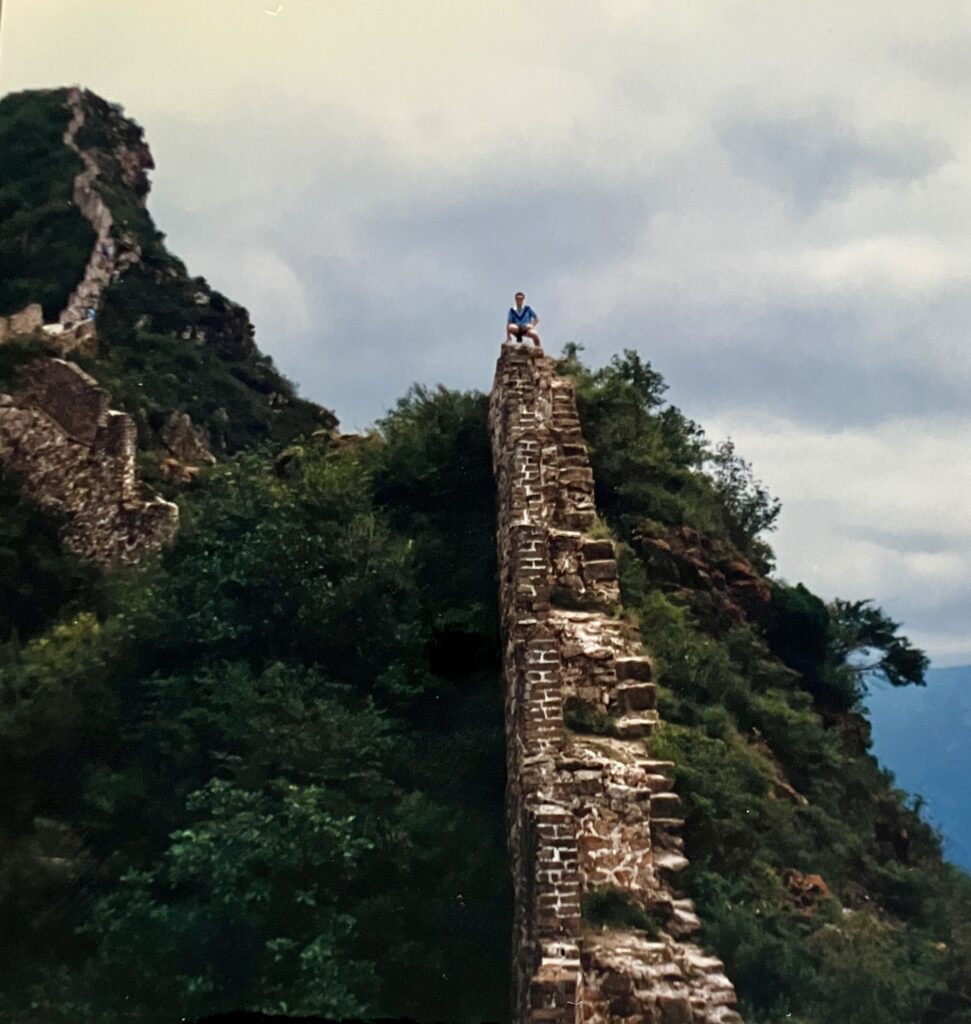
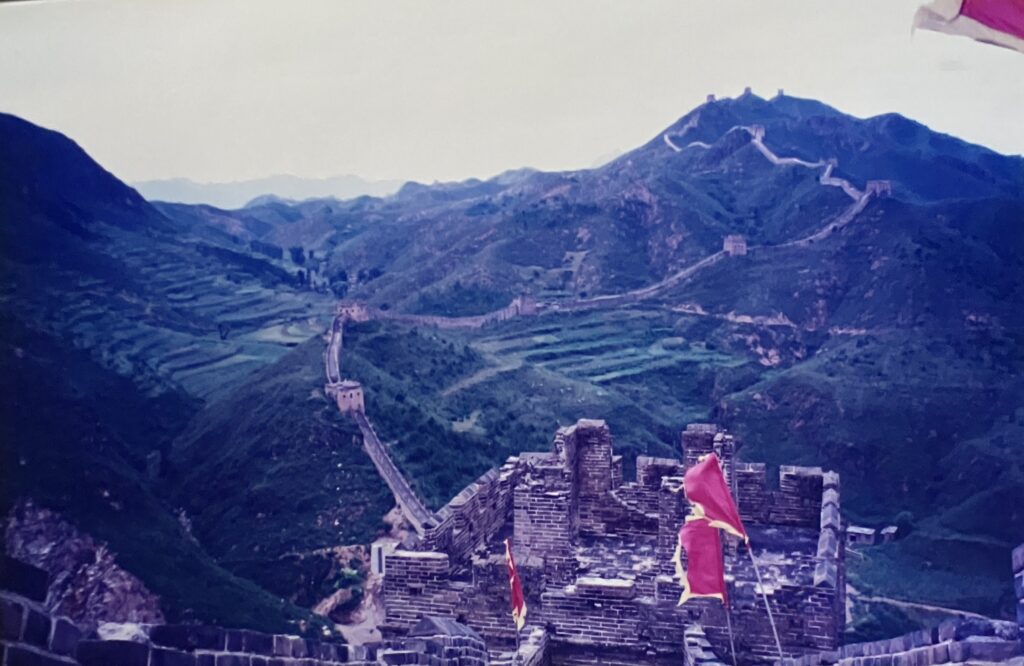
Once we arrived at Simatai, we caught the gondola cable car to midway up the hill to the Wall. We then spent most of the day exploring along the wall. Once at the top it is possible to see the Wall snaking along ridge tops for as far as the eye can see. The day flew by without realising it. Three memorable moments happened during the day. Firstly, Lach and I decided to push on and explore more of the Wall and get to the Fairy Tower (Tower 15) after lunch, whilst the rest of our group decided not to go with us. It was slow and careful going as the Wall was significantly deteriorated in many parts. Coupled with the height of the ridge line and the steep gradient, with near vertical drops on both sides in many parts. It was super dangerous to traverse including sometimes needing to crawl along. Lach and I got to a section which was one brick width with those imposing 100 foot drops on either side so we shimmied our way along on hands and knees, very slowly. At that moment, from the other direction, a Chinese lady who has probably lived in the area and walking the Wall her whole life strolls up to us and asks if we wanted to buy a pack of postcards! In hindsight, we thought it was hilarious however at the time we were shitting ourselves.
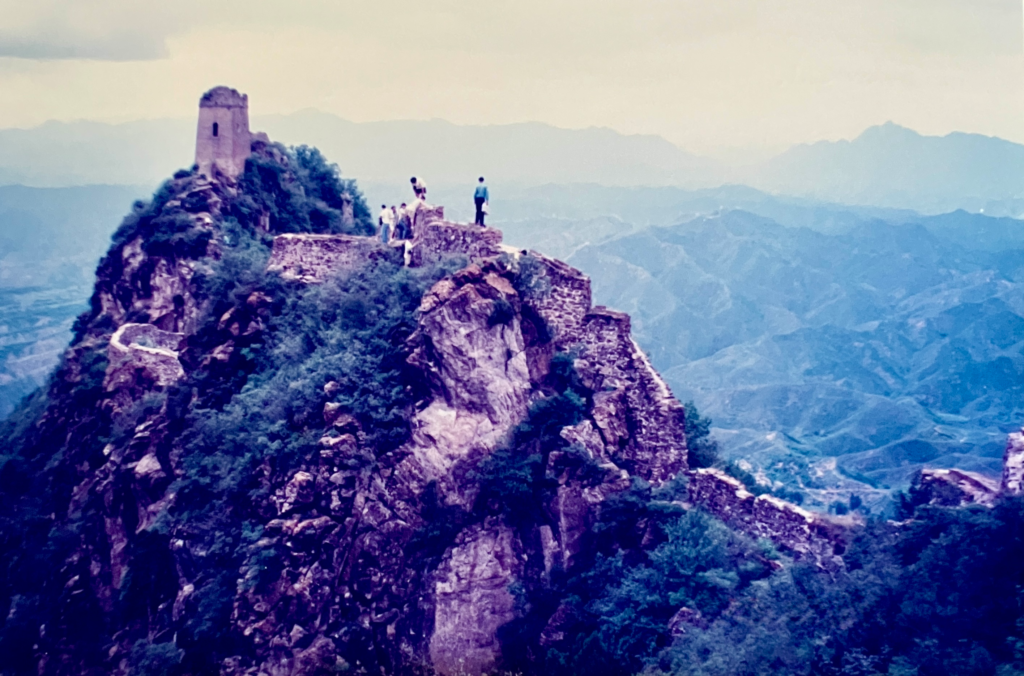
The second incident was a little later but in the same area, Lach and I got to a spot where we decided we shouldn’t push on and instead turn around. As we took a breather and some photos we could see back to where we had just come from and had to traverse again to get back to the group. As we were taking it all in, we saw a small group of Chinese visitors and one of them attempting to climb into The Fairy Tower window, 5 metres above him. It looked like he was going to make it but then realised he couldn’t pull himself up the final bit. So he tried to climb back down only to lose his grip and fall back to the Wall. At this stage, everything looked fine however he kept on falling as he couldn’t regain his balance and free fell off the side of the Wall for about 15 feet then continued to roll and fall another 20 feet through trees. Lach and I were shocked and rushed as slow quick as we could to help him and his friends. By the time we got there, his friends had helped him get back up. He was pretty banged up with cuts and bruises already showing and ripped pants at the knees but nothing more serious. We were as nervous as hell having to do it again and having just seen a guy fall off! We didn’t realise how dangerous it was. Heading outward to begin was hard but easier as we climbed up hill and didn’t realise how much more difficult it was to traverse back downwards on one brick width with 100 foot drop on both sides!
The photo below on the right was taken of the group of Chinese people minutes before the guy attempted to climb in the Fairy Tower window (top right in photo) only to fall down on the right hand side of the tower. You can clearly see in the photo how narrow the Wall was and the vertical drop on both sides.
Finally, as there were six in our group, we hired a minivan through the hotel to travel to Simatai in the morning and we pre-agreed the price and time to return back to the hotel no later than 7pm. When we got out to Simatai the driver announced we needed to be back at the minivan by 3pm as he needed to drop us back so he could pick up his wife by 5pm. We didn’t get back to the van until 4.30pm and arrived back at the hotel at 5.45pm. Once we arrived, he told us we had to pay an extra USD100. We refused and after a time spent arguing our case with him we just walked away back into the hotel. He chased after us yelling that he would send trouble after us that night! Still considered a third world country in the mid 1990s, meant tourism didn’t always flow smoothly.
I highly recommend a visit to Beijing as one of the wonderful cities of the world… just play by the rules!