Hong Kong has long embraced the ancient Chinese form of geomancy known as Feng Shui. Feng Shui translates to “wind and water” and focuses on arranging environments to channel the flow of energy. The philosophy embeds a belief that if practiced successfully it will promote prosperity, health and happiness.
The key principles of practice for Feng Shui include:
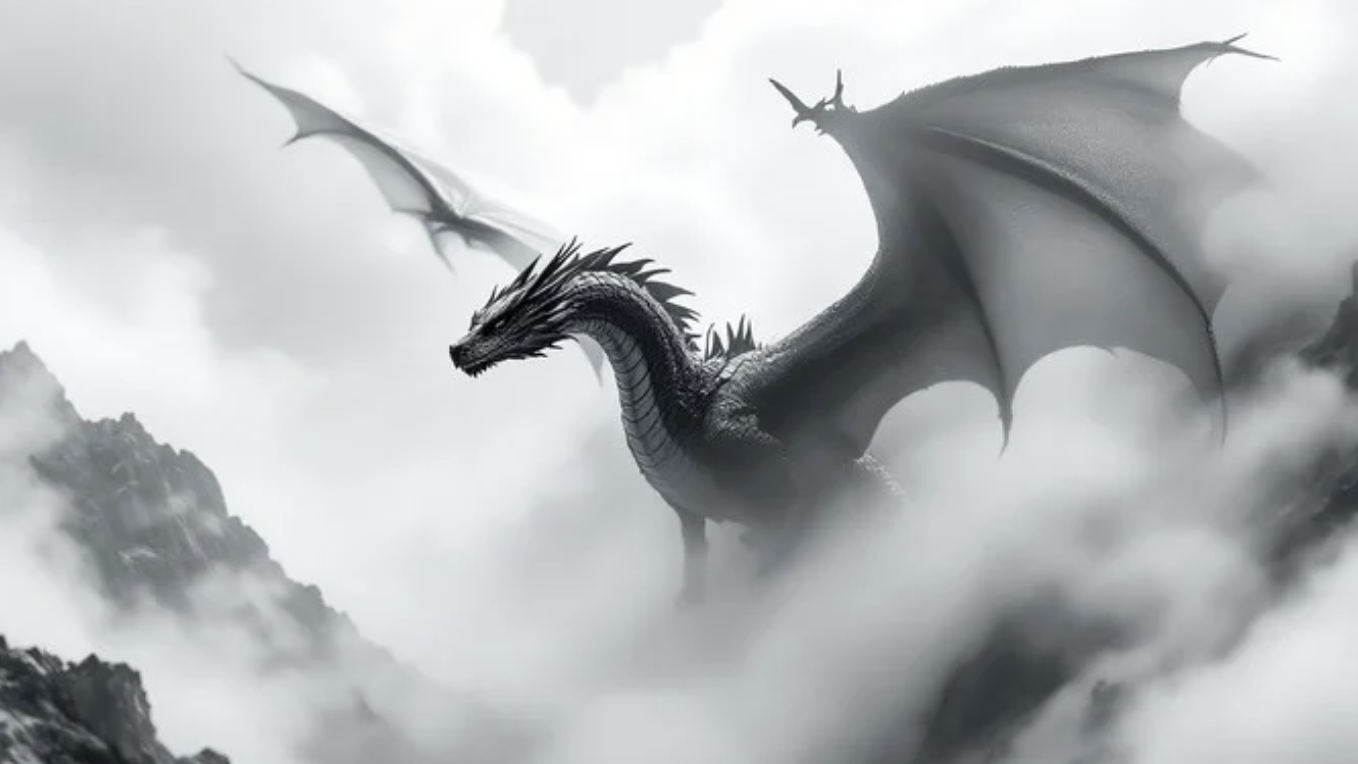
* Site selection: choosing locations with good “dragon’s breath” (Qi) to ensure prosperity.
* Harmonious design: placing objects, such as mirrors or plants, to prevent stagnation of energy.
* Avoidance of “bad” energy: avoiding sharp corners, clutter, or dead plants, which are considered to create bad, or “sha,” energy.
For Hong Kong, Feng Shui is a must for new or existing building architecture, interior design and also the design of other spaces, such as public parks. It focuses on interpreting environmental surroundings and energy flows to optimize landscapes, building orientation and interior design, to be in harmony with the environment.
Feng Shui is very serious business in Hong Kong. The government is known to allocate funding to property owners to make modifications if they have been negatively impacted by sha energy. Most businesses and property developers will have budget allocation for Feng Shui consultants. Feng Shui masters are regularly hired by developers, and can lead to millions of dollars being invested in design adjustments, particularly for high-profile projects. The principles regarding building orientation, entrance location, and water features are also widely adopted across residential and commercial sectors to avoid “bad luck”.
Lets dive into look at some of the fantastic examples of Feng Shui in Hong Kong.
Site selection
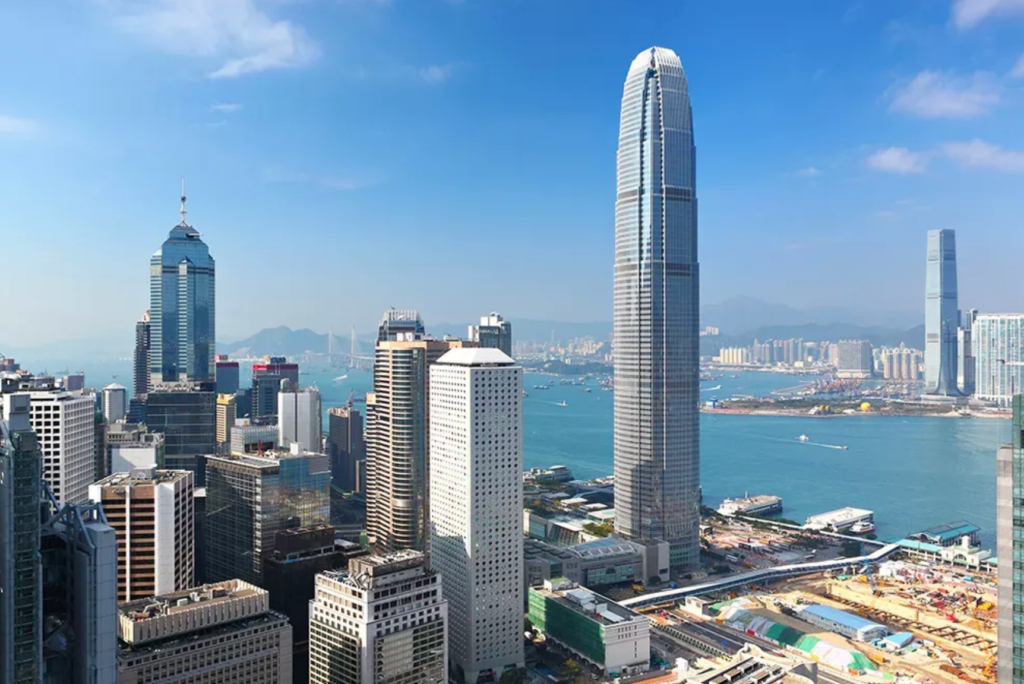
Hong Kong is believed to be ideally positioned as it allows buildings to be strategically positioned with their back to mountains and facing Victoria Harbour to invite prosperity. Being close to Victoria Harbour, on both Hong Kong Island and Kowloon sides, is ideal. When I was in Hong Kong in 1996/97, the building I worked in, Exchange Square was very close to the water front. However subsequently, land reclamation and new development has meant it is blocked. Now, the International Finance Centres (IFC) Towers 1 and 2, are ideally positioned as the most prestigious office buildings in Hong Kong. In addition, Feng Shui masters and property architects built a crown-like roof symbolizing elite status and success.
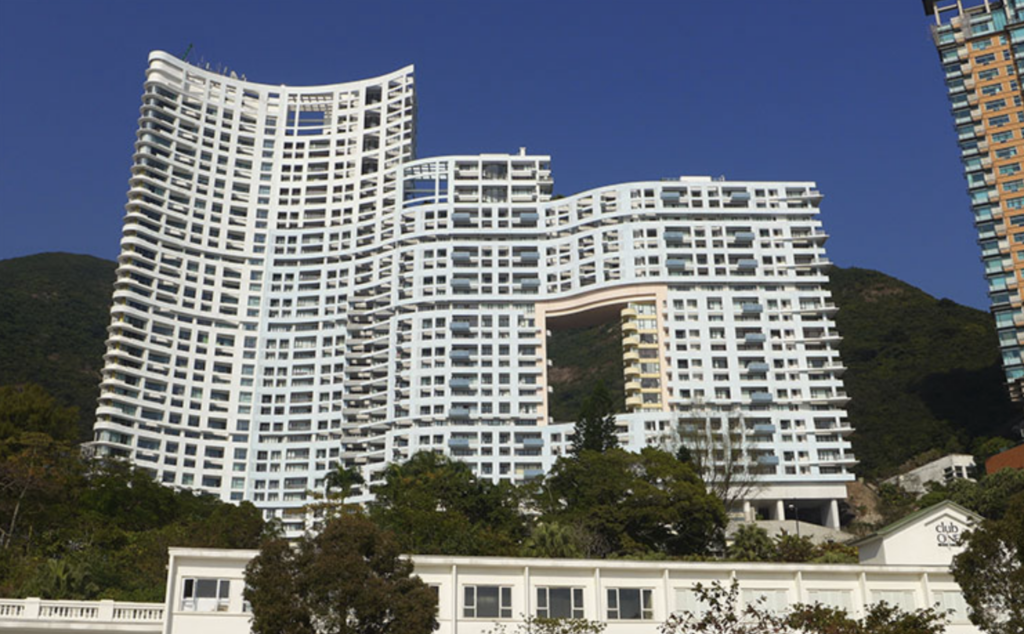
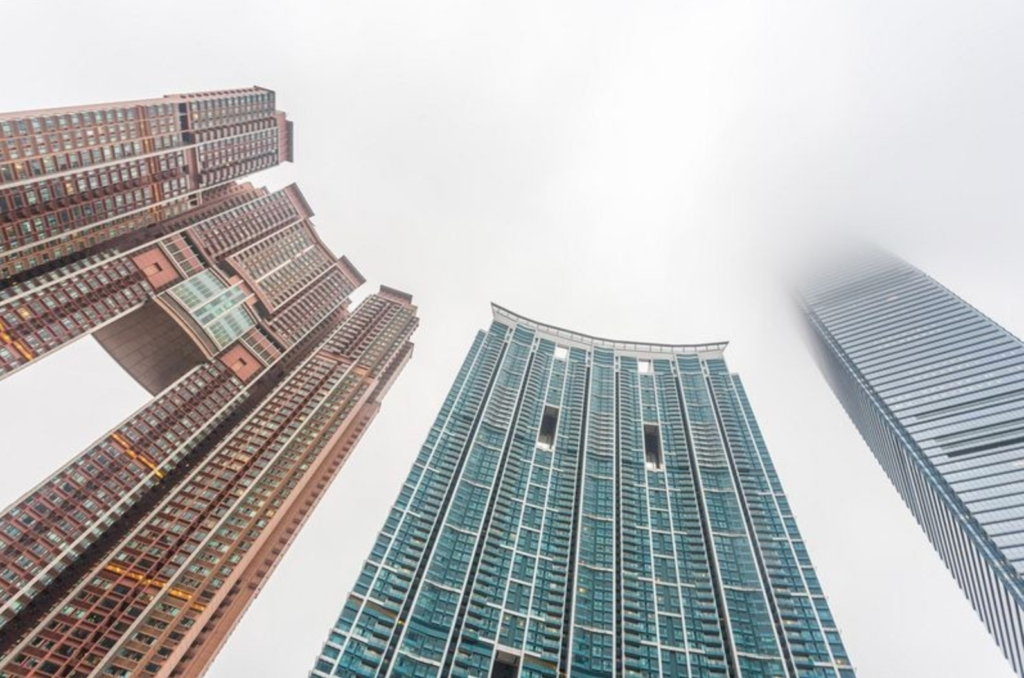
“Dragon gates” are often built as part of the architectural design within large buildings. In practice, these buildings will feature a large hole, often in the middle of the structure, designed to prevent blocking the spiritual path of dragons traveling from the mountains to the sea. When I was living in Hong Kong the best example of this is the residential building complex in Repulse Bay (below left) on Hong Kong Island. There are many more examples of buildings which have been constructed since my time in Hong Kong finished.
Harmonious design
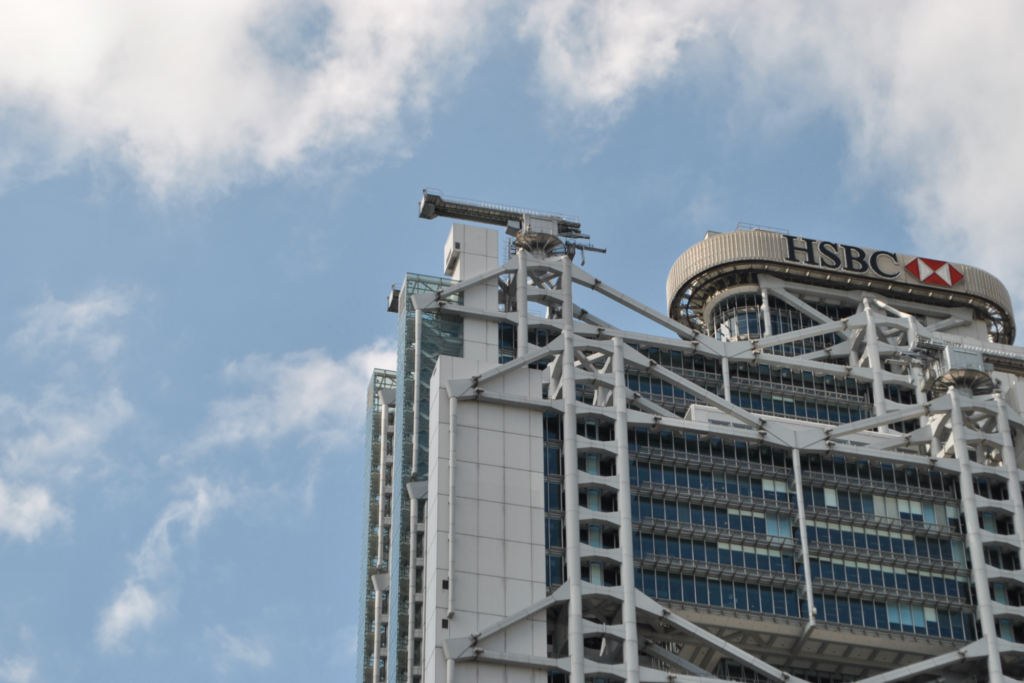
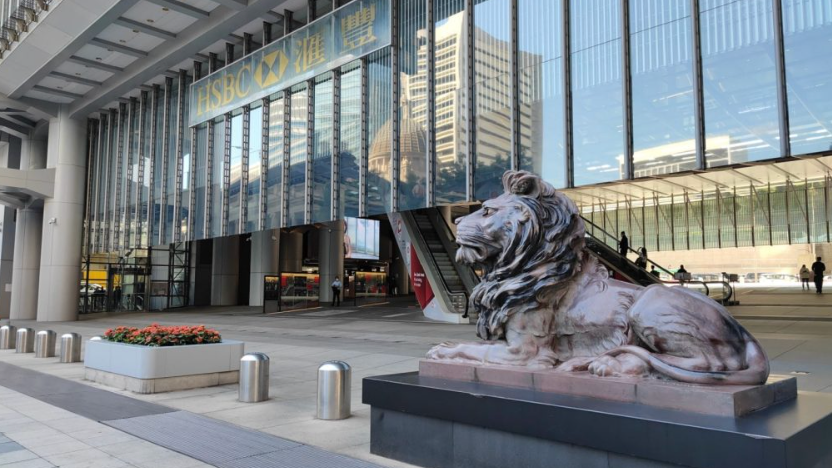
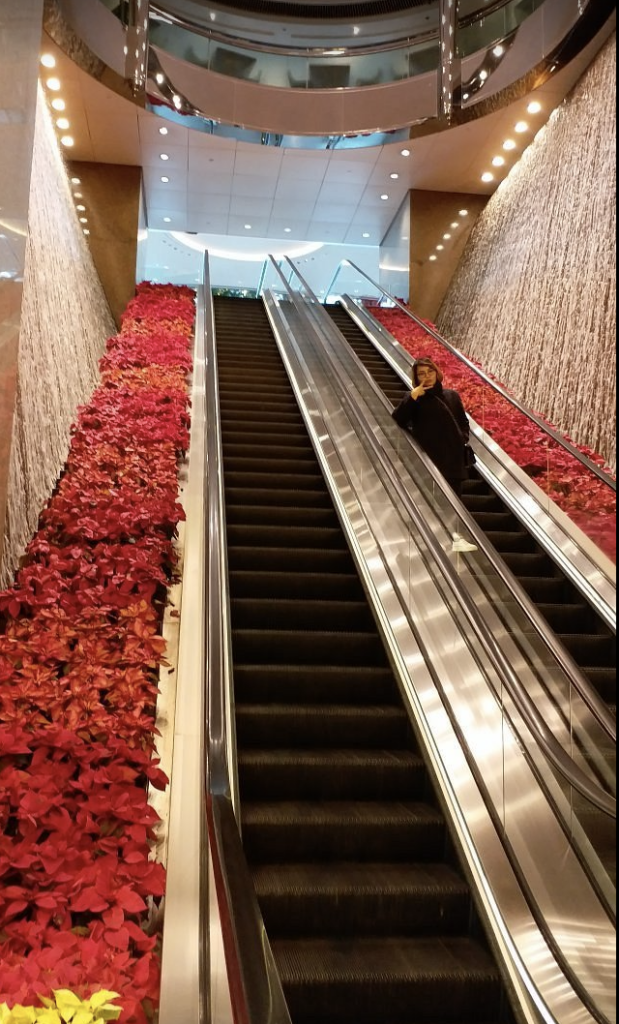
The HSBC Building is often referenced as a classic example of great Feng Shui design. It includes an open, hollow atrium allowing wind and positive qi (energy) inside. There are two bronze lion statues on the ground floor ensure prosperity and harmony. The angled escalators help prevent negative energy flowing directly in.
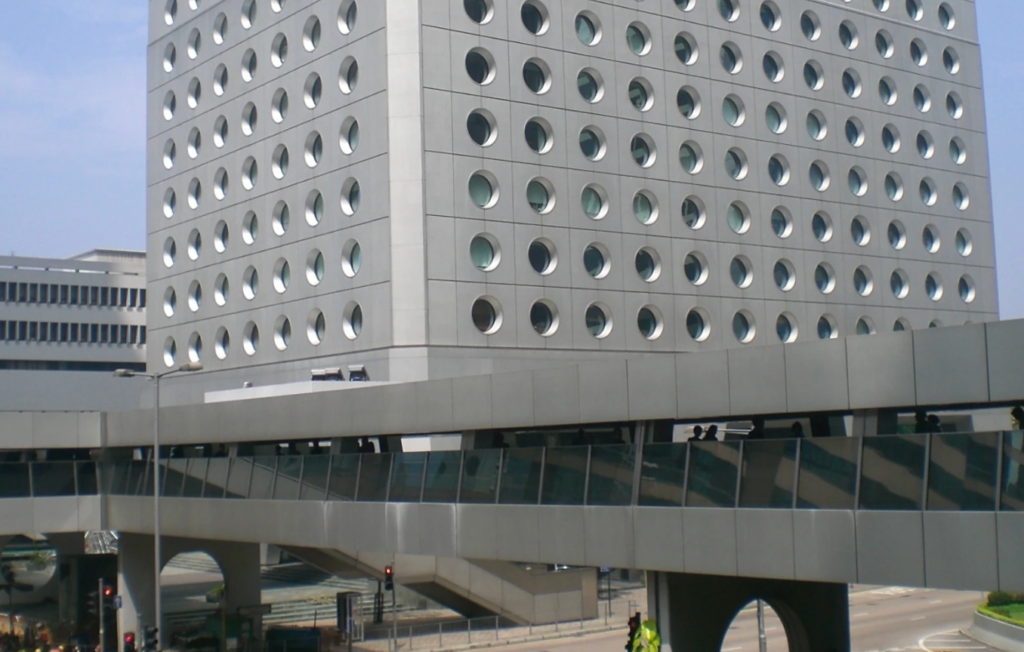
Jardine House still stands out in Hong Kong’s concrete jungle thanks to its dizzying facade of circular windows. The windows were designed as a homage to the portholes of the maritime trading business established by Jardine Matheson, one of the original “Hongs” which were the largest influential corporate groups in Hong Kong. Their round shape is synonymous with coins and the sun, symbolising both wealth and prosperity. To locals it was nicknamed the building “of a thousand arseholes”.
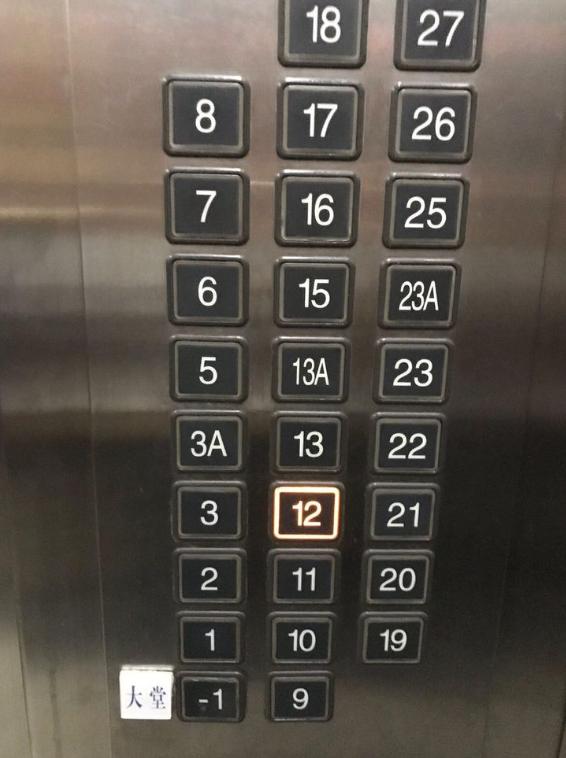
In most major Hong Kong skyscrapers and residential apartment blocks, including IFC and HSBC Building, ‘taboo floors’ such as 4, 14, 24, 40 – 49 are omitted, due to the fact that number four sounds like the word ‘death’ (死 – sǐ). They may be relabelled as 3A and 3B, for example.
The 14th floor was omitted from the May Mansion Building, 4 Shan Kwong Road, Happy Valley, which Al and I lived in for the year I was in Hong Kong.
Feng Shui design will have mirrors placed opposite building entrances and front doors which are used to reflect bad energy and evil forces from entering. The use of fountains and fishponds in office building foyers and entries are used to improve water energy and fortune.

Avoidance of “bad” energy
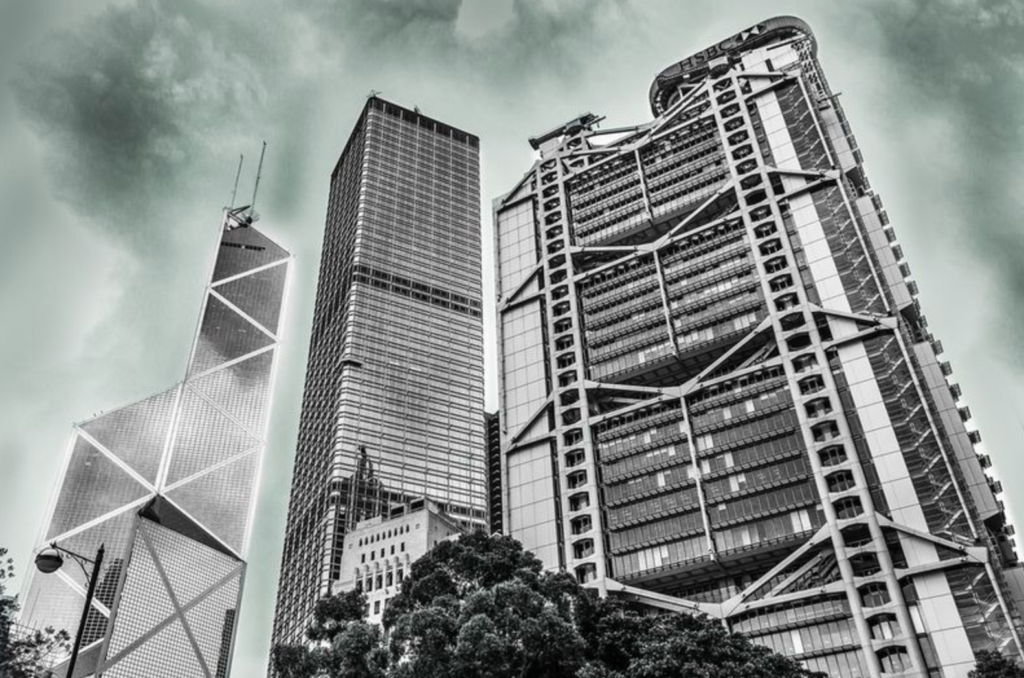
The Bank of China Building in Central, Hong Kong Island, is known for its sharp, blade-like angles that historically created sha qi (killing energy), which prompted surrounding buildings to install countermeasures. Its aggressive angles arrow hostile energy towards, amongst others, Government House and the HSBC Building. The HSBC Building has two cannons (in reality these are maintenance cranes) on its roof facing the Bank of China Building to counter the negative energy.