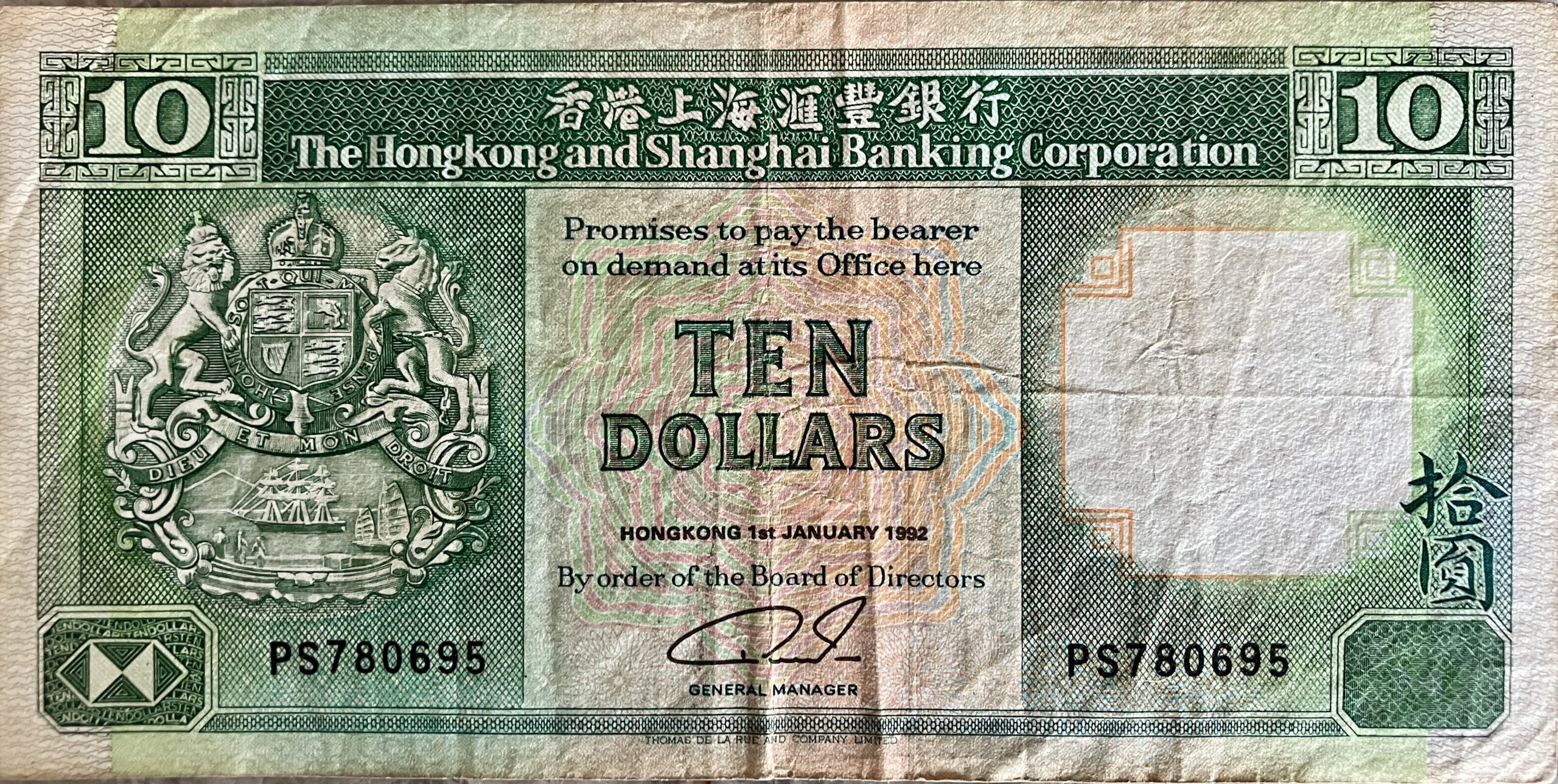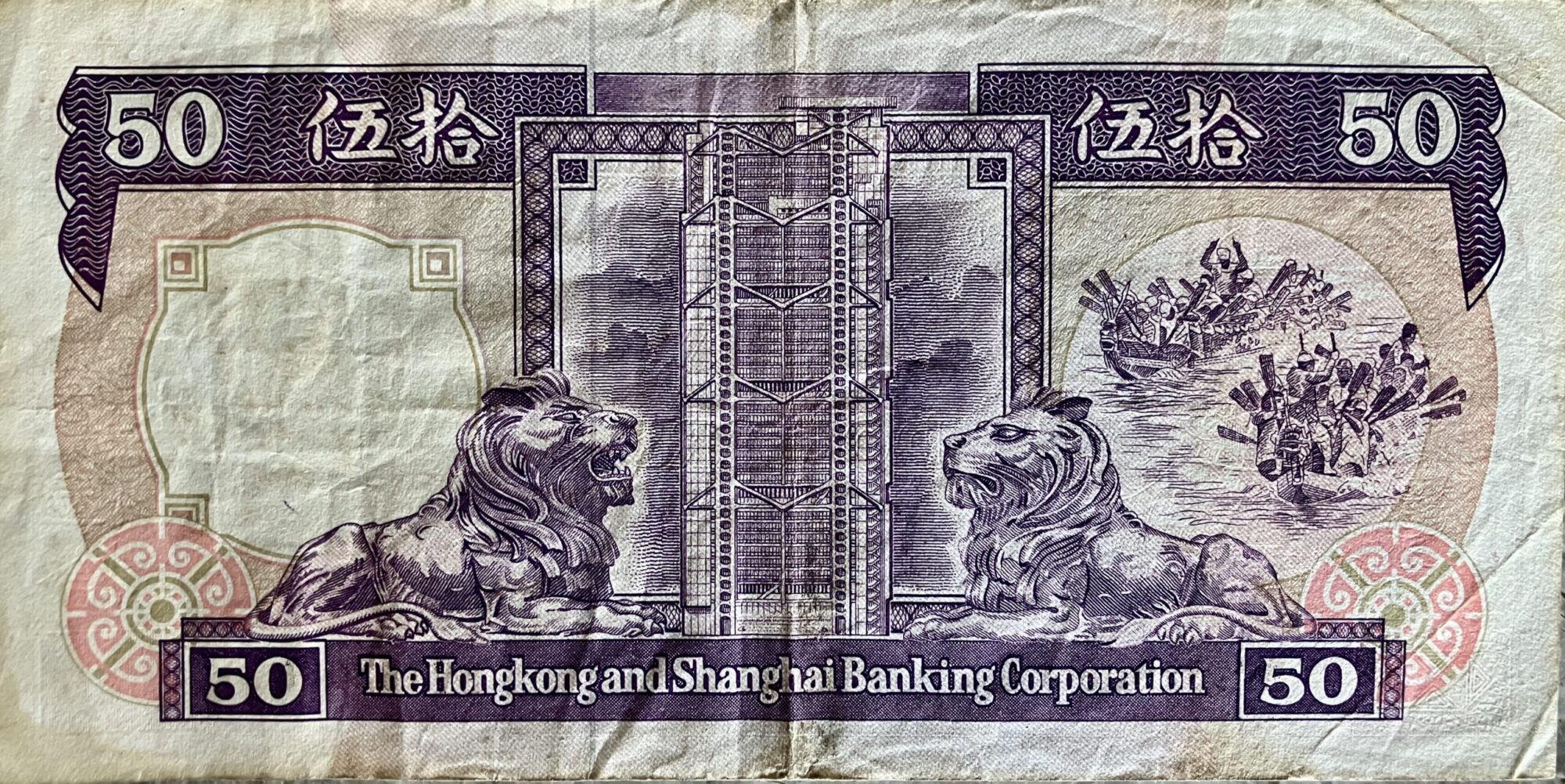
I have collected one or more notes of the currency of every country I have travelled to throughout my life. For each destination, I include a post on the history of the country’s currency and a copy of the notes I have collected.
The Hong Kong dollar (HKD) originated from a mix of foreign currencies used in the 1840s, officially introducing its own currency in 1863 based on the silver standard. It later pegged to the British pound (1935) and then the US dollar (since 1972/1983), now operating under a linked exchange rate system managed by the HKMA.
Key Historical Milestones:
- 1841–1862: Prior to formal currency, Spanish/Mexican silver dollars and other foreign coins dominated in the newly established trading port.
- 1863–1866: The first specific Hong Kong coins were issued by the Royal Mint in 1863, followed by the establishment of the Hong Kong Mint in 1866.
- 1935: The Currency Ordinance of 1935 ended the silver standard, fixing the dollar to the British pound, and made bank notes (from HSBC, Mercantile Bank of India, and Chartered Bank) legal tender.
- 1941–1945: During the Japanese occupation, the Japanese military yen (JMY) replaced the HKD as the only legal tender.
- 1972: The HKD was pegged to the US dollar after the collapse of the Bretton Woods system.
- 1983: The Linked Exchange Rate System was established, formally pegging the HKD at 7.80 HKD to 1 USD, which persists today.
Issuance Structure:
- Banknotes: Unlike most regions, banknotes are issued by three commercial banks—HSBC, Standard Chartered, and Bank of China—alongside the HK$10 note issued by the government.
- Coins: Issued by the Hong Kong Monetary Authority (HKMA) on behalf of the government, with denominations including HK$10, HK$5, HK$2, HK$1, and cents.
Source: Wikipedia