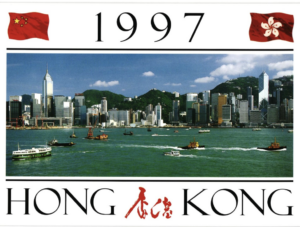
With a loose desire and a lot of curiosity about international travel, I had only been on one two week trip to Thailand before 1996 however living in Hong Kong for the 12 months leading up to The Handover in mid 1997 was the undeniable accelerator for my lifelong travel addiction thereafter!
Working for my brother, James Burkitt, at Rainmaker in Sydney Australia from late 1995, we provided a financial consulting, networking and data collection services for institutional investors, particularly pension funds and fund managers. After six months, I approached James and resigned to fulfil a promise to myself that I would go backpacking overseas as a reward for completing my economics degree, part-time whilst working as an accountant full-time. James surprised me with a counter-offer; “OK, however on your way, why don’t you go to Hong Kong for three months and open up our first international Rainmaker office”. I was 26 years old, had not been to Hong Kong, didn’t know anyone in HK and knew very little bout the financial services industry still… “sure” – how hard could it be?!?
So in late June 1996, a lad with a suitcase, laptop, some courage and a heap of curiosity left the secure and familiar home of Sydney to call Hong Kong home for a few months.
With a plan for only a three month timeframe I didn’t give much thought to what the right salary would need to be to live in Hong Kong and hence we agreed to convert my (lowly) Australian salary at the current exchange rate into HK dollars. Talk about naive!! The salary was hardly enough to live off as cost of living was much higher in Hong Kong, especially for rent but also social and night life, and regional travel.
Of course, three months is hardly enough time to achieve anything and hence it got extended by three months, then another three months, then another three months until I called time and quit for my back packing trip following the Handover in July 1997. Twelve months was a wonderful length of time for living in Hong Kong, everything work and social, and travelling across the region.
To comply with Hong Kong’s immigration requirements, I was allowed to arrive and enter under a three month tourist visa. It was then required for me to follow the process of applying through the immigration office for a twelve month working visa. I made the application and attended the immigration office twice, lining up for hours each time, as well as a dozen phone calls following up as to how it was progressing. Despite this effort my application did not progress, seemingly lost in someones in-tray. So… the other way to stay in Hong Kong for longer was to leave and return to have your passport stamped for another three months tourist visa. This was as simple as jumping on the hydrofoil ferry, the Far East Hydrofoil, for the one hour trip from Hong Kong to Macau for the weekend and returning Sunday night ready for work the next day. I never did get the official working visa, just made quite a lot of trips out of Hong Kong and return!
I arrived in Hong Kong with a flu and failing voice. I was to be met by Sarah Fuller who, working for a client of Rainmakers’, I had talked to a couple of times before landing. Sarah was late which left me wandering around Kai Tak Airport for an hour swamped by thousands of local Hong Kong Chinese and travellers with the occasional “gweilo” (鬼佬). An immediate impression was indented!
Landing at Kai Tak Airport was one of the special experiences of my time in Hong Kong. Located immediately North across the narrow waterway from Hong Kong Island, it was regarded as one of the most challenging landings for pilots. They would line up with a marker board and then be required to manually make a 45-degree visual turn at only 500 feet, often passing between residential buildings in the lead up to landing. In July 1998, Kai Tak Airport was replaced with the new much larger Hong Kong International Airport on reclaimed land known as Chek Lap Kok, 30 kms West of the old airport.
Once Sarah picked me up we dropped my bag at her apartment and went straight out to clubs in Wan Chai, starting with The Flying Pig followed by Carnegies. We were out until dawn, dancing on bar tops to Happy Hour by The Housemartins which had just been released, drinking and chatting to anyone and everyone. Sensational. Once in one of these bars you could as easily be in London, New York or Madrid which is the way it was with expats in Hong Kong recreating the western scene.
Gweilo is locals slang for white or foreign man and translates to ghost man or devil man. Not a term of endearment by any stretch! As a gweilo in Hong Kong you could live and work with partial assimilation learning a couple of hundred Cantonese words, some local meals and other local customs otherwise living a life not too dissimilar to home.
Hong Kong is one of the worlds’ great cities. Daunting in its size and intensity, culturally rich and fascinating, a great place to work and achieve a career (although easier before the Handover than after), and a stack of fun.
Hong Kong was literally at the end of being under British rule, which had been in place for 156 years. In 1841, following the First Opium War, the Treaty of Nanking ceded Hong Kong Island from China to Britain in perpetuity. Later treaties added Kowloon and leased the New Territories for 99 years. During this era, Hong Kong transformed a small coastal area into a global financial hub through a mix of colonial governance and free-market capitalism. With the New Territories lease expiring, the UK and China signed the Sino-British Joint Declaration in 1984, leading to the transfer of sovereignty on 1 July 1997; The Handover.
The economy was underpinned as a major international trade and financial center, heavily relying on re-exports, with 92% of IPOs in the prior year being mainland Chinese companies hence well entrenched and reliant on mainland China leading into The Handover.
In 1996, it had roughly 6.2 million people and a median age of 34 years. 95% of those inhabitants were ethnic Chinese and 60% legally residents of Hong Kong. Inhabitants are crammed into a land size of roughly 1100 km² although much of that is the New Territories which in not populated. Hong Kong Island is only 80 km². Guinness World Records recognises Mong Kok within Kowloon as the highest population density in the world with an estimated 130,000 people per km².
With the high population density as you can imagine there were issues of continual traffic jams, air and water pollution, and over-crowding. No one dares go swimming in Hong Kong harbour!
Transport options for getting around Hong Kong were varied and at times incredibly rewarding. Whilst the traffic congestion was always frustrating the yellow taxis had there own charm, could get you anywhere and were super cheap. Most taxi drivers were traditional Hong Kong Chinese and could not speak English requiring you to learn the hundred or so Cantonese words for instructions… Shan Kwong dou (Shan Kwong Road), Juen-jor (left), Juen-yoh (right), Jik-hang (stright), Lido (here), M goi (thank you). The drunken slur often became my biggest issue!!
Perhaps the most widely used public transport option in Hong kong is the Mass Transit Railway (MTR) system. The MTR is a system of underground tunnels and tracks which has operated since the late 1970s. It is incredibly efficient, high-capacity and relatively cheap option. A train will arrive every second minute without fail. Compared to the rail network in Sydney it is chalk and cheese! However, during peak hour on work days it is so full there are rail workers whose job it is to push people in so the doors can close. Run up and leap.
There is an extensive bus network around Hong Kong… nothing exciting to report there. Of much more interest is the historic tram network which operates on the Hong Kong Island. It began its operations in 1904 and is one of the world’s few fully operational double-decker fleets. I would catch the bus from Happy Vally to Central on the way to work in the morning as it was quicker however on the way home I would catch the tram as it has a wonderful charisma and is unique. It would take much longer time but was so much fun!
One of the traditional fun ways to travel in Hong Kong is on The Star Ferry across Victoria Harbour from Central on Hong Kong Island to Tsim Sha Tsui in Kowloon. The Star Ferry has been a passenger ferry operating since 1888. It is incredibly cheap and takes no more than 10 minutes across the harbour however the panorama of Hong Kong, especially at night, is stunning.
I worked in arguable the best office block in Hong Kong at the time, Exchange Square in Central, Hong Kong Island. My office had a great view towards the peak. The building was close to the water front. Since my time in Hong Kong there has been more land reclamation and the International Financial Centre complex and new MTR station have been built.
Given the near year-round heat and humidity Hong Kong has a network of above ground inter-connecting walk ways which weave through buildings, bridge across to the next and weave through again. From Exchange Square I could walk to any 20 buildings depending on where I needs to get to and not have to go to ground level. It took a while of exploring to learn the short cuts but was super efficient and saved a lot of sweating once mastered! There is also the Central – Mid Levels escalator, which is the world’s longest outdoor covered escalator system, stretching 800 meters and carrying over 80,000 people daily.
The cost of living in Hong Kong was high, much higher than Sydney, at least in 1996. Local food, travel in taxis and trams, and other locally sourced items were cheap however any food and goods imported from Australia, UK or US was expensive. The biggest draw on my budget however was rental accommodation. Not long after arriving I met Al Chalabi, who was from the UK and also recently arrived, and we decided to share an apartment together. Al was my flatmate for the entire year I was in Hong Kong and we became great mates. We rented a 55 m² flat in May Mansion, 4 Shan Kwong Road, Happy Valley for HK$16,500 / month (A$2,750 / mth in Australian equivalent)… astronomical!!! It was a tall skinny building and we were on the 18th floor with a view straight down the valley towards the the racecourse. As you can imagine, that size for two bedrooms doesn’t leave much room for anything else. We still managed to have parties, dinners, the Happy Valley Ironing Board Surfing Championships, Wednesday night races on a regular basis and a whole bunch of fun.
Hong Kong culture is a unique mix of traditional Cantonese heritage and Western influences, shaped by the 156 years of British rule. Often described as “East meets West,” it combines Confucian family values, high-density urban life, and a “can-do” entrepreneurial spirit. Key aspects include Cantonese language, bustling nightlife, dim sum, and a dedication to both finance and tradition. British influences were dominated by the rule of law, the English language, freedom of speech and business etiquette. Chinese influences include Feng Shui being critical in architecture and daily life, alongside traditional Chinese medicine and honouring ancestral customs.
Whilst the traditional and majority spoken language is Cantonese for Hong Kong Chinese locals, since the Handover increasingly schools are teaching Chinese in Mandarin instead of Cantonese. Within traditional Chinese families, they would typically live together in close-knit units, often with many members living within very small apartments.
Cantonese cuisine in Hong Kong was great and endless local restaurants to choose from. The main options include dim sum at yum cha, roasted meats, seafood (far from my favourite!) and the fast-paced no frills tea restaurants. There were also many western oriented restaurants across all the typical cuisines. To cook at home, fresh veggies from a local market was cheap, seasonal-fresh and fantastic. Buying meat you could rely on would be imported from Australia or New Zealand however was expensive so not a common purchase.
Renowned for its efficient, hardworking, and resilient population, Hong Kong Chinese place a high premium on entrepreneurship, efficiency, and professional success. They work long hours, starting at 8am and finishing after 6pm each day during the work week and also half a day on Saturday. Having said that they have many more holidays than in Australia, UK and USA. Major celebrations include Lunar New Year in February, Mid-Autumn Festival, and the Dragon Boat Festival in June.
Given the intensity of life in Hong Kong, every time there is a holiday, even a three day long weekend, expats would travel out of Hong Kong to somewhere within the region. During my year in Hong Kong I made trips to Beijing, Shanghai, Shenzen, Yangshou to Guilin all in China, Macau, Cambodia and Vietnam. I cover these in more detail in [Asia Region 1996/97] timeline and individual countries [China, Cambodia, Vietnam] in destinations.
As an expat in Hong Kong at the time, being a significant minority within the population, it lead to expats being both transient and extremely open to new friendships. Most expats were from Britain, Australia, Canada, and the USA. Many expats were not in Hong Kong longer than two years however a portion decide to stay on to achieve permanent residency achieved by living there for seven years. As a result, it helped me settle into to Hong kong quickly and confidently. I formed a number of different friends groups who would be open to travel, Hong Kong social life, exercise, hiking, etc… It was a special part of living in Hong Kong.
With this in mind, rarely would I do something without someone with me or being part of a group. There are a wide range of options for hiking in Hong Kong. On Hong Kong Island, we would do Dragon’s Back trail and Victoria Peak Trail. In the New Territories, Sai Kung Country Park was a great spot for a full day of travel, hiking and comaraderie. Often I would hike or run with Al or Lachlan, Sebastian, Tim, Rob and the gang. The outer islands of Hong Kong, namely Lantau, Lamma and Cheng Chau Islands were a great combination of travel, hiking and fun over a meal. Mountain biking day out on Lantau Island in pouring monsoon rain with Andrew Rodham (mate from Macquarie Uni in Sydney who coincidentally was in Hong Kong at the beginning of my time there), Lach, Seb and Tim. Hiking with Mick Playford, a mate from Macquarie Uni, Sydney, visited and one of the trips we made was another hike on Lantau Island.
Whilst it was hot and humid most of the year, running was also reasonably easy. I fell in love with running Bowen Road from Central to Happy Valley. One of my all time favourite runs. Also long runs to the far side of Hong Kong Island along Dragon’s Back Trail. I did a couple of Hash House Harriers runs which is a more formal and organised group who choose a different spot to run. There is a designated “hare” and the rest of the group chase “it”. It is pretty competitive and after 18kms of a lot of up and down in the middle of the day with heat and humidity, you were well and truly stuffed by the end!
Not long after arriving, I found myself learning how to rock climb at Shek O headland with Sarah. We would head over to Shek O Village and do a couple of hours of rock climbing, followed by a couple of hours of drinking beer at a small tea shop in the village, served out of tea pots and cups as they weren’t licensed to sell us beer. So much fun! During the week, we would go to an indoor climbing gym before heading for a cheap meal.
James in the office which Rainmaker shared space with convinced me to give parachuting a go! We joined the Hong Kong Parachute Association and went out to Shek Kong Airfield on five occasions for single-person static line jumps. I found the steep climb with tight circles in the aircraft with no door more nerve-wracking than the climb out on metal rungs for footing and hand hold under the wing before pushing backwards to begin the jump… but WOW what an amazing buzz!! Once you finished the initial drop and your chute had been released the floating sensation with 360 degree views was unforgettable. Landing was also not straight forward, as you need to pull your chute to slow your descent however not too late as you’ll hit the ground too fast or too early as you’ll stall and fall to far to not injure yourself. It was an experience which you do without thinking twice about in Hong Kong however far less likely to give it a go back home. Parachuting was phased out soon after the Handover, by the end of 1997.
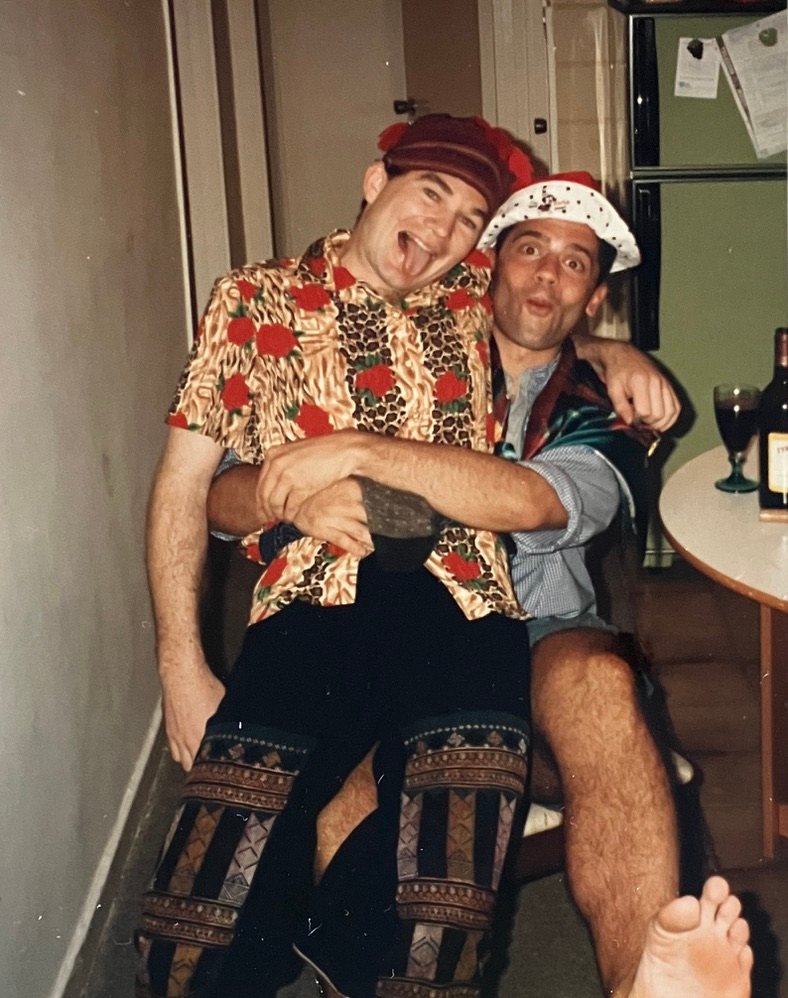
The party life was a constant whilst living in hong Kong. It was a wonderful way to meet new friends and deepen existing friendships. You would often have a party on a traditional Chinese junk somewhere around Hong Kong Island. Or drinks, dinner and banter in Lan Kwai Fong, SoHo or Wan Chai on Hong Kong Island or occasional over in Tsim Sha Tsui on the Kowloon side. Or any number of special parties like the pirate party at Middle Island Yacht Club where I met Kendall for the first time.
In late September, Australian football all have their finals series. Ansett (one of two major Australian airlines at the time, which collapsed in 2001) hosted a party for the AFL grand final on 28 September 1996. They hired an entire pub on Hong Kong Island. Being Australian we all got an invitation and had a raucous time watching North Melbourne beat the Sydney Swans to be the premiers. Go Roos (coincidentally the AFL team I have always supported)!!!
There were specific events we would participate in as part of a group. The Dragon Boat Festival in June 1997 required us to form a team for a boat and practice for a couple of months’ before the race day. Once the race was over we jumped on a junk and parties for the rest of the day in celebration. I joined my friend Henry Arundel’s dragon boat sponsored by Arup.
James Burkitt would fly up and spend a week every 6 – 8 weeks to help grow the business in Hong Kong with me. I would arrange an itinerary packed full of networking and meetings. One of the more unusual activities I would build in the itinerary was early morning water skiing in Repulse Bay on the Southern side of Hong Kong Island. We would head out and be over there on the water just after sunrise, ski for an hour then get back for showers and be in our first meeting by 9am. Given the heat, it was the perfect way to start a work day!
The Hong Kong Sevens Rugby tournament was also a big event for expats living in Hong Kong each year. Held in March 1997 whilst I was living there, it coincided with the Rugby Sevens World Cup being hosted by Hong Kong. Three days of fun and complete debauchery.
All good things come to an end. My twelve months zoomed passed and The Handover was upon us on 30 June 1997. The Handover day and evening was a dreary rainy day which dampened the celebrations a bit, couple with a speculation amongst locals and expats as to what China would change (for the worse). Chief concerns centred around the legal system, as well as media and free-speech, and the mix of Hong Kong inhabitants.
Al, Fi and I decided to gate crash the celebration party at the Royal Hong Kong Yacht Club for the night, out of the rain, with free alcohol and food, and lots of dancing and revelry. It was the perfect way to finish my stay in Hong Kong. With many goodbyes over a couple of days, I flew out of Kai Tak Airport and waved goodbye to Hong Kong on 3 July 1997 ahead of my next adventure.