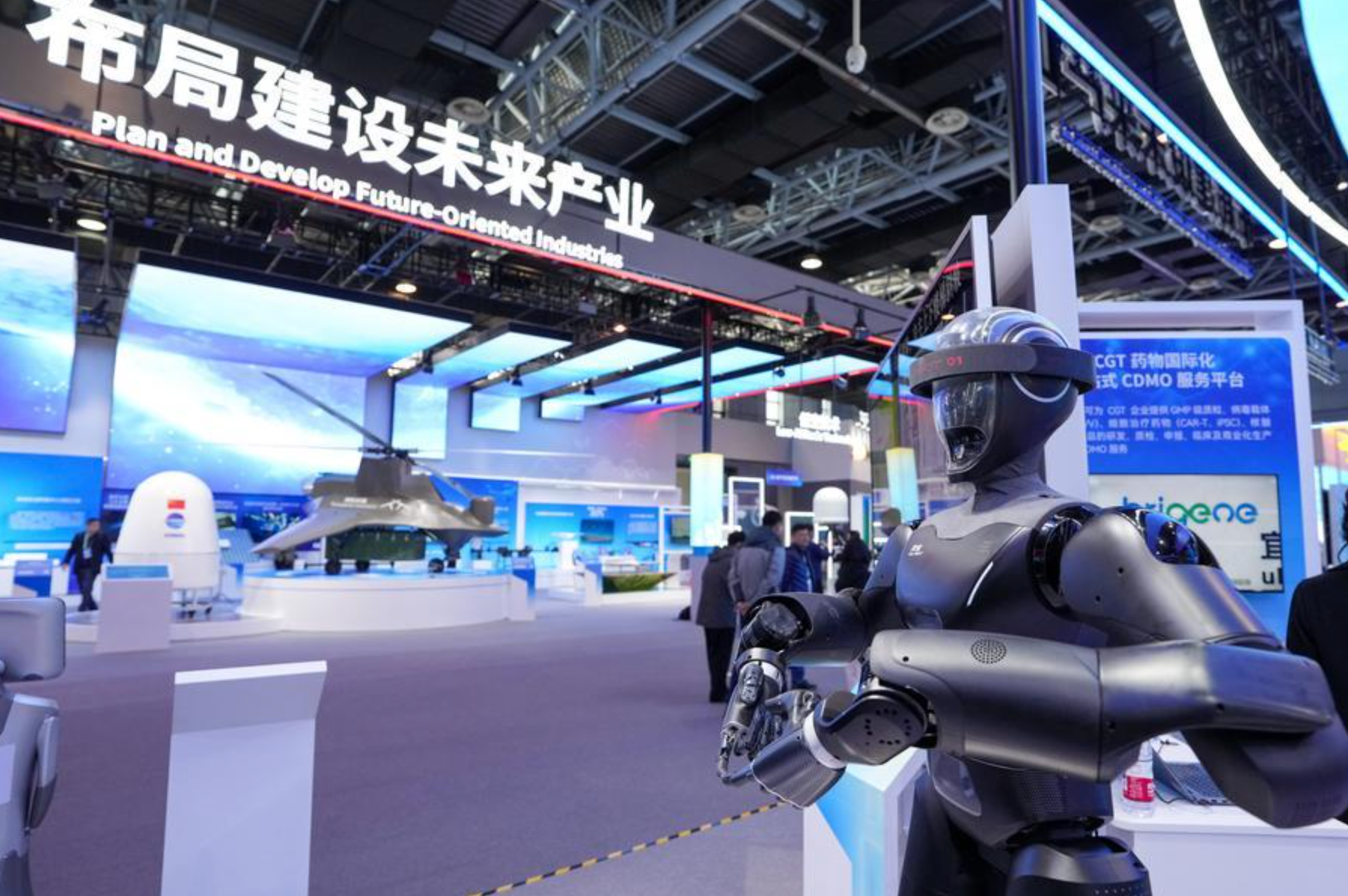
China is successfully transitioning from being a “copycat” that adapted and scaled foreign inventions into an emerging global powerhouse independently driving original innovation. Its capability to innovate is the result of multi-decade determination by China’s government to not only be an adaptive leader but to become the world’s innovation leader in key core technologies.
Invention (R&D) and adaptive leadership (mass adoption and scaling) represent two distinct parallel pathways for China. While they historically pursued “adaptive leadership” by copying and refining foreign technologies, it now balances both. It leads globally in applied scaling while fiercely pursuing invention to combat supply-chain vulnerabilities and genuinely determined to lead the world as a tech innovator. A comparative overview of the two follows.
| Feature | Adaptive leadership (Scaling) | Invention (R&D) |
|---|---|---|
| Strategy | Adapting, standardizing, and mass-producing existing global tech. | Discovery and pioneering basic scientific research. |
| Examples | 5G Network deployment, EV manufacturing, super-app ecosystems. | Breakthroughs in AI algorithms and indigenous semiconductor manufacturing. |
| Key Strengths | Unmatched manufacturing speed, low wages, network effects, and diffusion capacity. | High-value intellectual property, tech sovereignty, and global standard-setting. |
| Challenges | Relies heavily on foreign foundational IP; susceptible to geopolitical sanctions. | Massive capital costs, historical inefficiencies in basic research, and talent constraints. |
.
My memory growing up in Australia through the 1970s / 80s / 90s, it was always a joke that China could only copy a product or a brand, reproduce it on mass at a far lower quality and price, and export it for distribution across the world.

To understand why this was the case, lets put ourselves in China’s Jimmy Choo’s… during China’s “Century of Humiliation” and decades following, China’s competitive advantages had been reduced to its vast population, pride in its cultural heritage, resilience, and belief in its right to return to its former superpower position in the world. These enduring traits allowed the country to resist total colonization, eventually absorb foreign ideas, and cultivate a unified drive through an authoritarian government for national rejuvenation. The ability to mass produce goods with workers on drastically lower wages, manufactured and transported at vastly lower costs meant global demand for cheap replicas helped drive export growth in the early stage of China’s rejuvenation.
For context of why China believed it should return to be a world superpower, lets step back to the period when China was previously the world’s economic leader, from 1 AD to 1820. During this period there were many inventions and discoveries but there are four great inventions from imperial China in particular that are celebrated for their historical significance. They are also symbols of ancient China’s advanced science and technology for the era. The great four inventions are the compass, gunpowder, papermaking and printing.
It is no coincidence that China’s great historical inventions were during the era when they were global economic leaders and able to invest in the ingredients required for invention, such as education, research, development, and resilience.
Compass
Gunpowder
Papermaking
Printing
Additional inventions which made their first appearance in ancient China through to the modern Chinese era from 1912 include:
* Acupuncture: the traditional Chinese medicinal practice of inserting needles into specific points of the body for therapeutic purposes and relieving pain, from the 3rd to 2nd centuries BC.
* Paper currency: refer to “Chinese currency and its history“.
* Belt drive: The mechanical belt drive, using a pulley machine, in 15 BC. The belt drive was not only used in textile technologies spinning silk and for weavers, it was also applied to hydraulic powered bellows.
* Blast furnace: were used to make pig iron and early blast-furnace sites discovered around 117 BC.
* Bomb: The first accounts of bombs made of cast iron shells packed with explosive gunpowder, coined the “thunder-crash bomb”. First recorded Jin dynasty (1115–1234).
* Borehole drilling: By the Han dynasty (202 BC – 220 AD), the Chinese used deep borehole drilling for mining and other projects.
* Bristle toothbrush: first recorded in China since 1498 during the Ming dynasty, using pig bristles.
* Cast iron: Confirmed by archaeological evidence, cast iron, made from melting pig iron, was developed in China by the early 5th century BC during the Zhou dynasty.
* Counting rods: Counting rods are instruments used for performing calculations, which uses a grid of cells to represent a decimal system from 2 BC.
* Football: The game of football known as cuju was first mentioned in China in 3 BC.
* Field mill: a cart with millstones placed onto the frame; these were mechanically rotated by the movement of the cart’s terrain wheels to grind wheat and other cereal crops, from 350 AD.
* Forensic entomology: In 1235, during the Song dynasty, forensic science was used to solve a murder case.
* Gas lighting: The Chinese made the first practical use of natural gas for lighting purposes about 500 BC.
* Hand gun: the oldest existent archaeological discovery of a metal barrel hand gun is the Heilongjiang hand cannon from the Chinese Heilongjiang excavation, dated to 1288.
* Handscroll: The handscroll originated from ancient Chinese text documents where bamboo or wooden slips were bound and used to write texts on, from the Spring and Autumn period (770–481 BC).
* Inoculation: As Europeans would not begin to develop vaccinations for smallpox until 1796, historical Chinese records show that Chinese physicians have been inoculating against the same disease hundreds of years earlier.
* Kite: The Chinese invented the kite about 3,000 years ago, using Chinese made silk for the sail.
* Match: The earliest type of match for lighting fire was made in China by 577 AD. They were pinewood sticks impregnated with sulfur and needed only a slight touch from a flame to light.
* Modular system of architecture, eight standard grades: published in 1103 by the Song dynasty, descriptions of the “cai fen system” of eight standard dimensions for module components of timber architecture and structural carpentry. These were used to determine the ultimate proportions and scale of a building as a whole.
* Oil refining: The Chinese were among the first civilizations to refine oil, around 512 AD.
* Paper cups, napkins, lanterns and packaging: around 1 AD.
* Petroleum as fuel: The use of petroleum dates from ancient China more than 2,000 years ago.
* Restaurant menu: During the early Song dynasty (960–1279), due to expanding trader visiting.
* Rock paper scissors: the Han Dynasty (206 BCE – 220 CE) as a game called “shoushiling”, featuring hand signs representing a frog, a slug, and a snake, and was often used as a drinking game.
* Rockets: The first gunpowder-powered rockets were developed during the Song dynasty in 13th century.
* Tea: The tea plant is indigenous to western Yunnan, first recorded in 2 BC. They also invented the teapot.
Hence, China relied heavily on the production and export of low-cost manufacturing to fuel its initial economic rise from the 1980s onwards, with cheap replicas and knockoffs serving as a stepping stone. However, the direct revenue from counterfeits is dwarfed by the broader macroeconomic engine that subsidized, low-cost production built.
Products and technologies which China did not invent however became the adaptive leader for include:
*
*
*
*
*
*
The maturation of China’s innovation ecosystem is supported by several key factors:
- From Adaptation to Invention: Historically, China’s edge came from quickly adapting foreign technologies to massive domestic markets (adaptive leadership). Today, it leads independently in sectors like Artificial Intelligence (AI), quantum computing, commercial nuclear power, and electric vehicles (EVs). [1, 2, 3, 4, 5]
- Research and Patents: China vaulted into the top 10 of the Global Innovation Index. It routinely ranks among the top countries for triadic patents and highly cited science and engineering publications. [1, 2]
- Speed and Scale: A major competitive advantage is China’s ability to iterate and scale new technologies at an unprecedented pace. This is supported by massive supply-chain infrastructure and a highly adaptive local tech user base. [1, 2, 3]
- State and Corporate R&D: Backed by ambitious government planning (such as the focus on “new quality productive forces”) and robust academic research, China has steadily decreased its reliance on foreign foundational technology