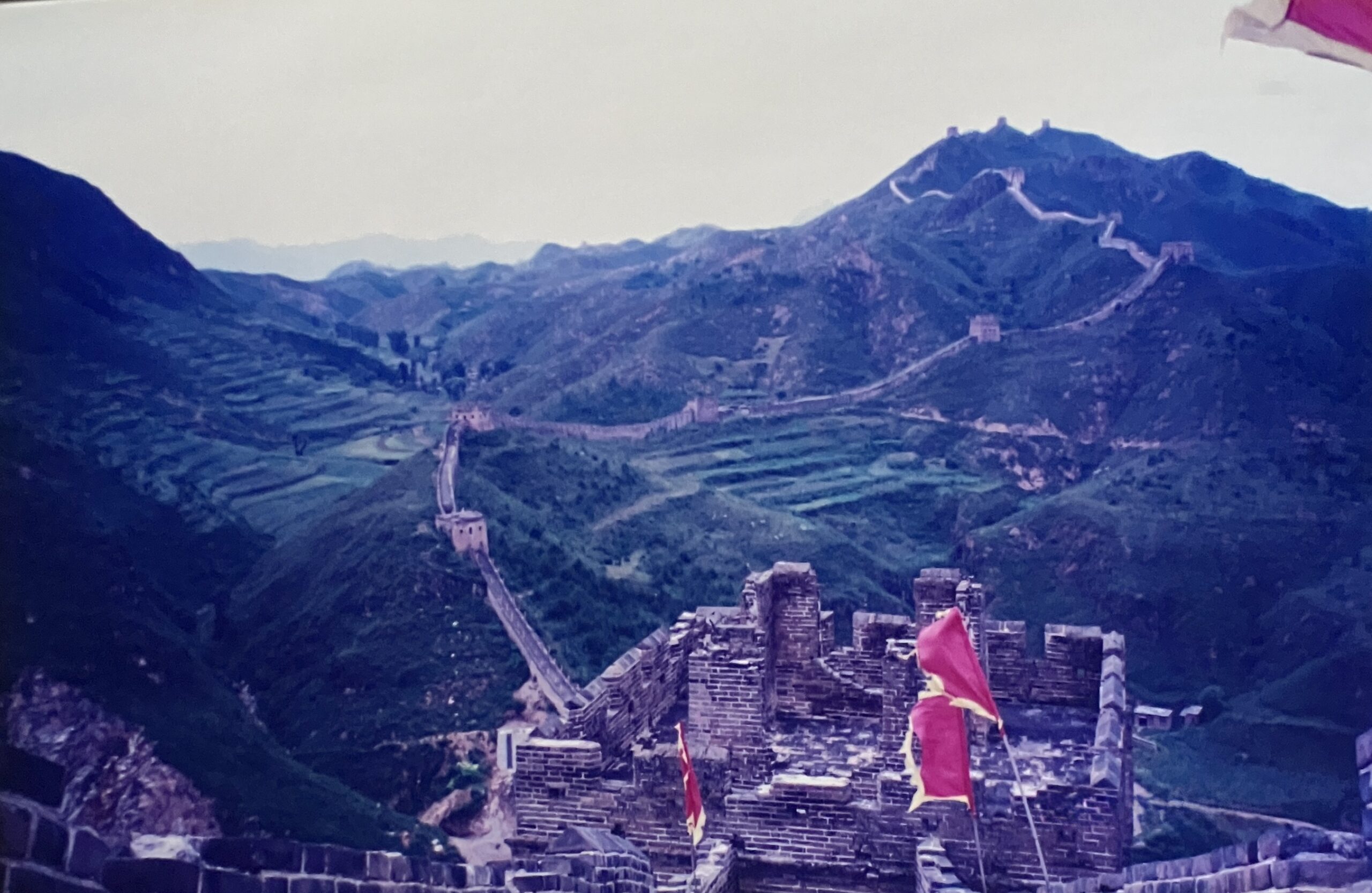
The Great Wall of China is spoken in the same sentence as the Pyramids of Giza, the Taj Mahal, the Colosseum and Machu Picchu when anyone speaks of the most recognizable man-made wonders of the world. Stretching over 21,000 kms across northern China, this massive series of fortifications were built over millennia to protect the Chinese empires.
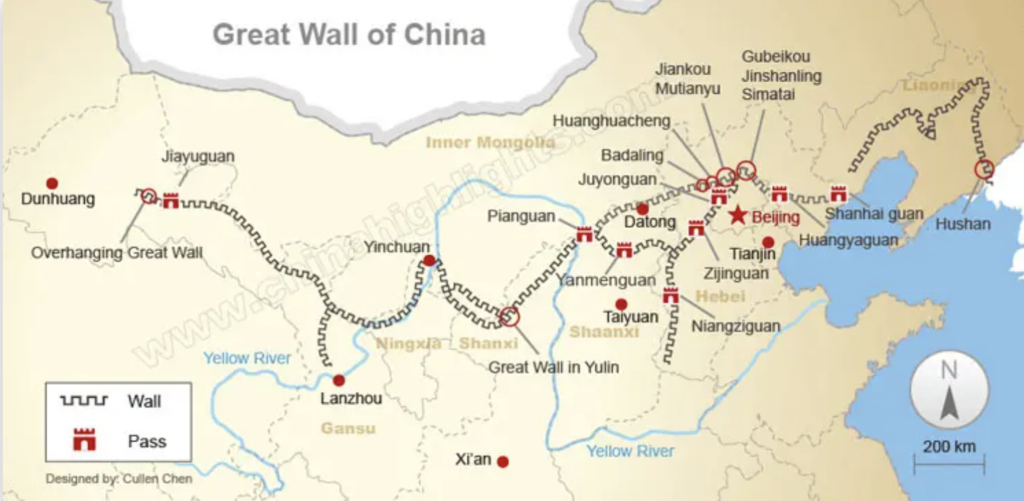
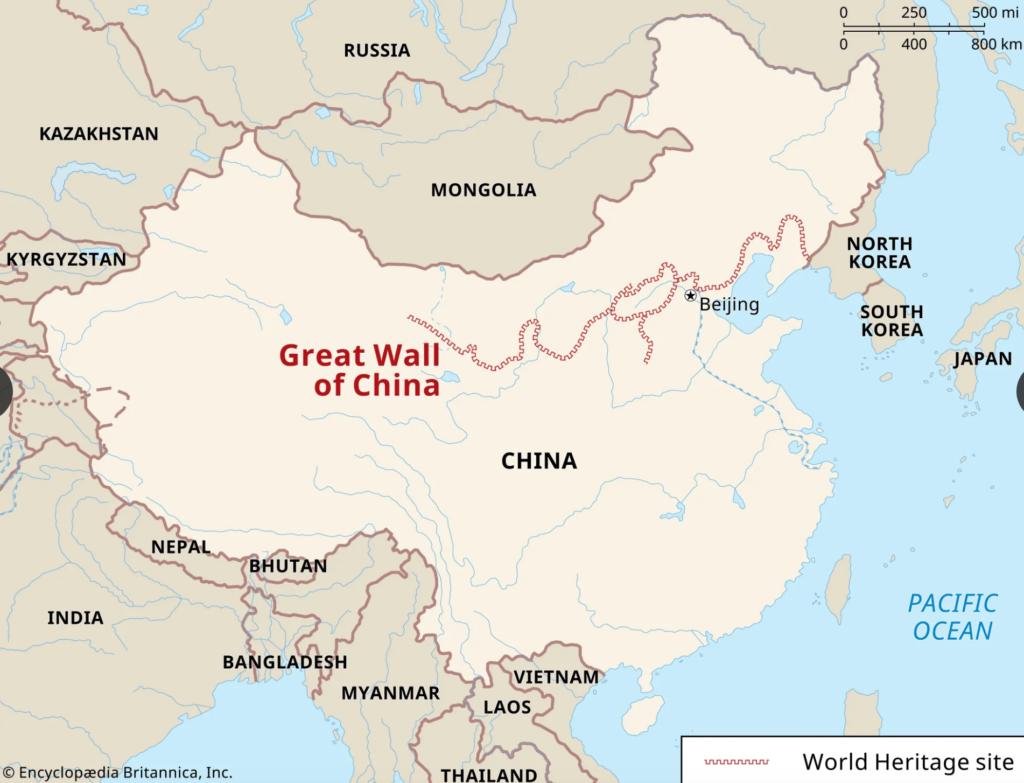
The Great Wall of China spans a total length of 21,196.18 km and includes 10,051 wall sections, 1,764 ramparts (trenches), 29,510 individual buildings, and 2,211 fortifications or passes. It stretches from its easternmost point at Shanhaiguan district, specifically the Laolongtou (Old Dragon’s Head), located in Qinhuangdao, Hebei Province. Whilst the westernmost point is Jiayuguan Pass, located in Gansu Province.
Smaller sections of fortified Wall began to be built across the historical northern borders of ancient Chinese states and Imperial China as protection against various nomadic groups from the Eurasian Steppe. The first Walls date to the 7th century BC; these were joined together in the Qin dynasty. Successive dynasties expanded the wall system; the best-known sections were built by the Ming dynasty. Since the 1980s, the “Love China, Repair the Great Wall” initiative led by figures like Deng Xiaoping and Xi Zhongxun to help crowd-source restoration of declining parts of the Wall.
To aid in defence, the Great Wall utilized watchtowers, troop barracks, garrison stations, signalling capabilities through the means of smoke or fire, and its status as a transportation corridor. Other purposes of the Great Wall have included border controls, allowing control of immigration and emigration, and the imposition of duties on goods transported along the Silk Road, and the regulation of trade.
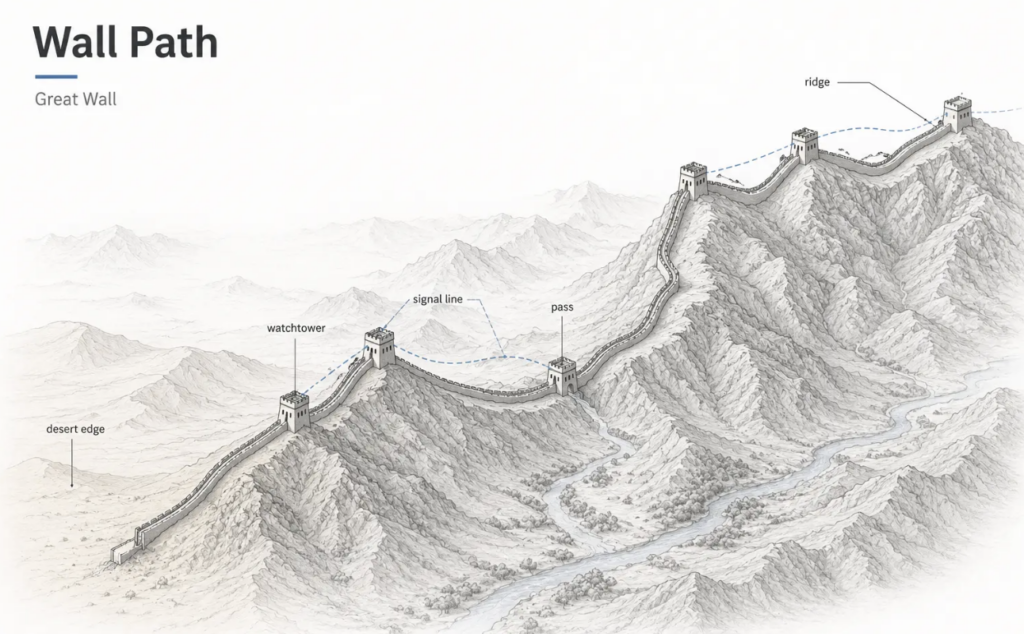
Across its expanse it traverses four major types of terrain: precipitous mountain ranges, arid deserts, vast grasslands, and flat plains. Combined with the distinct seasons experienced in China the beauty and differentiation through summer, autumn, winter or spring is very special. The map below displays the full expanse of the Great Wall today, with key locations. Also refer to the map with photos linked at the bottom.
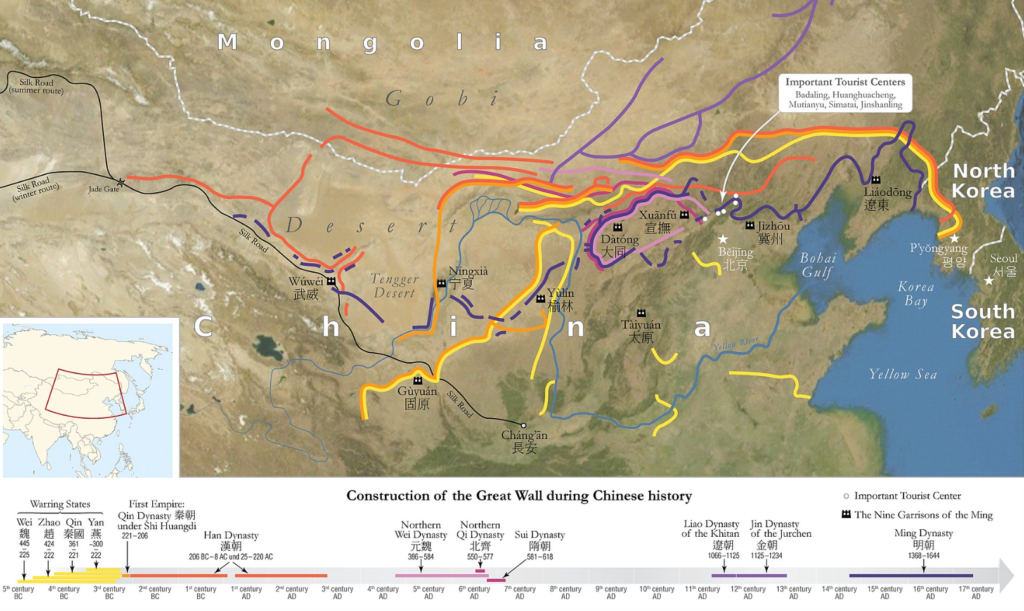
The Chinese were familiar with the techniques of wall-building by the time of the period between the 8th and 5th centuries BC. During this time and the subsequent Warring States period, the eleven states at war all constructed extensive fortifications to defend their own borders. Built to withstand the attack of small arms such as swords and spears, these walls were made mostly of stone or by stamping earth and gravel between board frames. The state of Qin emerged victorious in 221 BC; its ruler, now the First Emperor of a unified China, centralized authoritarian rule and a key goal was to prevent the resurgence of feudal lords.
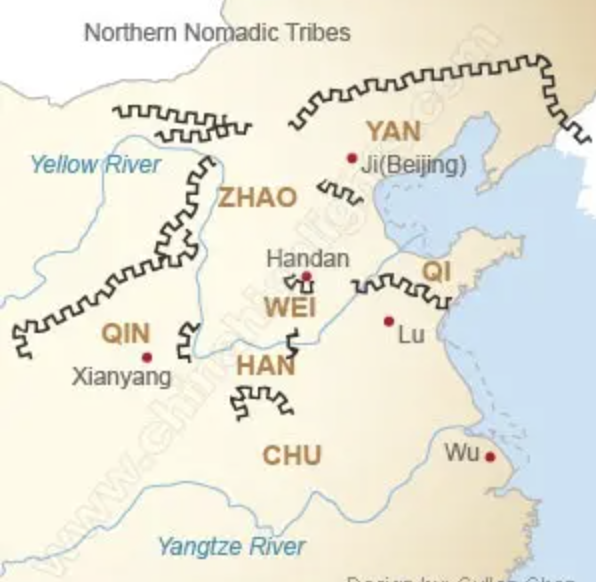
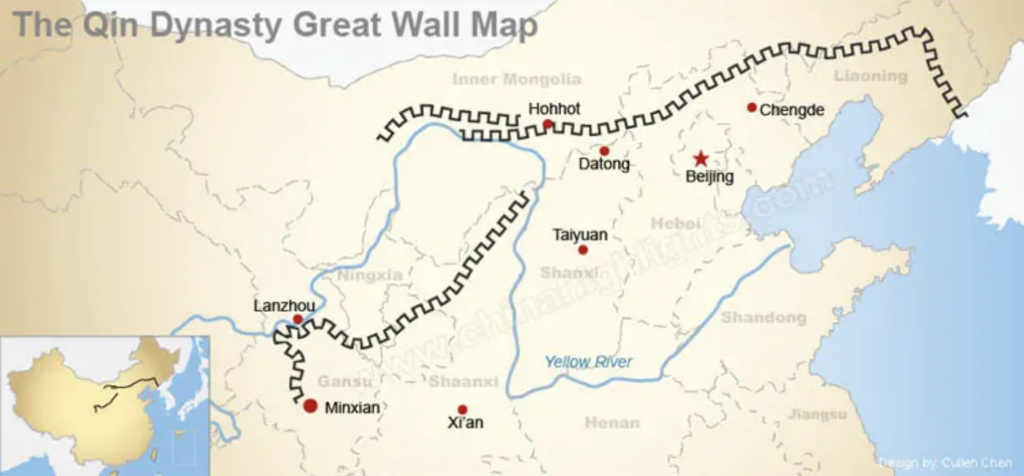
Emperor Qin Shi Huang oversaw the first dynasty, the Qin dynasty (221–206 BC), of a unified China and ordered the destruction of the sections of the walls that divided his empire among the former states. Concurrently, to position the empire against the Xiongnu people from the north, he ordered the building of new walls to connect the remaining fortifications along the northern frontier. The first true Great Wall. It took a million workers 9 years. When it was finished, the total length of wall exceeded 5,000 kms and became known as the “10,000-Li-Long-Wall”.
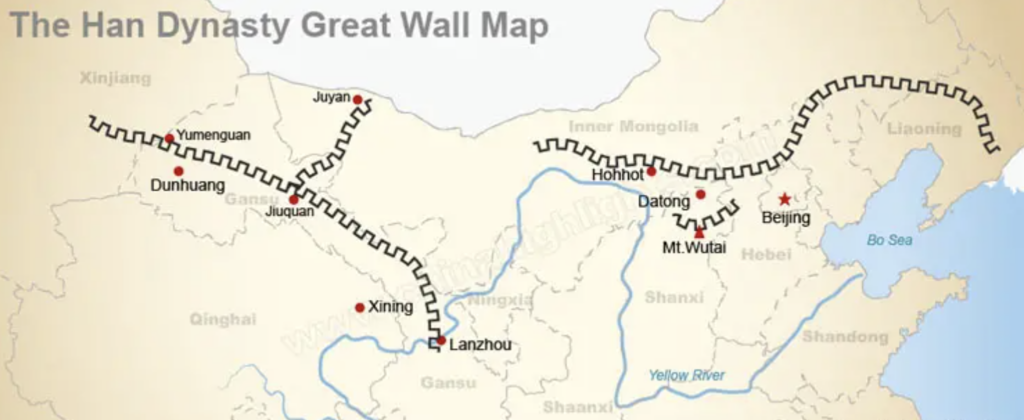
During the Han dynasty (206 BC – 220 AD) the emperors aggressively expanded the Wall deep into the western desert regions (reaching modern Gansu province) to protect the Silk Road and the north to protect against the Mongolians. It was not until the reign of Emperor Wudi (156-87 BC) of the Han dynasty that China’s territory grew, and new Great Wall was built stretching as far as north Ningxia. The Han integrated intricate beacon and watchtower systems for rapid military communication. The Great Wall has extended be more than 8,000 km in length.
Following the death of the last Han emperor and the Han dynasty collapse there was a series of “Feudal Dynasties” between 220 – 1271, being the Wei, Northern Qi, Sui, Song, Liao and Jin dynasties. Each of these dynasties length of power was relatively short lived and due to the constant threat they all continued to invest in the maintenance and expansion of the Wall. The last of these feudal dynasties, the Jin, was unable to stop the vast Mongol Empire invading, under the rule of Kublai Khan (1215–94), grandson and successor to Genghis Khan, and in the process consuming China and beginning the Yuan Dynasty.
The Yuan dynasty was the first dynasty in which the whole of China was controlled by a non-Han people, the Mongols. The Great Wall had done a good job of preserving Han China for 1,500 years. Building of the Great Wall, not surprisingly, ceased during the Yuan dynasty, as China and Mongolia to the north were one.
When the Yuan dynasty collapsed due to civil unrest the Chinese Han once again took control under the command of rebel leader Zhu Yuanzhang, who became the first emperor of the Ming dynasty (1368–1644). China flourished during the Ming dynasty and its military might swell. The Great Wall was systematically rebuilt in a 100-year project to prevent further northern invasion. Most of the remaining Great Wall was built in the Ming dynasty, and is known as the Ming Great Wall. The Great Wall sections close to Beijing like the Badaling section and Mutianyu section were built during the Ming dynasty. During the Ming dynasty, millions of soldiers and forced labourers were used during the 100-year project, supervised by famous generals such as Xu Da and Qi Jiguang. The Great Wall has extended be more than 8,850 kms in length.
The Nine Garrisons was a system implemented during the Ming dynasty to protect the northern border and the Great Wall. Originally consisting of nine garrisons, the system was later expanded to eleven. Each garrison was controlled from a fortified garrison town, strategically located at important passages and reinforced militarily. The leadership of the garrisons was divided among three supreme commanders: Jiliao, Xuanda, and Shaanxi sanbian. Each garrison had a military commander, as well as a civilian administration. In total, approximately 300,000 soldiers and officers were deployed in the garrisons.
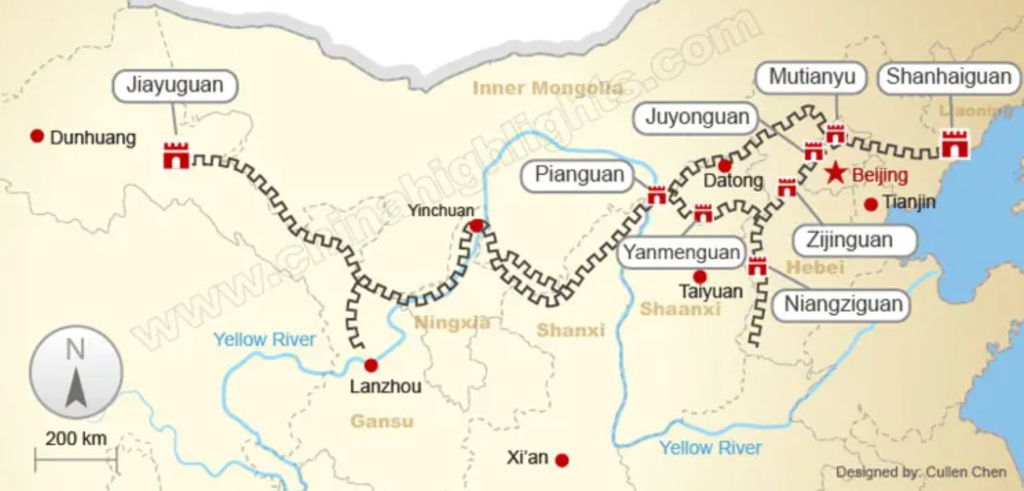
A breach in the Great Wall at Shanhai Pass in 1644 by Manchu forces signalled the end of Han control in China for the last and final Chinese dynasty, the Qing dynasty (1644–1911). During the Qing dynasty, the empire’s borders expanded far north. As a result, the Wall lost its military utility and was left to deteriorate.
In the late 20th century, the Chinese government began large-scale restoration efforts, transforming the decaying ruins into the symbol of national heritage and a major cultural landmark as we know it today. The Badaling section was the first to be restored by the government of the Peoples’ Republic of China, and opened to the public in 1957 as a tourist attraction.
Over the millennia the Great Wall was built, the terrain and conditions Chinese builders faced meant they had to adapt their construction techniques to fit the natural landscape. Following is an overview for the types of terrain:
* Mountain ranges & cliffs: the wall frequently snakes along the crestlines of rugged, forested hills. Builders used local stones and bricks to maximize height and defence. In some extreme areas, they chiseled directly into the sheer cliffs to form the natural wall.
* Deserts & Gobi: in the dry, northwest regions, builders used a mixture of gravel and desert plants like red willows and reeds to reinforce the sand.
* Grasslands: in open steppe environments, the Han Dynasty constructed barriers by alternating layers of sand, crushed stones, and compacted plants like tamarisk twigs to prevent wind erosion.
* Plains: in low-lying, flat areas, the wall was typically built by pounding yellow earth into solid, layer-by-layer structures.
* Waterways: roughly one-third of the wall’s path relies on natural boundaries. Rivers and valleys were heavily utilized as natural moats, and in some localized areas around Beijing, segments of the wall even submerge directly into lakes.
The key types of fortifications and towers design were:
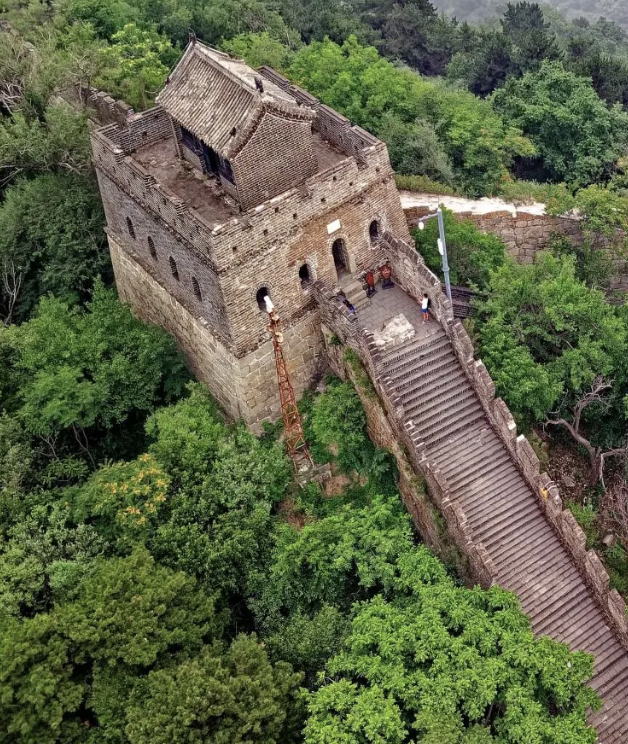
* Hollow fortified towers: Unlike solid beacon towers, these towers were built hollow as strongholds, armouries, and troop barracks. Soldiers lived on the bottom floor, which was stocked with provisions.
* Watch and beacon towers: Placed roughly every 10 kms, these were used to observe enemy movements and transmit urgent messages. Communication was done using smoke signals during the day and fire at night, heavily reliant on a direct line-of-sight between towers.
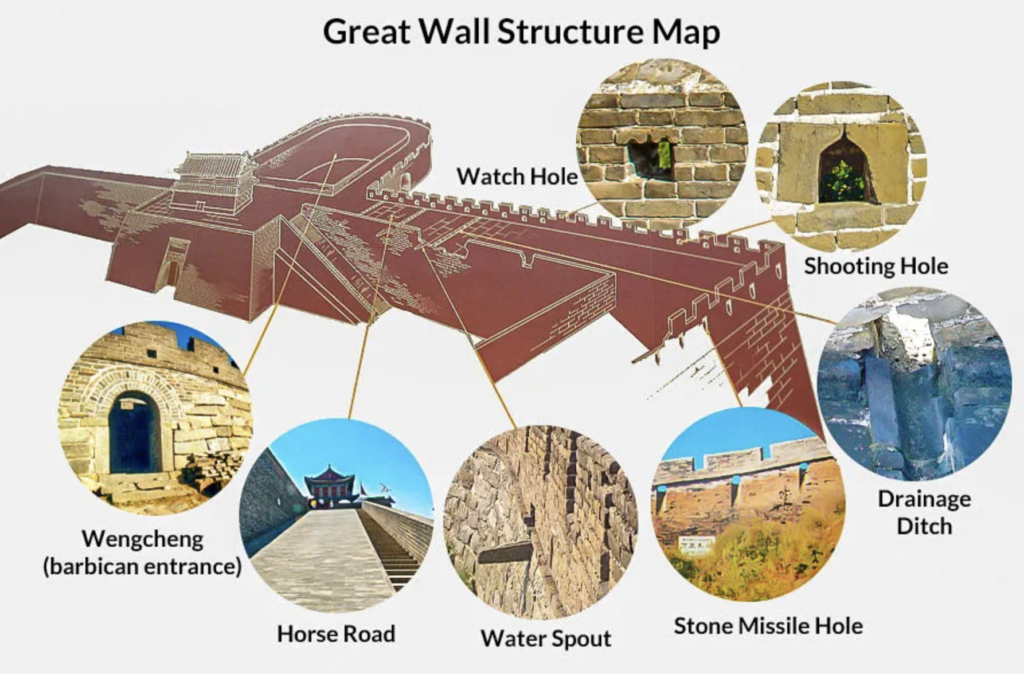
* Crenellations (battlements): The upper parapet of the Wall featured tooth-shaped crenellations. These offered protective cover for archers, while smaller gaps and holes allowed soldiers to fire arrows or peer down at attackers.
* Passes and gatehouses (Guan): The most heavily fortified nodes along the Wall. These were critical logistical and defensive points built in natural chokepoints, mountains, or valleys to control movement and channel enemy forces.
Following are the main construction techniques used:
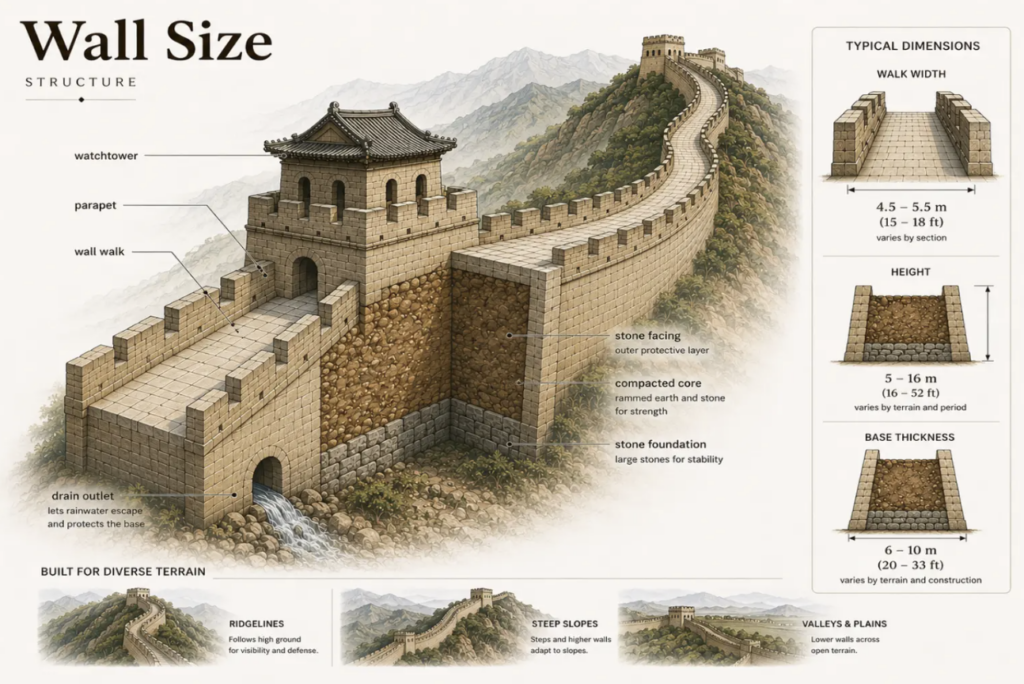
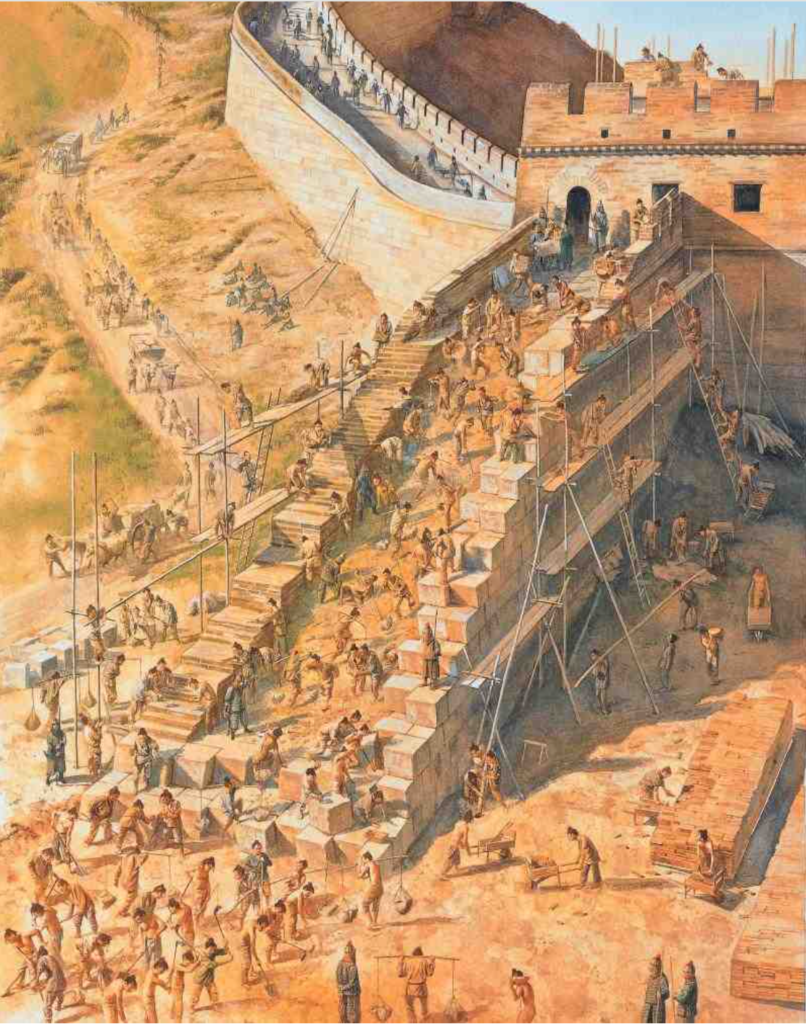
* Rammed earth (tamped loess): The foundational method for early walls (and the core for later ones). Builders placed layers of soil, sand, and gravel within wooden frames, pounding the mixture tightly with mallets until it became rock-hard.
* Composite masonry: During the Ming Dynasty, architects perfected a composite technique. They built thick interior cores of packed earth, faced the exterior with massive cut stones, and used fired, uniform “blue bricks” for a weather-resistant shell.
* Glutinous rice mortar: A monumental innovation. Builders mixed sticky rice soup with slaked lime, creating a durable adhesive mortar that provided superior waterproofing and made the brick joints stronger than the bricks themselves.
* Reed and willow weaving: In the arid, resource-scarce Gobi Desert, builders layered desert vegetation, sand, and gravel to form a remarkably resilient, layered wall structure.
The Great Wall, especially during the later Ming Dynasty, had increasingly deliberate and sophisticated design thinking implemented. Firstly, the Wall top works as a route. In some sections it narrows to something close to a defended path. In others it widens enough for organized movement, supply transport, and faster response between points. That shift in width is a design decision, not an accident. It tells you what kind of movement the architects and military expected.
Tower spacing is another design move. Towers had to stay close enough for sightlines, smoke signals, warning fires, and mutual support. Too far apart and the system slows down. Too close and labour is wasted. The spacing is an important part of the architecture design.
The parapets, openings, battlements, and firing positions also matter more than people think. They shape how soldiers moved, where they stopped, and how they used the edge. A Wall without usable edges is just mass. The Great Wall was built with edge conditions that could be occupied.
Stairs, ramps, gradients, gates, and passes complete the picture. Steep changes in level had to stay usable. Passes had to work as checkpoints, choke points, and administrative thresholds. Water also had to be handled. Drainage, slope control, and surface durability were part of keeping the Wall functioning, especially in mountain and rain-exposed sections. This is where the Wall starts to read less like a monument and more like a long, inhabited piece of infrastructure.
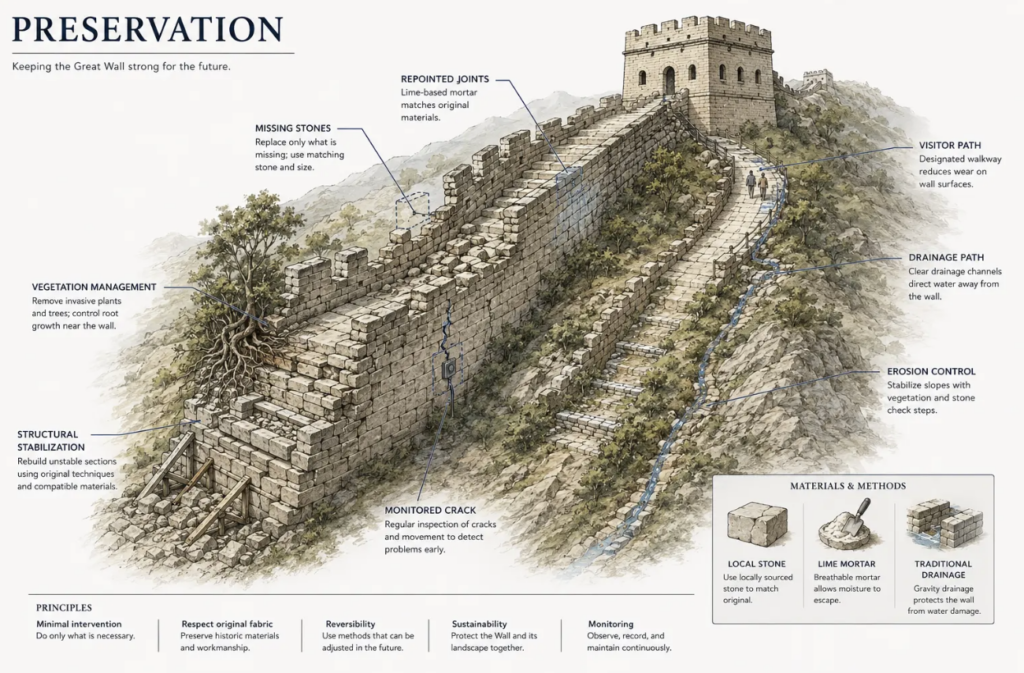
Conservation and restoration is crucial for the Great Wall of China. This is, however, not a matter of patching cracks and moving on. Given it spans thousands of kilometres across different microclimates, terrain, materials, visitor loads, and failure patterns it requires active management, scientific intervention, structural stabilization, and managed public access.
The choice of approach shifts depending on the state of the specific section:
* Unrestored/wild sections: for remote or crumbling sections, conservation focuses on stabilization. Rather than rebuilding, experts use minimal intervention, such as utilizing natural biological crusts and repairing localized cracks to stop structural collapse while leaving the historical weathering intact.
* Restored/touristy sections: for heavily visited areas (like Badaling or Mutianyu), conservation allows for active material restoration. This ensures the structural integrity of the Wall while integrating modern tourism and digital exhibits.
* International Standards: the Chinese government and UNESCO manage the monument under established doctrines outlined in the Principles for the Conservation of Heritage Sites in China, emphasizing authenticity, minimal intervention, and permanent protection.
The labour burden was enormous. Exact numbers are hard to pin down, but the scale of manpower, hauling, quarrying, tamping, firing, and on-site living conditions was extreme. Massive numbers of Chinese labourers built the Wall in brutal conditions, and many sections only survived because later dynasties rebuilt them rather than because the earliest construction stayed intact.
Ultimately, today the Great Wall of China is a profound cultural symbol. It represents China’s ancient civilization, protection, control and resilience. It is woven into national folklore, celebrated in literature, and even featured in the Chinese national anthem (with the lyric: “With our flesh and blood, let us build a new Great Wall!”). It stood for the capacity of a state to organize land, labour, and defence at immense scale – the collective spirit of the Chinese nation.