I have collected one or more notes of the currency of every country I have travelled to throughout my life. For each destination, I include a post on the history of the country’s currency and a copy of the notes I have collected.
China’s currency evolution spans over 3,000 years, pioneering the transition from primitive items and metal coins to the world’s first paper money. Today, the modern Chinese financial system relies on their currency known as the Renminbi, meaning “people’s currency”.
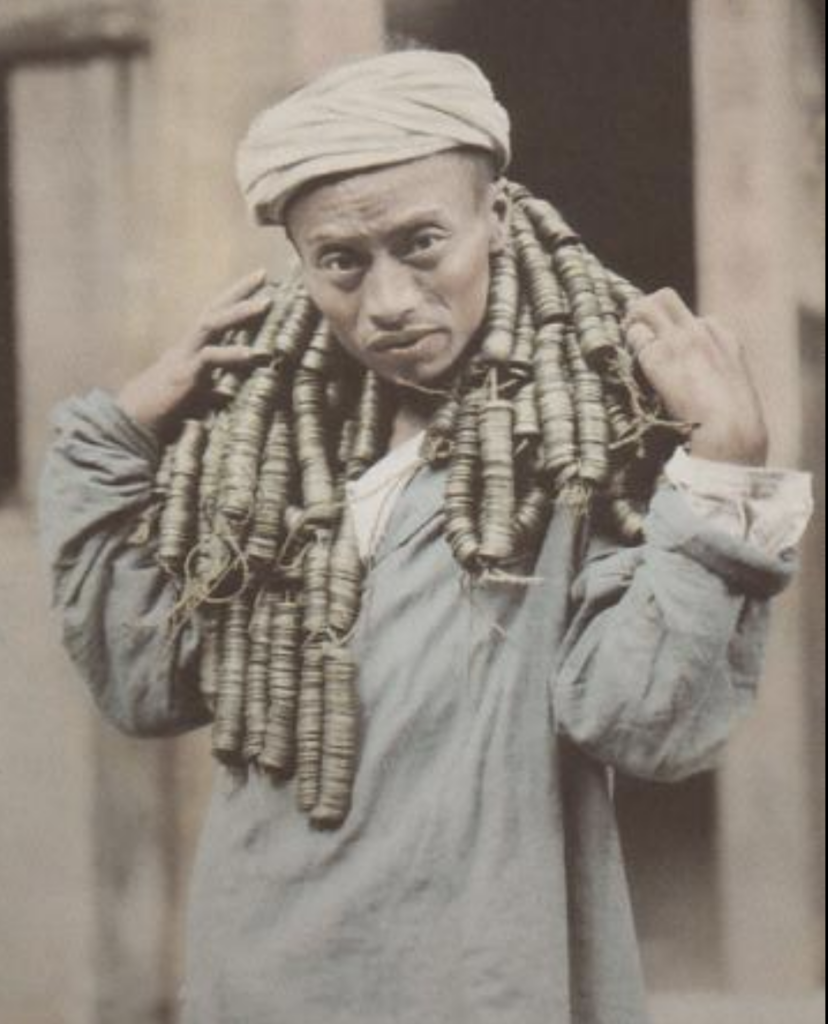
Following the Warring States era conclusion and the unification of China under Emperor Qin Shi Huang, first emperor of China, he abolished regional currencies and introduced uniform circular copper coins with a square hole in the middle. These iconic, strung coins served as the primary measure of wealth and were used continuously for centuries (221 BCE–c. 1000 CE).
One of the most important inventions from ancient China was the concept of paper currency. The concept was introduced to the rest of the world via bustling commercial routes like the Silk Road. It emerged during the Tang Dynasty (618–907 CE) as merchants began using lightweight promissory notes to avoid carrying cumbersome strings of copper coins. It was nicknamed “flying cash” because the paper was light enough to blow away in the wind.
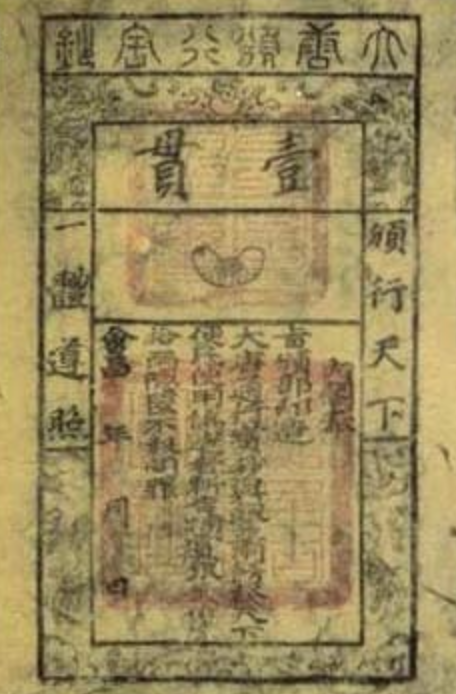
During the Song Dynasty (960–1279 CE), the government took over this private merchant system to streamline the economy. Around 1024 CE in the Sichuan province, authorities officially issued the jiaozi, widely regarded as the world’s first institutionally recognized paper money. This evolved into the world’s first official government-issued paper money by the Chinese government shortly after.
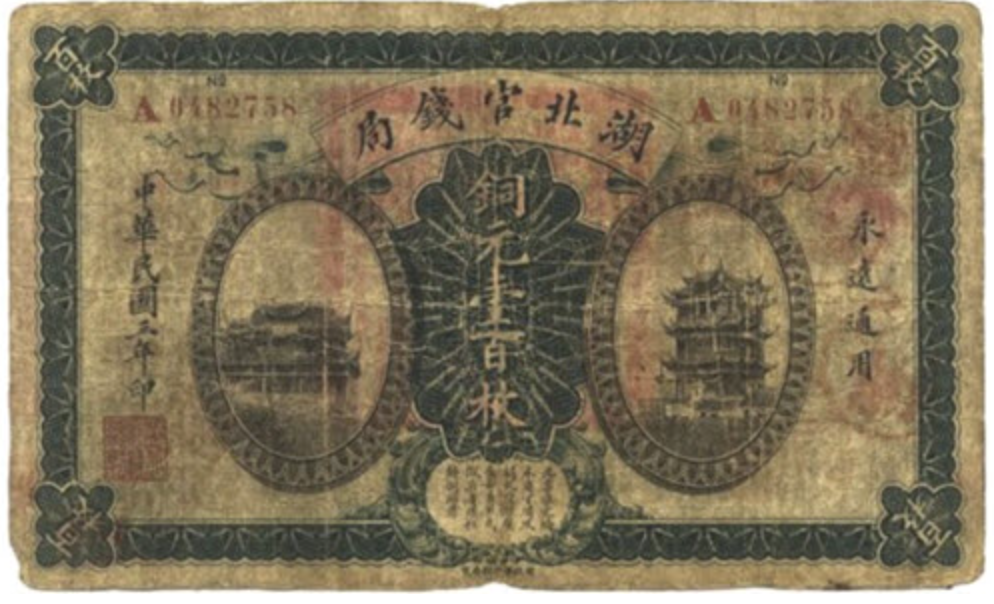
With Chinese paper currency created as a result of the busy trade its merchants conducted with traders from other countries it was inevitable the the paper currency and the concept would quickly spread along The Silk Road routes. Marco Polo observed the established, state-controlled use of paper money during the Yuan Dynasty, under Kublai Khan, and brought these stories back to Europe. It took hundreds of years for the West to adopt the practice. Sweden became the first European country to issue banknotes in 1661, centuries after China had pioneered the concept.
In the modern Chinese economy, since 1949, the Renminbi (RMB) has evolved into an actively floating, globally influential reserve currency, increasingly dominated by digital payment networks. While Renminbi is the official name of the currency, the basic unit of account is the Yuan (CN¥). China’s RMB notes have been issued in five distinct series by the People’s Bank of China. Throughout its evolution, the currency was re-evaluated once in 1955 and has progressively adopted advanced anti-counterfeiting features and modernized portraits. The series release history:
- First Series (1948–1955): Introduced on December 1948, to unify the currencies of Communist-controlled territories. It consisted of 12 denominations (ranging from ¥1 to ¥50,000) and carried a total of 62 different designs featuring agricultural and industrial scenes. They were withdrawn between April and May 1955.
- Second Series (1955–1962): Introduced on March 1955, this series revalued the currency at a rate of 1 new yuan to 10,000 old yuan. It was the first series to include denominations in Mongolian, Tibetan, and Uyghur on the back.
- Third Series (1962–1987): Introduced on April 1962, this series standardized the sizes, improved anti-counterfeiting with watermarks, and continued to circulate with newer notes for several decades.
- Fourth Series (1987–2019): Issued between 1987 and 1997, this series featured distinct portraits of various Chinese ethnic groups or distinct famous areas in China. They included braille for the visually impaired. It was officially withdrawn from circulation on May 2019.
- Fifth Series (1999–Present): Progressively introduced starting October 1999, to mark the 50th anniversary of the PRC. It is characterized by the prominent portrait of Chairman Mao Zedong on all modern notes. Various denominations have received updated editions with advanced security features, such as the major 2005 and 2015 revisions.
Following are photos of the Chinese Renminbi notes I collected:
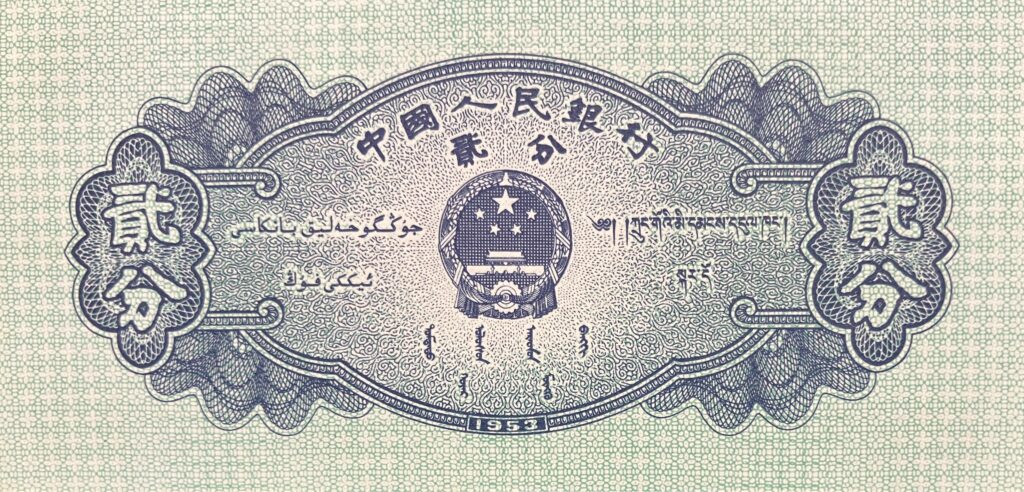
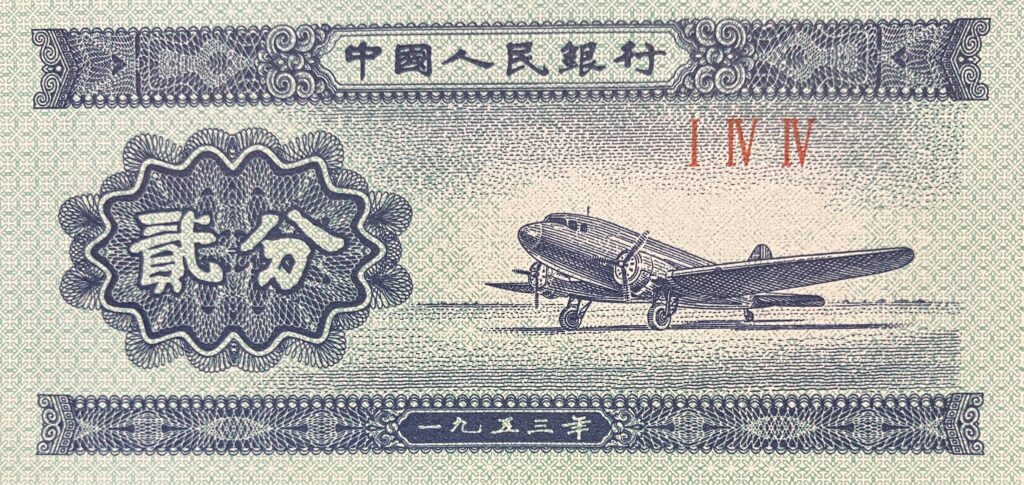
The 1953 2 Fen banknote (equivalent to 0.02 Yuan) is part of the Second Series of the Chinese Renminbi. It was withdrawn in 1980. It features a Lisunov Li-2 airplane on the front and the national emblem on back.
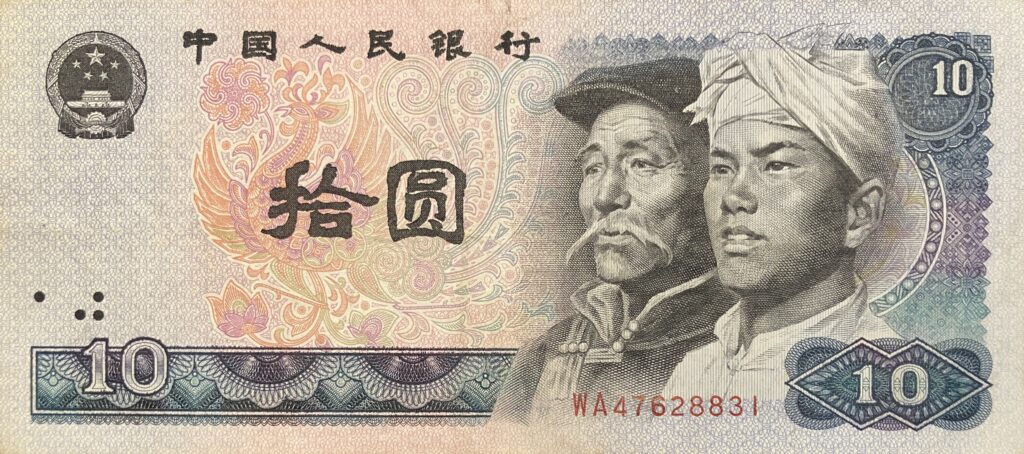
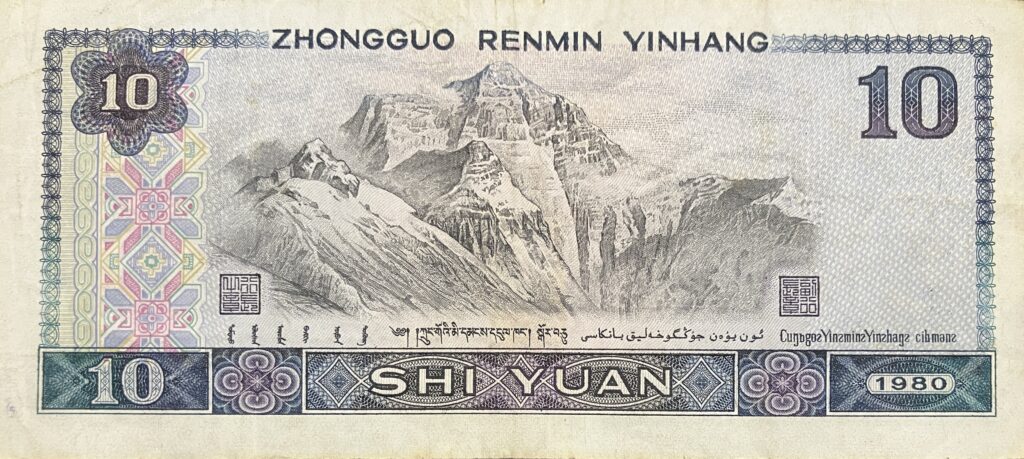
The 1980 10 Yuan banknote is part of the Fourth Series of the Chinese Renminbi. It features dual portraits of Han and Mongolian men on the front and Mount Everest on the back. While dated 1980, it was officially issued in 1988.
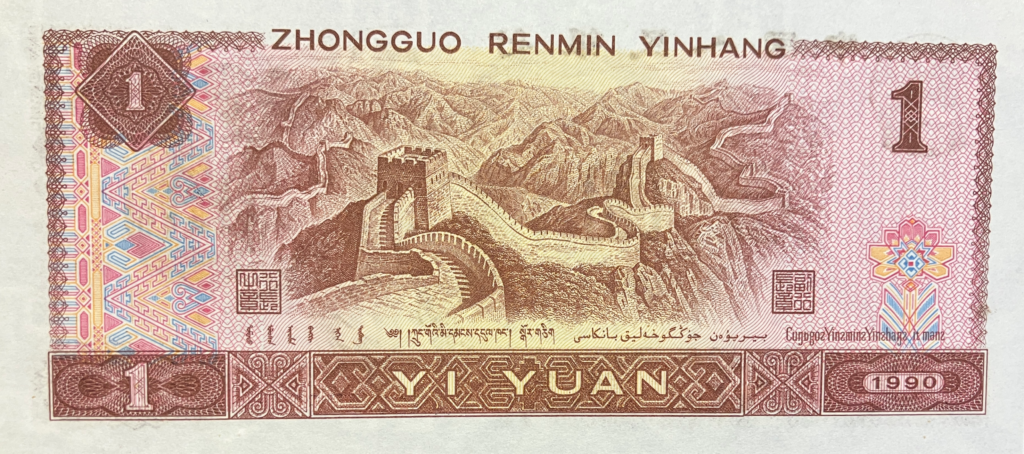
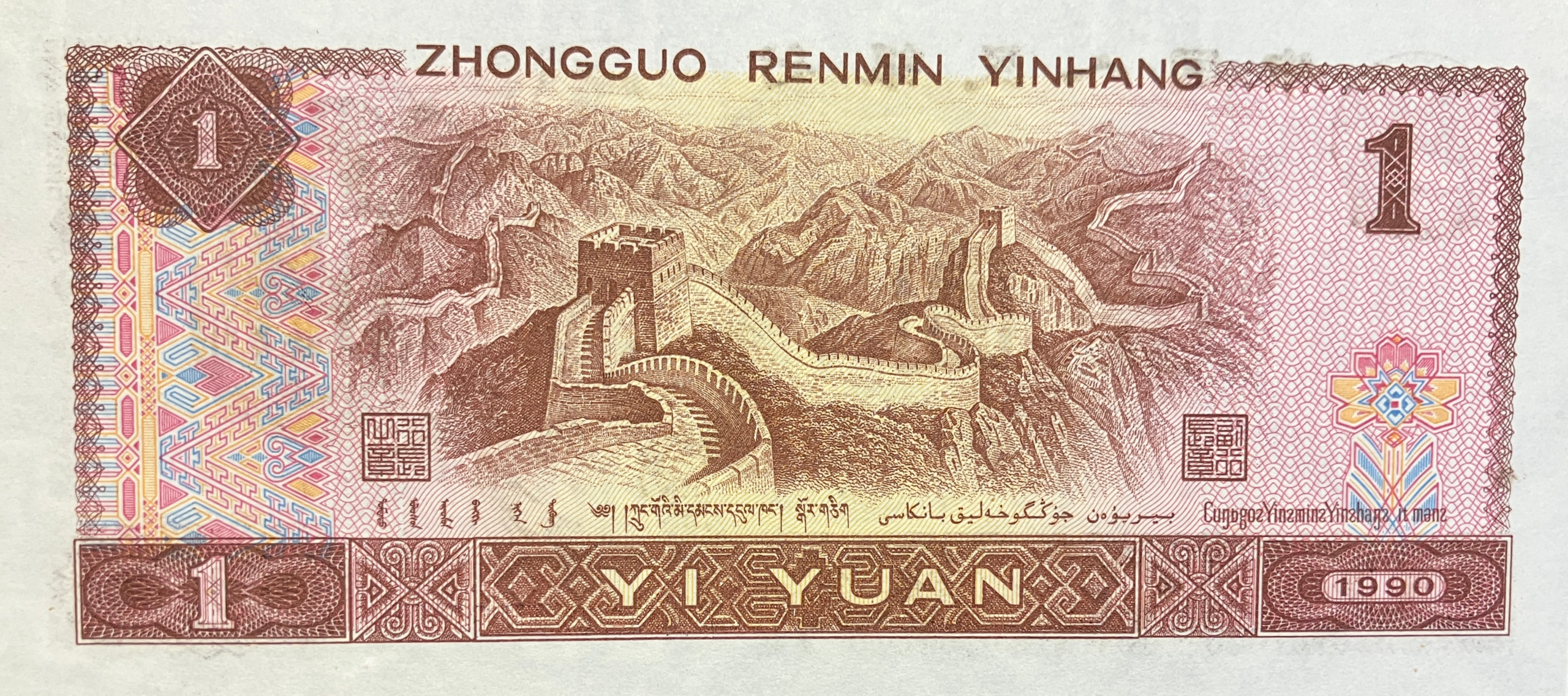
The iconic section of the Great Wall of China featured on the reverse side of the 1 Yuan note, from the Fourth Series of the Renminbi, is the Badaling section, near Beijing.