When you visit Guilin to be received by welcoming locals with great accomodation and restaurants, along with bikes, taxis, bamboo rafts or boats to help you get around as you choose, to admire the amazing karst system and rural heritage it is important to remember there is a darker history before this newer phase.
Travellers who look closely will notice subtle social dynamics rooted in past economic and cultural shifts.
* Many of the “ancient” sights in the city, such as the Sun and Moon Pagodas in Guilin city, are actually recent modern reconstructions. Older, genuine historical sites and temples were largely destroyed during the Cultural Revolution.
* Decades of aggressive economic restructuring have turned the region into a highly commercialized destination. You may notice stark divides between modernized urban areas and the lagging infrastructure of surrounding rural farming villages.
* The mix of traditional ethnic groups of the Zhuang and Yao have been largely overwhelmed with the influx of Han Chinese over the past 40 years.
* There is tourist touts which can be imposing which is a sign of the over-dependence today on tourism.
The tourism phase can be considered to have begun in the late 1980s. Guilin, and the wider Guangxi Zhuang Autonomous Region within which it is located, boasts a history spanning over 2,000 years. Lets dive into its history, especially the 20th century and the impact of China’s social policies on the Guilin.
Originally, in 214 B.C., Emperor Qin Shi Huang ordered the construction of the Lingqu Canal, which linked the Yangtze and Pearl river systems. This established Guilin as a crucial transport corridor connecting central China with the southern regions. During the Han Dynasty, around 111 B.C., the area was formally established as Shi An County, marking its foundation as a permanent administrative and military settlement. By A.D. 997, it became the capital of the Guangnan West Circuit, the historical precursor to modern Guangxi. In 1376, it was formally given the name Guilin (meaning “Forest of Sweet Osmanthus”).
Throughout the Ming (1368-1644) and Qing (1644-1911) dynasties, Guilin operated as the official provincial capital, attracting scholars, poets, and painters who celebrated its unique karst landscapes. The seat of provincial government moved to Nanning, though Guilin retained profound military and political importance, even serving as a major Northern Expeditionary headquarters in 1921.
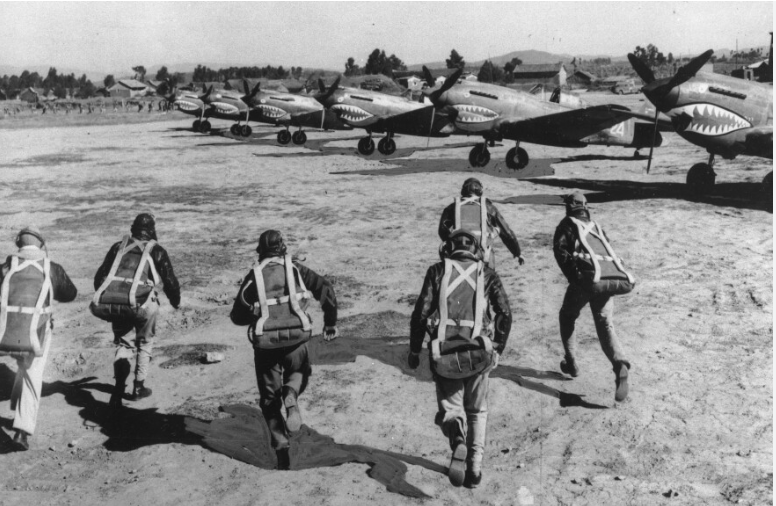
Guilin became one of the most important military, transport and cultural centres of China during the Japanese invasion, which began in 1937, and World War II. The city drastically expanded as refugees, particularly intellectuals and artists, from all over China poured in, and by early 1944 its population had grown from 70,000 pre-war to more than 500,000. During the war, the city housed critical airfields used by the US Army Air Forces and the famous Flying Tigers to strike Japanese forces and supply lines. In late 1944, during Operation Ichi-Go, the Japanese launched a massive offensive to destroy these Allied airbases and secure a land route to French Indochina. Facing overwhelming Japanese forces, retreating Chinese and American troops set fire to the city’s airbases and structures to prevent them from falling into enemy hands. After ten days of intense and bloody fighting, the Japanese captured Guilin in November 1944. The surrounding region suffered staggering losses, with hundreds of thousands of civilians killed or wounded in the crossfire and retaliatory violence.

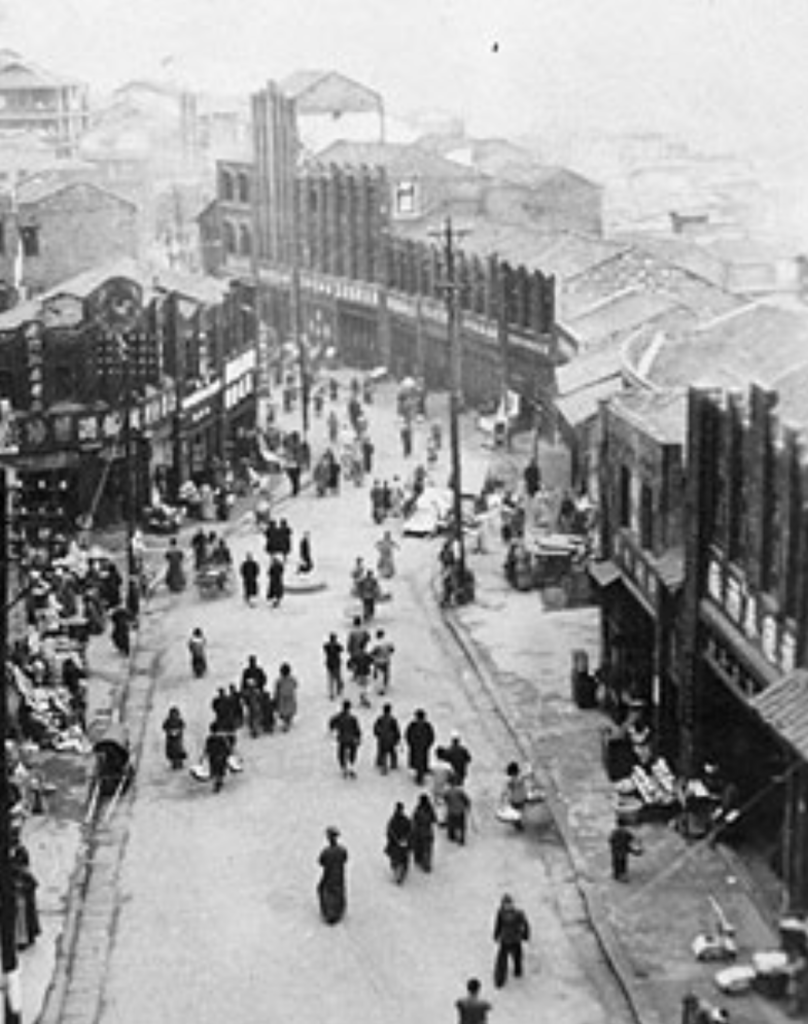
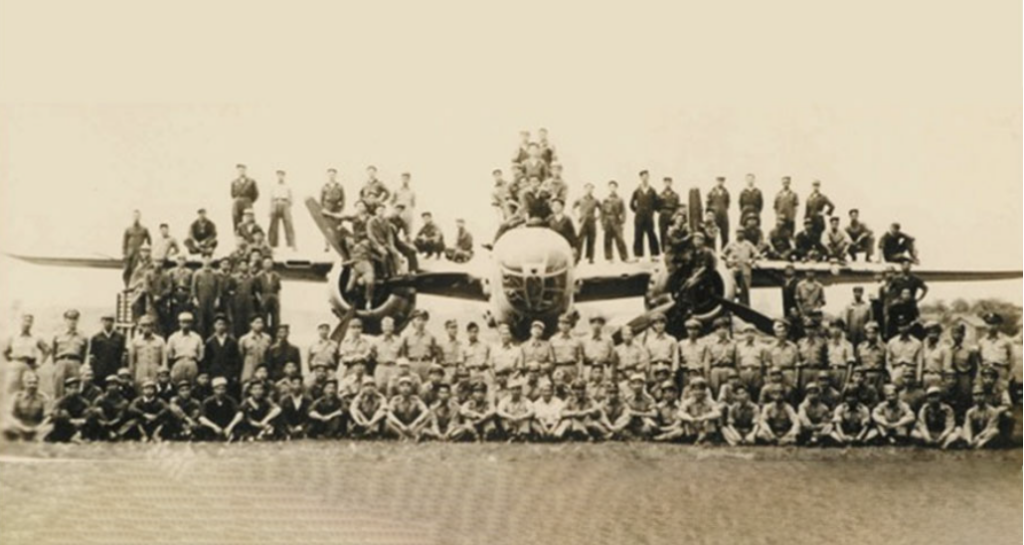
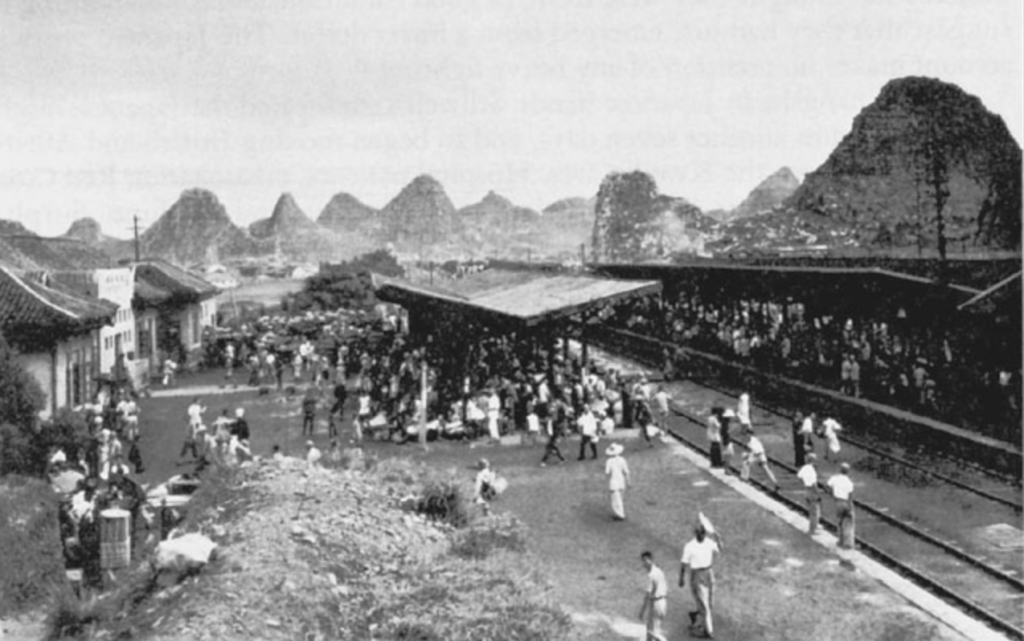
After WWII, Guilin was utterly destroyed and had to be rebuilt from the ashes. Following the 1949 – 1950 Communist Revolution and the People’s Liberation Army took control, the city lost its status as the Guangxi provincial capital to Nanning. It then semi-successfully pivoted to become an industrial hub through the 1960s and 1970s.
Guilin’s fate then shifted to be severely impacted by two consecutive radical Maoist social campaigns – the Great Leap Forward and the Cultural Revolution. While both were catastrophic campaigns initiated by the Chinese Communist Party Chairman Mao Zedong, they differed significantly in their primary goals, methods, and the specific crises they generated.
The Great Leap Forward (1958–1962) was a radical economic and agricultural campaign which had the goal to rapidly transform China from an agrarian society into a modern industrial powerhouse to rival the West. Sadly, it resulted in a devastating man-made famine.
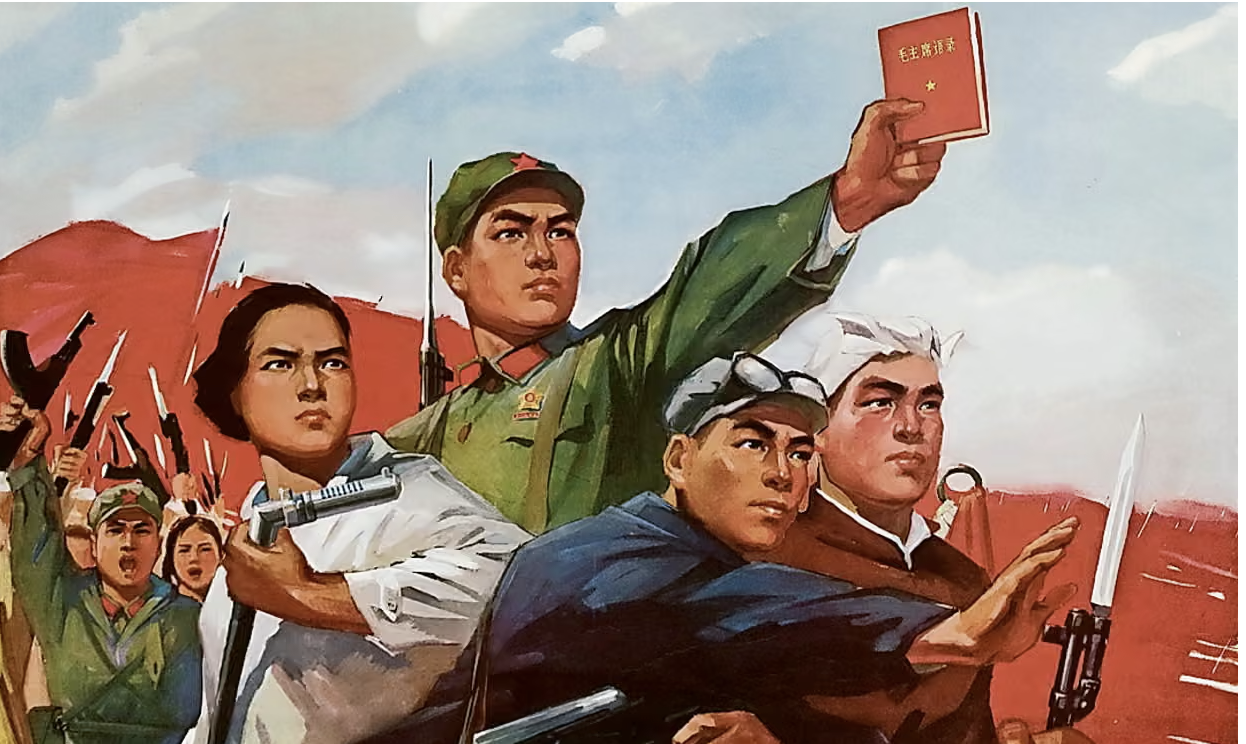
The full force of the centrally organised government was behind the policy and it was rigidly implemented with brutal force, overseen by Chairman Mao. Below are propaganda posters from the late 1950s.
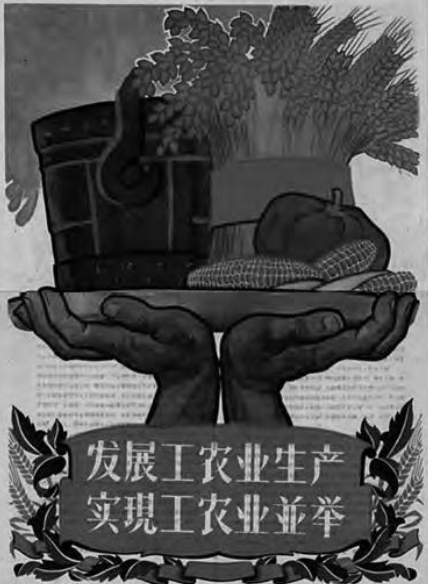
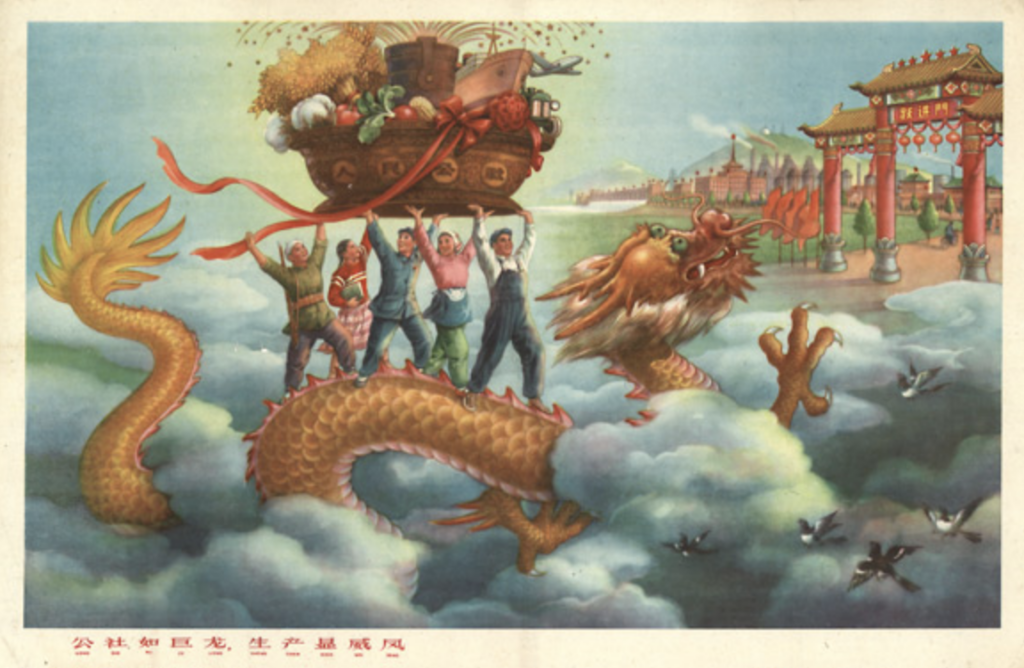
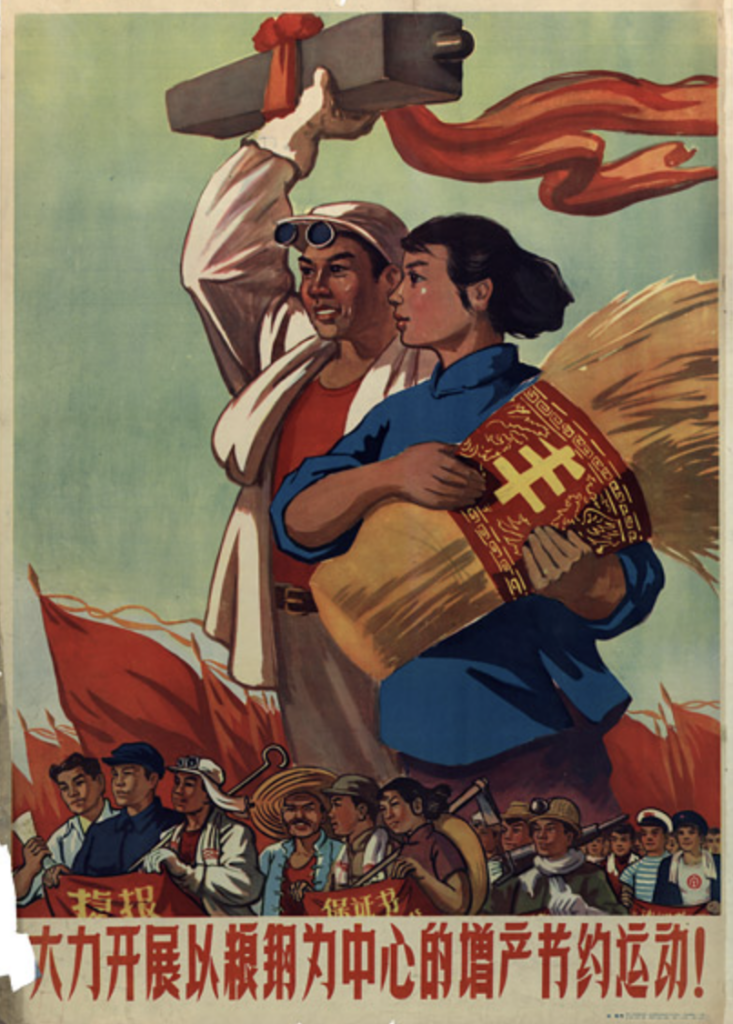
The Great Leap Forward brought devastating consequences to the Guilin region, primarily through forced collectivization into massive “people’s communes”and agricultural strain. A consequence of the people’s communes was that it abruptly dismantled traditional family structures and farming practices, as private property was abolished and peasants were forced to eat in communal mess halls.
As peasants in the rural counties of the Guilin region were diverted to iron smelting and massive infrastructure projects, local agricultural production collapsed. Locals were ordered to produce steel by constructing backyard steel furnaces, known as “folk furnaces”, melting down everyday items in an attempt to hit national quotas. In addition, in the frantic effort to fuel these furnaces and meet quotas, local forests were extensively cleared for charcoal, leading to severe deforestation and ecological damage in Guilin’s famous karst landscape.
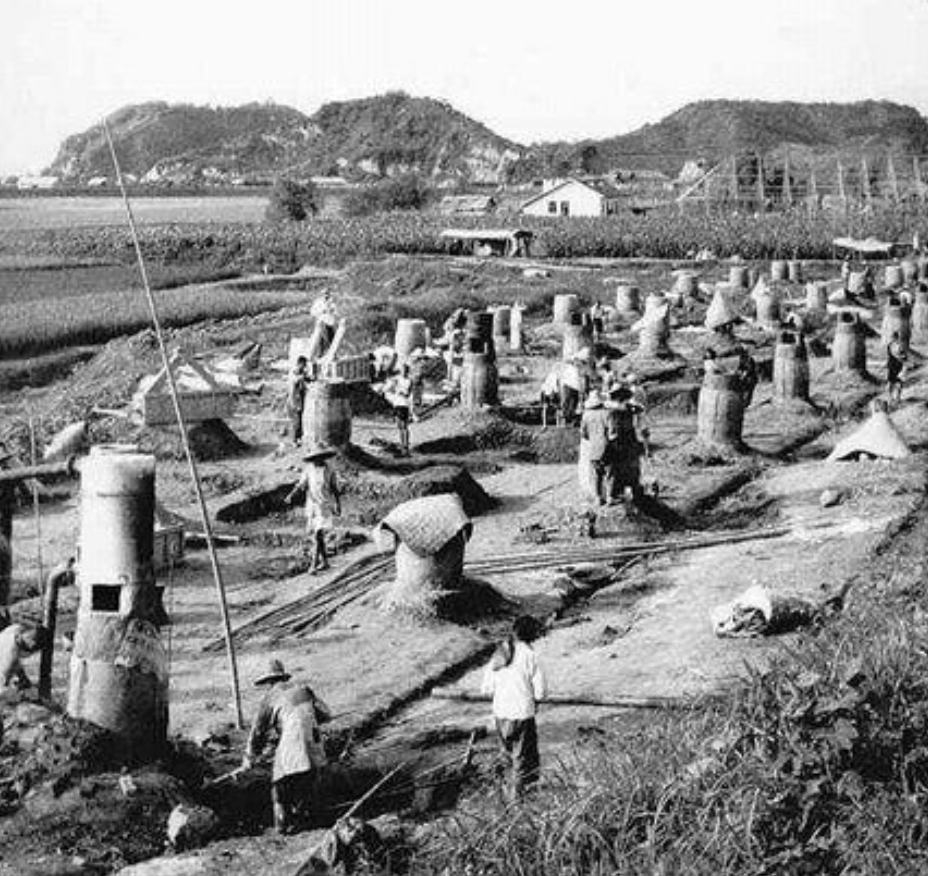
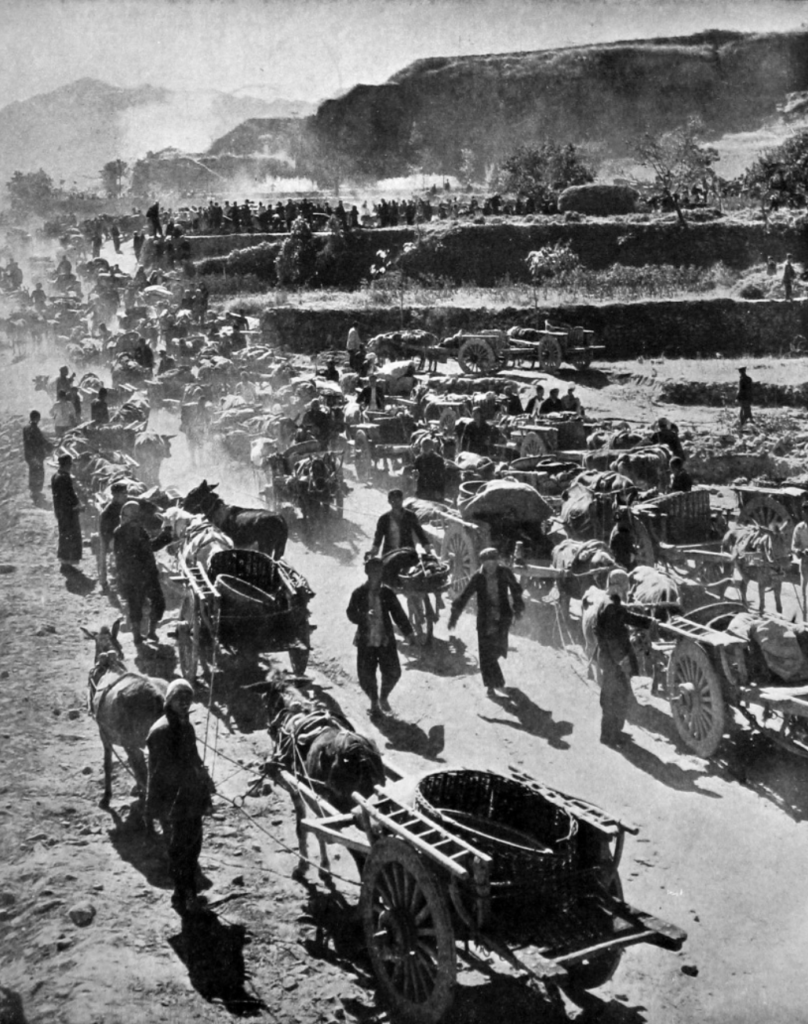
Exaggerated crop yields reported by local coordinators led the central government to extract inflated grain quotas, leaving peasants with little to nothing to eat and causing severe starvation. Because of wide-spread mismanagement of quota expectations relative to actual supply the consumption and distribution of national food stores was disastrous.
During the Great Leap Forward, China’s population was overwhelmingly agrarian. Approximately 87% of the population was rural, while only 13% lived in urban areas. To restrict the movement of peasants fleeing rural famine to the cities, the Chinese government implemented the Household Registration (hukou) system in 1958. This legally separated the populace into “agricultural” and “non-agricultural” citizens, strictly limiting rural-to-urban migration.
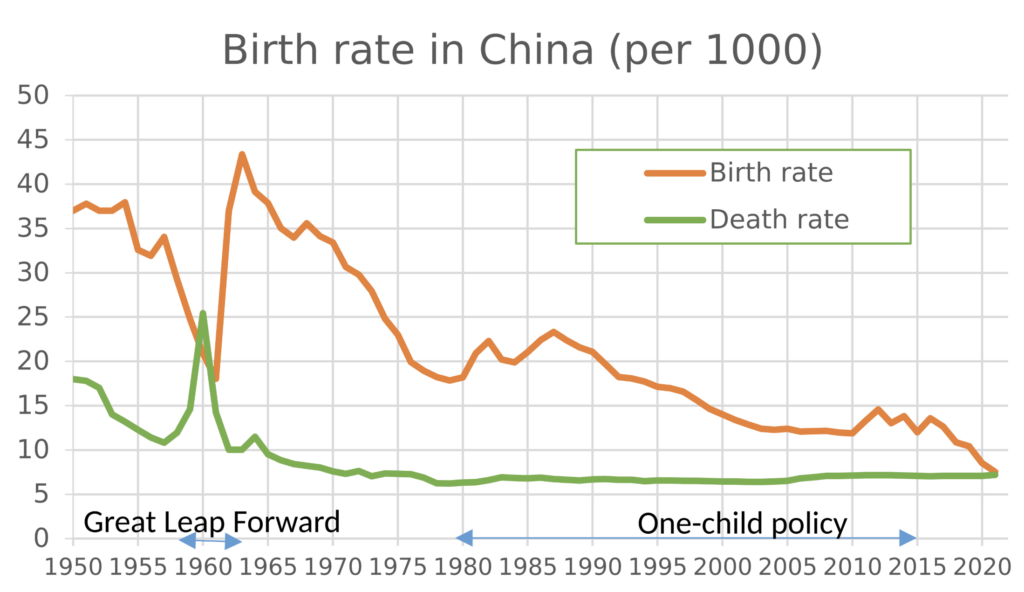
Shifting labor away from traditional agriculture and mismanagement as described above triggered nation-wide food shortages. Like much of China, Guilin and its surrounding rural counties suffered heavily during the Great Chinese Famine which led to many deaths. This Maoist policy created the worst man-made famine in history, resulting in an estimated 30 to 45 million deaths from starvation across China. The below chart shows the enormous impact on both Chinese death and birth rates during the period of the Great Leap Forward. Unsurprisingly, the economy collapsed completely.
The Cultural Revolution (1966–1976) was a socio-political movement with the goal being to preserve Chinese communism by purging remnants of traditional Chinese culture, destroy political rivals, and eliminate capitalist (and foreign) threats. Like the last one, this social policy was a directive by the People’s Republic of China government, led by Chairman Mao, launched in 1966 and lasted until his death in 1976.
Chairman Mao believed that bourgeois elements had infiltrated the government and society with the aim of restoring capitalism. Mao appealed to young people and proclaimed that “to rebel is justified”. Mass upheaval began in Beijing with Red August in 1966. In 1967, emboldened radicals, began seizing power from local governments and party branches across the country, establishing new revolutionary committees in their place while smashing public security, procuratorate and judicial systems. These mobilized youth were forming government sanctioned paramilitary groups known as the Red Guards.
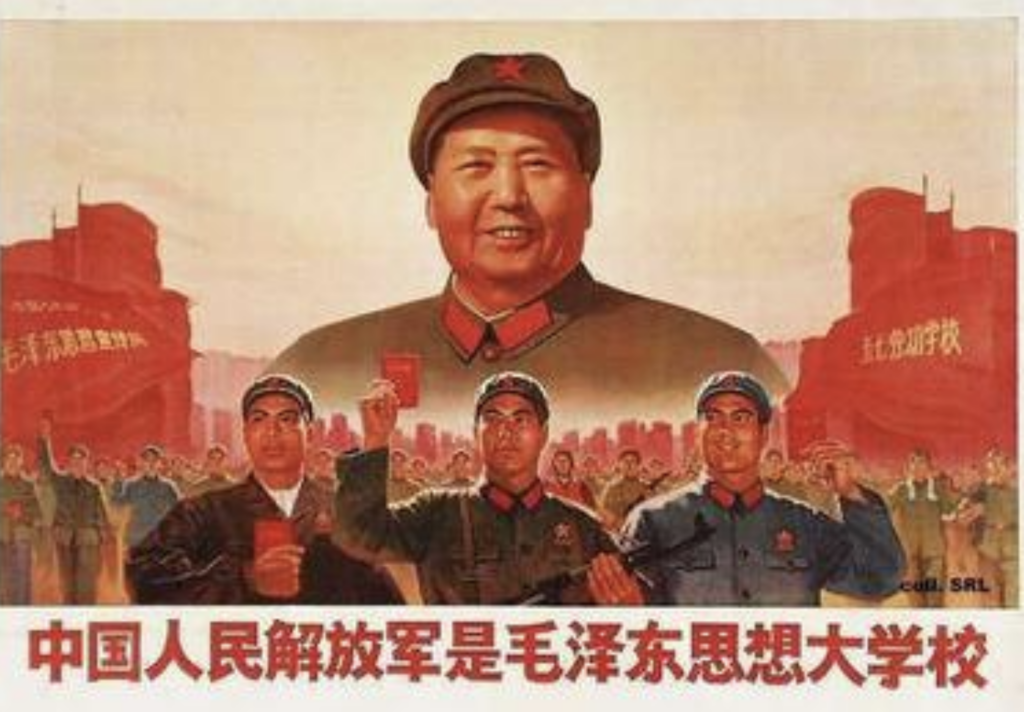
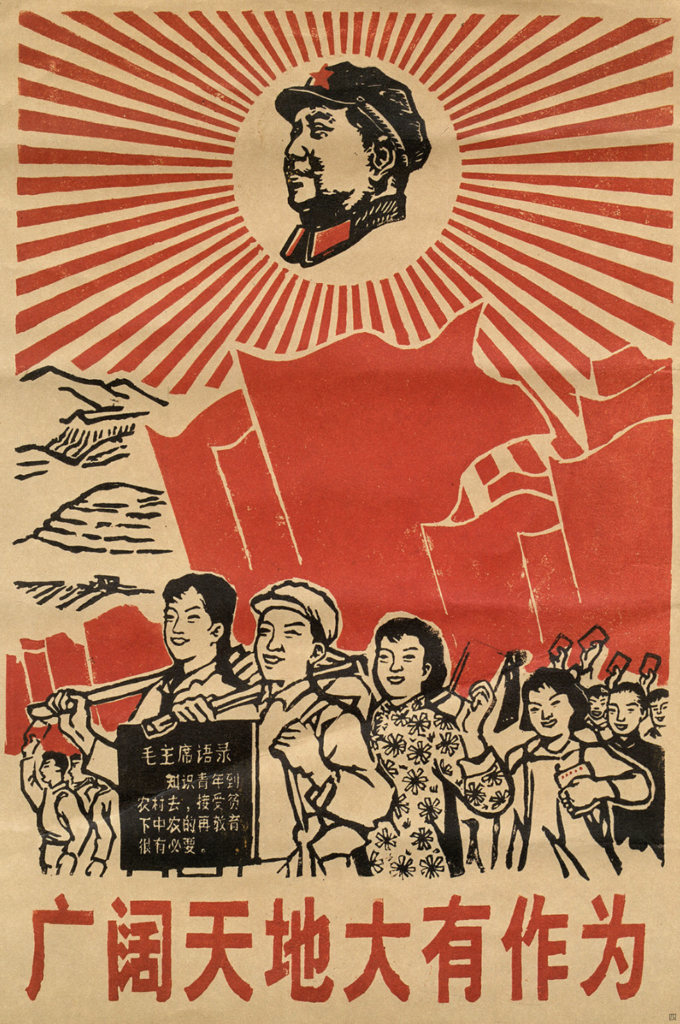
The “Little Red Book” (Quotations from Chairman Mao Zedong) was a pocket-sized collection of 267 aphorisms. During the Cultural Revolution, it became a pervasive symbol of ideological devotion, acting as a daily guide, a shield for Red Guards, and the ultimate tool for Mao Zedong’s personality cult.
Beginning in late 1968, Chairman Mao Zedong mandated the “Down to the Countryside” Movement of an estimated 17 million urban youth. These students and graduates were forced to leave the cities for rural villages and frontier settlements to be part of the Red Guards and enforce the ideology.
Red Guards sought to destroy the “Four Olds” (old ideas, old culture, old customs, and old habits), which often took the form of destroying historical artefacts and cultural and religious sites. Mao singled out nine categories of enemies: landlords, rich peasants, counter-revolutionaries, bad elements, rightists, traitors, foreign agents, capitalist roaders and “the Stinking Ninth” intellectuals. In the fight against class enemies and bourgeois reactionaries, teachers, people with a college degree or relatives overseas, workers, and members of minority groups such as Tibetans and Uyghurs, were all targeted.
Tens of millions of Chinese civilians were persecuted. Schools were shut down, and intellectuals, teachers, and party officials were subjected to public humiliation, violence, and forced labour. Many of those impacted were rural-based with approximately 82% of the population was rural, while only 18% lived in urban areas. The urban minority largely consisted of state-employed industrial workers, party officials, and intellectuals living in designated cities and county seats where they could be monitored and controlled.
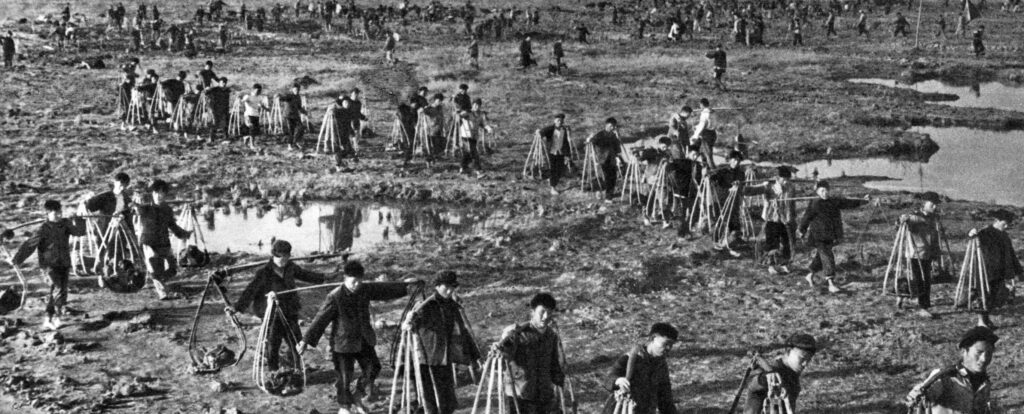
The Guilin region in Guangxi became a localized war zone. It suffered devastating factional violence between the military-backed “Conservative” and the anti-establishment “Rebel” factions. The region experienced mass purges, widespread destruction of cultural heritage, and massacres that claimed tens of thousands of lives.
In particular, the Guangxi Massacre, which encompassed Guilin, was a series of extreme lynchings, mass killings, and horrific acts of cannibalism that occurred between 1967 and 1968. In the summer of 1968, heavy street fighting broke out, paralyzing Guilin. The Rebel forces were completely crushed by heavily armed Conservative factions and local militias, resulting in hundreds of urban combatant deaths and mass devastation in the Liberation Road district, which is central Guilin including West Street.
Temples, statues, and ancient relics in and around the Guilin city’s famous limestone karst landscapes were heavily looted and defaced. The 4th-century Lama-style brick pagoda situated atop the iconic Elephant Trunk Hill had its surrounding Buddhist statues and engraved reliefs defaced. Guilin is famous for its millennia-old stone inscriptions. During this period, countless Song, Yuan, and Ming dynasty cliff carvings on hills like Diecai Hill (Folded Brocade Hill) and Yushan Hill within Guilin city were chiseled away, vandalized, or covered with revolutionary slogans.
For the Guangxi Massacre alone, official investigations documented over 100,000 deaths as a direct result, although unofficial estimates is that deaths could have been as high as 500,000, making it one of the deadliest and most brutal regional episodes of the era. The Cultural Revolution was characterized by violence and chaos across all of Chinese society. Estimates of the death toll range from 1 to 2 million, including the massacre in Guangxi.
Mao’s death in 1976 marked the end of the movement. It paved the way for the rise of Deng Xiaoping as the new Chairman of the PRC. Under his leadership, the government initiated sweeping reforms, which drastically shifted China away from Maoist policies and dismantled the ideology of the Cultural Revolution. In 1981, the Communist Party publicly acknowledged numerous failures of the Cultural Revolution.
The 10 year period of the Cultural Revolution created the “lost generation”. Someone who would have been of school age between 1966 and 1976 likely had their formal education completely disrupted. By 1996, in their 30s or 40s, they often found themselves bypassed for promotions or white-collar corporate jobs in favour of younger, university-educated peers who benefited from the reinstated exams post-1977. By 1996, many had leveraged Deng Xiaoping’s Reform and Opening-Up policies to transition into private business, operating small shops, restaurants, or independent tour guide services to cater to the growing domestic and international tourism industry.
There was enduring tension, however, as often Guilin prefecture locals would be working in state-owned enterprises alongside former rivals or neighbours who had denounced them or their families during the 1970s. Rather than seeking justice, the consensus was to endure and bury the trauma of the past while building a new middle-class life.
The final social policy to note was the introduction of the One Child Policy (1980 – 2015) to curb rapid population growth, the national family planning policy drastically changed family structures in Guilin. Because the province was already heavily populated, local authorities in the region stringently enforced birth quotas. Implementation utilized pervasive propaganda alongside strict financial penalties. The policy caused a sharp drop in birth rates and altered traditional multigenerational family dynamics.
As the only-child generation has come of age, it has led to the pervasive “4-2-1” family structure in urban Guilin. This placed immense financial and social pressure on single adults, who are solely responsible for the care and financial burden of four aging grandparents and two parents.
Guilin currently faces the compounded challenges of a declining youth population and a surge in senior citizens, leading to the designation of the area as one of only a few special “National Demonstration Zone for Active Population Aging” by the Chinese government. A tragic local consequence of the one-child era was the rise of “Shidu” families, who are parents who lost their only child to illness or accident and were left without familial support networks in their old age.
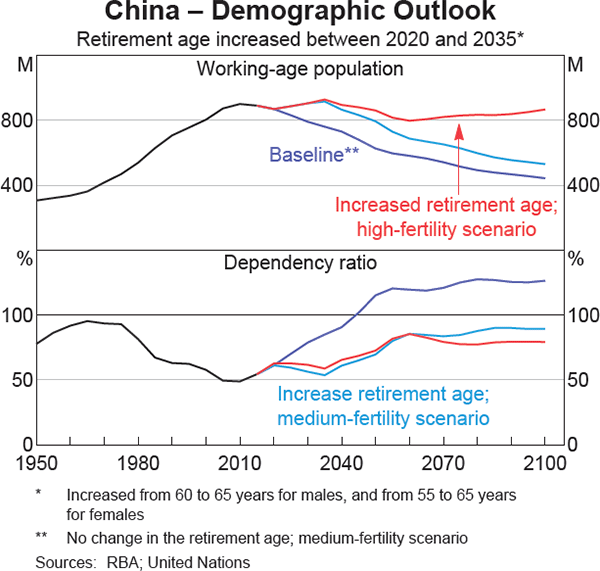
China’s dependency ratio (dependents younger than 15 or older than 64 per 100 working-age adults) has transitioned from a high youth-dependency burden in the mid-20th century to a historic low that fuelled its economic boom, and is now shifting toward a severe aging crisis. Today, the ratio of non-working dependents to the working-age population is rising rapidly. Future social policy by the Chinese government will be to enforce a later retirement age, (ironically) encourage increased birth rates and significant productivity gains through technology and AI.